
09
May
2007
 A
country-music performer's decision to move to Nashville is
typically the product of a dream. For Suzy Bogguss, it was eminently
practical.
A
country-music performer's decision to move to Nashville is
typically the product of a dream. For Suzy Bogguss, it was eminently
practical.
In the early 1980s, the Aledo native and Illinois State University graduate was knocking around the country, doing gigs at coffeehouses and ski resorts. She lived in the Quad Cities, Kewanee, Peoria.
She didn't envision a future as a respected and popular country singer. She didn't aspire to the gold and platinum records she would eventually earn.
"It just never really occurred to me that that's what my goal was going to be," she said in a phone interview last week, in advance of her May 12 performance with the Quad City Symphony Orchestra at the Adler Theatre. "It was just fun."
 The
week of May 12 through 18 is "Bike to Work Week," but if you're
a casual cyclist, good luck.
The
week of May 12 through 18 is "Bike to Work Week," but if you're
a casual cyclist, good luck.

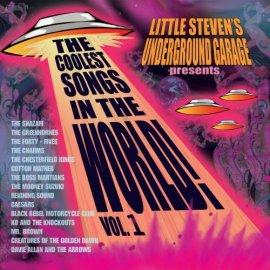 Steven Van Zandt (of Bruce Springsteen's E Street Band and The Sopranos) has laid hands on two swaggering CD collections due this coming Tuesday from his new Wicked Cool Record Co. imprint - near-religious extravaganzas that dust the weak and electrify the willing. Fueled by the playlists of his syndicated radio program Little Steven's Underground Garage, the 15 personally selected tracks on The Coolest Songs in the World: Vol. 1 are each monsters in their own right. Blasting off with cosmic power-poppers The Shazam, Cincinnati's favorite sons The Greenhornes, and the wigged-out frenzy of The Forty Fives, the CD also features the snarling Ellie Vie fronting The Charms from Boston, a Mooney Suzuki rouser from 2002, and the Black Rebel Motorcycle Club's prophetic "Whatever Happened to My Rock & Roll." The sweaty, dangerous fun continues in CBGB OMFUG FOREVER, a tribute to the iconic, now-shuttered club with liner notes by Lenny Kaye. Sixteen tracks made the cut, with hits such as Blondie's "Hanging on the Telephone" from 1978 and The Damned's "New Rose" from 1977, along with a few rare songs including Japanese bonus tracks from Green Day and U2 (which covers The Ramones' "Beat on the Brat").

 The
concept of record-label samplers is to introduce a listener to the sound
and artists that a label offers. But too often, these compilations
are nothing more than a hodge-podge of material tied together by a
company name: Either everything sounds the same, making it difficult
to tell one artist from the next, or the compilation is so disparate
that it's impossible to settle in and sit through all of the songs.
The
concept of record-label samplers is to introduce a listener to the sound
and artists that a label offers. But too often, these compilations
are nothing more than a hodge-podge of material tied together by a
company name: Either everything sounds the same, making it difficult
to tell one artist from the next, or the compilation is so disparate
that it's impossible to settle in and sit through all of the songs.