Twelve Quad Cities-area artists have been selected by a jury to create works for an exhibition and auction in conjunction with a major show at the Figge Art Museum. The artists will donate the 12 pieces to benefit the Figge, where the local artworks will be displayed from the week before a fundraising gala until May 27, or whenever the winning bidders choose to take possession of the artworks. The selected artists were Emily Christenson, Catherine Jones Davies, Diane Dexter-Wall, Sara Jane Fellin, Kristin Garnant, Ulrike Goerlich, David Heffner, Heidi Hernandez, Nancy Lindsay, Jim Riesberg, Bruce Walters, and Peter Xiao. The museum will present its fundraising gala "Under the Big Sky" on March 24, when guests can see the major exhibition of Deborah Butterfield's horse sculptures as well as the Follow the Horses show of locally created works. To make reservations for the gala, contact special-events coordinator Mary Davidson at (563) 326-7804 extension 2046. Admission is $125 per person, which includes heavy hors d'oeuvres, live music, wine, and cocktails.
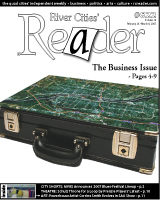 Welcome
to the first official Reader
"Business Issue." While we are keenly aware of our own 13-year
record of covering business issues important to the community, it's
no secret that the Reader
is often (especially among our Davenport-based critics and
competitors) dismissed as "anti-business" or "anti-growth"
"againsters."
Welcome
to the first official Reader
"Business Issue." While we are keenly aware of our own 13-year
record of covering business issues important to the community, it's
no secret that the Reader
is often (especially among our Davenport-based critics and
competitors) dismissed as "anti-business" or "anti-growth"
"againsters."
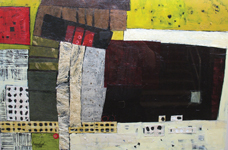 The latest show by Corrine Smith, running through March 9 at the Morrissey Gallery inside St. Ambrose University's Galvin Fine Arts Center, is a chance to see some exciting new color explorations by a painting and collage powerhouse. She has incorporated a wider range of bolder colors that have invigorated her powerful images with even more visual octane.
 The
"real" world can teach you about marketing, or annual reports, or
human resources. The real world can't teach you much about
literature, or philosophy, or art.
The
"real" world can teach you about marketing, or annual reports, or
human resources. The real world can't teach you much about
literature, or philosophy, or art.