02
Feb
2009
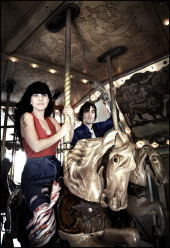 The influences of the Brooklyn-based duo KaiserCartel include punk rock on the "his" side and The Cure and My Bloody Valentine on the "her" side.
But good luck finding much evidence in the sound of the group, which is playing at RIBCO on Thursday in a Daytrotter.com show. The band's music is largely acoustic pop, and Courtney Kaiser's voice has a character like Aimee Mann's but without the flat disillusionment. Whistles and xylophones add sunshine to some tracks, but there's also a magnetic sadness in many.
Kaiser and Benjamin Cartel - both of whom sing and play multiple instruments - insist that the influences can be heard, and their comments reflect a wise understanding of the efficiency and directness of their own songs.
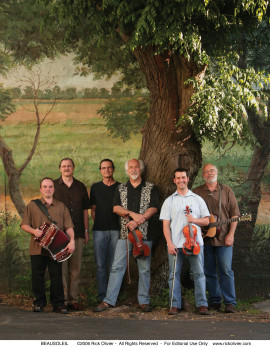 As Michael Doucet tells it, the Acadian
people of Louisiana have in their blood a penchant for both
adaptation and preservation. They moved from France in the 17th
Century and colonized Acadia - in what are now the Canada Maritime
provinces and Maine. And many settled in Louisiana after the Great
Expulsion of 1755 and became Cajuns.
As Michael Doucet tells it, the Acadian
people of Louisiana have in their blood a penchant for both
adaptation and preservation. They moved from France in the 17th
Century and colonized Acadia - in what are now the Canada Maritime
provinces and Maine. And many settled in Louisiana after the Great
Expulsion of 1755 and became Cajuns.

 On record, Rodriguez has an assured, slightly too-knowing voice, pleading to a drug dealer - "Won't you bring back all those colors to my dreams" - over a wistful, wheezing musical backdrop that gives way to agitation. The song is "Sugar Man" (available for free download at
  You've probably never heard of Local Natives, but
 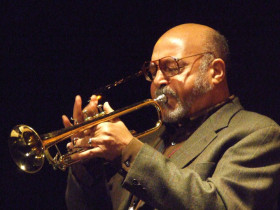 Born in Mississippi, veteran jazz
trumpeter Art Hoyle was raised in Oklahoma in the early 1930s, and
says that jazz "was just an inevitable part of the black community
when I was growing up. You heard it everywhere - jazz and blues,
and gospel music, of course. It was just part of everyday living."
Born in Mississippi, veteran jazz
trumpeter Art Hoyle was raised in Oklahoma in the early 1930s, and
says that jazz "was just an inevitable part of the black community
when I was growing up. You heard it everywhere - jazz and blues,
and gospel music, of course. It was just part of everyday living."
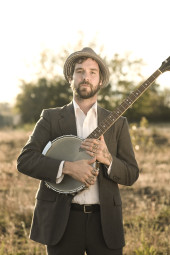 William Elliott Whitmore, a farm boy who hails from Lee County, Iowa, is set to release his new record, Animals in the Dark, on the Anti- label on February 17. After a trio of acclaimed, intimate, spare, and highly personal albums on the Southern label, Whitmore gets more political on Animals in the Dark, and he also fleshes out his sound. What remains the same is his wizened, worn voice, which gives a startling authenticity to his straightforward, woodsy folk music.
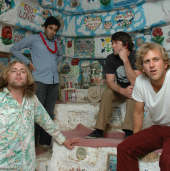 The California-based Donkeys spent three years on their second album, Living on the Other Side, from start to release, and that combined with the quartet's warm, fluffy, unhurried music might create the impression that the band moves slowly. Some songs sound downright lazy.
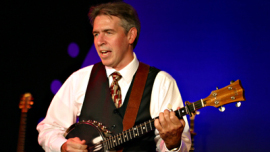 Michael
J. Miles, the freelance educator, composer, and musician currently in
the area as Quad City Arts' latest visiting artist, isn't blind
to the common associations connected with the banjo. "The general
awareness," he says, "if there is
any, of the banjo sits on
things like The Beverly
Hillbillies or Deliverance
or O
Brother, Where Art Thou?"
Michael
J. Miles, the freelance educator, composer, and musician currently in
the area as Quad City Arts' latest visiting artist, isn't blind
to the common associations connected with the banjo. "The general
awareness," he says, "if there is
any, of the banjo sits on
things like The Beverly
Hillbillies or Deliverance
or O
Brother, Where Art Thou?"