DAVENPORT, IOWA (September 15, 2026) — Biannually, millions of birds make their way across the night skies of the Midwest in search of their migratory destinations.
This happenstance causes the birds to contend with our light pollution which can be disorienting, confusing, and exhausting for the birds on their already tiresome journey.
In our area, the highest nightly averages of migrating birds occur throughout the month of May.
Shutting off excess light pollution at this time would have the most significant impact on the greatest number of birds.
We encourage local citizens to join in this easily achievable participation of environmental stewardship by reducing unnecessary light pollution throughout the month of May and help make our community more mindful of our birds.
According to birdcast.info (a website sponsored by The Cornell Lab, Colorado University, and UMassAmherst), fall migration begins as early as mid-August and continues through November (listed specifically as 8/15-11/30), with peak nightly averages in September.
The birds are tracked using radar technology and a “livecast” is updated daily during migration to show the approximate number of birds migrating and the altitude at which they are flying.
The included graphs, found on the birdcast website, depict the total number of birds crossed during the migration period and the number of birds recorded in flight each night; each graph is compared to an historic average.
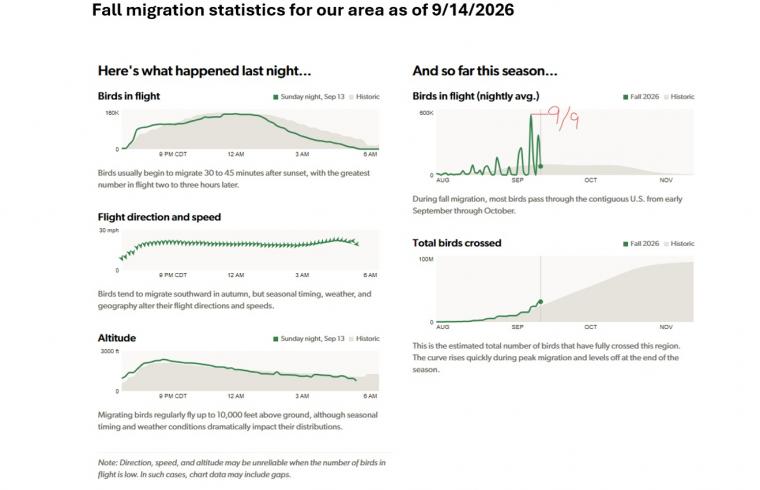
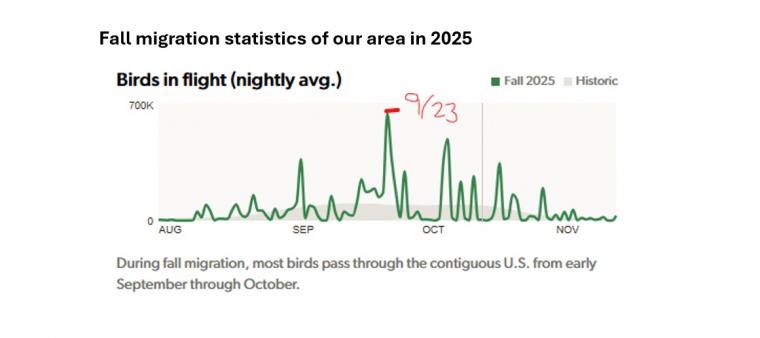
As shown in these graphs, peak bird migration the Quad Cities could be argued as being the end of August through the month of October for fall migration. According to this data, excess light pollution should be reduced as much as possible starting no later than August 15th and resuming no earlier than November 1st each year.
Birds today face an increasing number of challenges related to urbanization like habitat loss, pollution, predation from invasive species like house cats, collisions with cars, and light pollution. It is up to us to do all that we can to be mindful of and minimize these impacts as much as possible. River Action’s hope is that more citizens within the community will make these small changes in order to help the Quad Cities become a more environmentally friendly and mindful place.