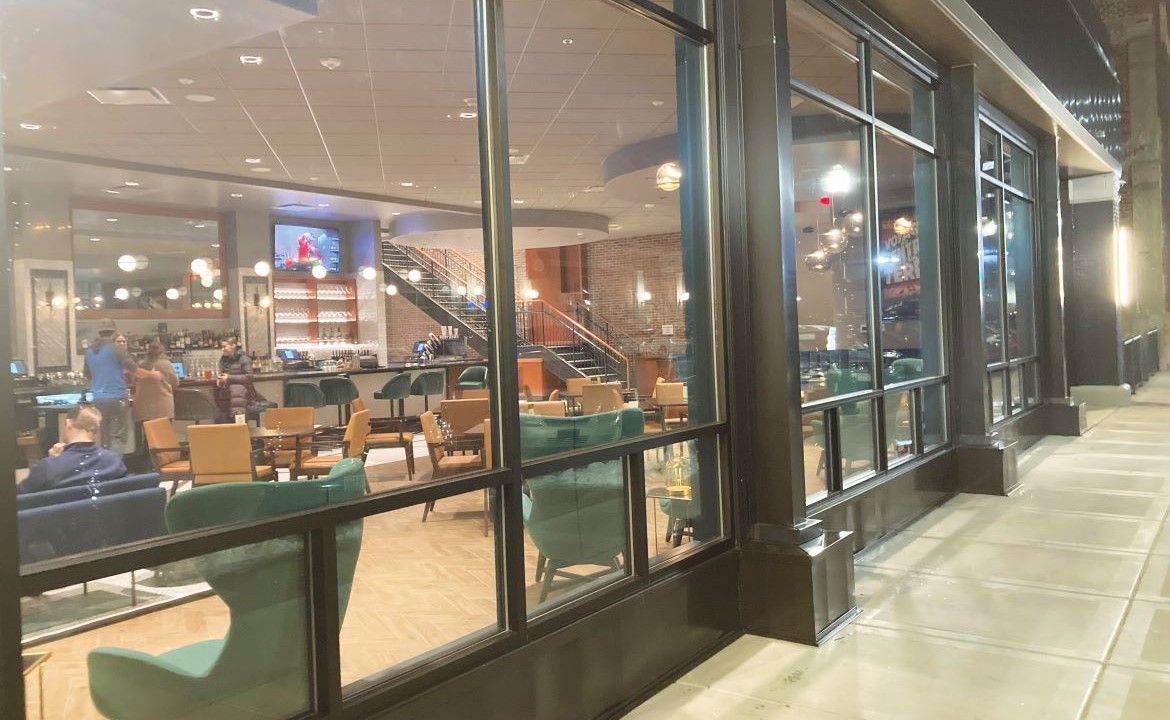
The building that houses the Village Theatre (2113 East 11th Street, Village of East Davenport) has a long and colorful history. Recently sold, it faces an uncertain future, and likely will not be called a theatre in its next act.

After seven years tucked nearly out of sight in downtown Davenport, the growing Bix Beiderbecke Museum & Archive is raising money for a move across the street.

In its nearly quarter-century of existence, Nahant Marsh in southwest Davenport has worked to grow and improve inside and outside its borders.

How did the City Administrator, who hired the department heads that mismanaged two of the city's big

How did the City Administrator, who hired the department heads that mismanaged two of the city's biggest disasters in modern history, secure a $1.6MM payment for emotional damages and lost wages in secret without a city council vote until after the 2023 municipal elections?

Important note to the reader: All underlined phrases in the timeline below hyperlink to the document that corroborates that statement. Most of the hyperlinked documents were acquired through Freedom of Information Act (FOIA) requests. 

Demolition Site at 324 Main Street in Davenport, Iowa on June 13, 2023

How Did the City of Davenport, Iowa Allow This Disaster to Happen? All citations below linked to source documents regarding the history and demise of the building and lives inside 324 Main Street in downtown Davenport, Iowa and were either acquired via Freedom of Information Act requests made to the city of Davenport, or are publicly available documents or links to published articles.

The transformation of East Second Street in downtown Davenport is truly remarkable. And The Last Picture House (TLPH) movie theater that launched its soft opening at the corner of Second and Iowa Streets is a phenomenal transformation.

On Monday July 14, 2014 Davenport Mayor Bill Gluba hosted a roundtable discussion at the Davenport Public Library. The purpose of the meeting was to address the influx of migrant children coming in from Central America into the United States and how a Quad Cities based "Caring Cities" campaign could assist.

The meeting was approximately 50 minutes long. This video has been edited down to 17 minutes.
In attendance and identified on the video are:
Mayor Bill Gluba, City of Davenport
Glenn Leach, Davenport Catholic Diocese
Mike Reyes, League of United Latin American Citizens
Cheryl Goodwin, President Family Resources
Mr. Ortiz, Outreach and Community Enrollment Coordinator for Community Healthcare
Rick Schloemer, Scott County Housing Council
Stephanie Lynch, Doctoral Candidate University of Iowa
Amy Rowell, Director of Moline World Relief
Byron Brown, Retired ARMY, CEO at TGR Solutions

[Note: Not every individual seated at the table is identified by name in the video. We are happy to update this story with any missing participants.]

Hunger is a human problem with millions of faces, but two related numbers can illuminate the size of the problem in the Quad Cities - and the heartwarming community generosity that's fighting it.


The first number: Christian Care served nearly 56,000 meals last year at its meal site, according to Executive Director Elaine Winter. The second: "Our budget [for food] is about a thousand dollars a year," she said.

The site at 2209 Third Avenue in Rock Island serves 19 meals week. (There's no lunch on Saturday or Sunday.) On average, then, it was feeding more than 57 people per meal. The cash cost per meal? Less then two cents.

What this one site illustrates is that food assistance beyond what taxpayer-funded government programs provide is a real, persistent need in the Quad Cities. And the community - through churches, charitable organizations, and individuals - has been meeting the need.

The bad news is that hunger appears to be growing.

The grim math for Hope Creek Care Center is pretty simple. Changing it is not.

Right now, the 245-bed Rock Island County-run nursing home in East Moline is paid $127.48 by the State of Illinois for each Medicaid recipient it houses. The cost to care for each person, said Administrator Trudy Whittington, is $200 a day.

And because by law government-run homes can't turn away Medicaid recipients, typically more than 60 percent of Hope Creek residents are on the state/federal public-aid program.

So Hope Creek is nearly $4 million in the red each year from that disparity alone, and the current property-tax subsidy for the nursing home doesn't cover it. And that doesn't even consider other factors related to state government - such as late reimbursements and delays in approving Medicaid applications.

In that context, Rock Island County officials on October 10 bluntly announced that "after providing an option for the long-term-care needs for residents of our county since 1839 in one capacity or another, the county is looking to divest itself from the nursing-home business due to forces beyond our control that have made that commitment impossible to continue. ... The Rock Island County Board will take official action at their November 19 meeting to explore the potential of leasing or selling Hope Creek Care nursing home."

That statement brought immediate backlash - by the union representing Hope Creek workers, and by people concerned about the fate of Medicaid recipients who live at Hope Creek or might need to in the future. The county quickly retreated, and County Board Chair Phil Banaszek appointed an ad-hoc committee to look at other options.

Whittington said selling or leasing Hope Creek is Plan D and Plan E at this point - but the county would be remiss if it didn't do its homework on those alternatives. "We have to start looking at what Hope Creek's options are," she said last week. "If we don't do something, those may become our only options. ... That is ... our last resort."

The Rock Island County Board could as soon as its November 19 meeting take some sort of action on Hope Creek. The most likely course is approving a referendum question for the November 2014 ballot to raise property taxes in 2015 to further subsidize Hope Creek.

Developer Tim Baldwin in the Democrat building. The skylight, he said, will be integrated into the design of one apartment.

It would be natural to look at the volume of housing being developed in downtown Davenport and infer some coordinated process or a major new incentive program. Roughly 300 market-rate apartments are either recently finished or in the development process.

There's undoubtedly a trend here. The Downtown Davenport Partnership - part of the Quad Cities Chamber of Commerce - noted in its strategic plan from earlier this year that "nearly 100,000 square feet of office space is currently planned for conversion to residential units."

That includes 11 different projects from seven different developers.

And while the Downtown Davenport Partnership has been a key player, its director - Kyle Carter - said his organization's role has been to "help guide that process. Not own it, guide it. ...

"We always give advice when these developers are shopping," he said. "But the vast majority of those plans are developer-driven. If anything, I'm the tour guide. I'm the guy that is showing the buffet of options down here. So I will certainly push for projects that I think are more catalytic, or locations that will have bigger benefits for the whole down here."

In other words, local government, a downtown organization, or a plan with the scale or taxpayer cost of River Renaissance isn't behind this housing boom. It's largely happening on its own.

Pages