
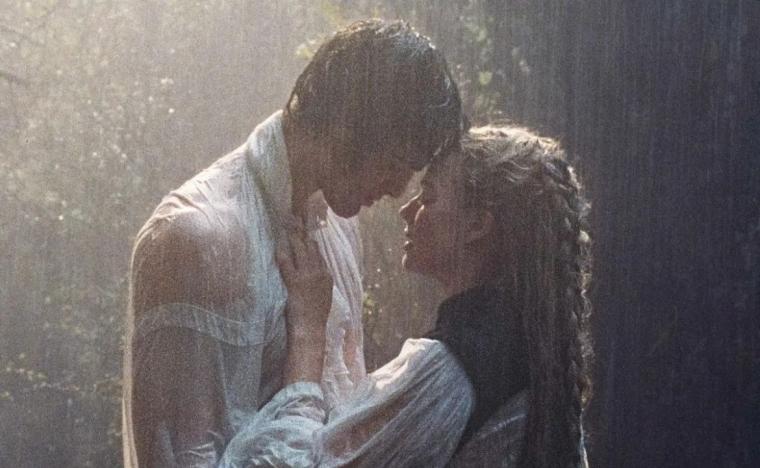
Jacob Elordi and Margot Robbie in "Wuthering Heights"
Because the experience felt so unusual, I actually checked my archives to make sure, and it was true: This past Thursday-through-Saturday marked the first time since pre-COVID that I viewed six new big-screen releases over the course of three days. Every so often during the 2020s, I have covered a half-dozen or more movies in one article. But those pieces always featured at least one streaming title, and didn't require the purchase of six separate tickets and trips to three separate local theaters. (Do your best to ignore that my personal film fest took place over Valentine's weekend, which likely tells you more about my romantic life than I'm comfortable with you knowing.)
So let's take a look at the movies I saw in the order I saw them. And while I'll inevitably fail in the task, I'll do my darnedest to be less wordy than usual, because, you know … . Six. None of us want to be here all day.
Thursday, February 12, 3 p.m. Knowing how many screenings I'd like to attend, and needing to be at that night's play rehearsal by 6:30 p.m., I realize a mid-afternoon showing of Emerald Fennell's “Wuthering Heights” at the Davenport Cinemark will fit perfectly into my cinematic game plan. What I hadn't anticipated was that the writer/director's aggressive, hyper-symbolic, 140-minute Emily Brontë adaptation would leave me so fuzzy-brained that I'd be in no shape to properly act or pick up line cues. To clarify, this wasn't the enjoyable sort of wooziness you sometimes feel after a transcendent movie experience, where you don't feel quite in the real world because of how much you want to stay in the make-believe one. This was an oppressive lightheadedness – the kind you'd feel after five rides on the same roller coaster, or a meal composed solely of greasy fast food and candy. I didn't want to relive my time spent with Catherine and Heathcliff on the moors. I just wanted a nap.
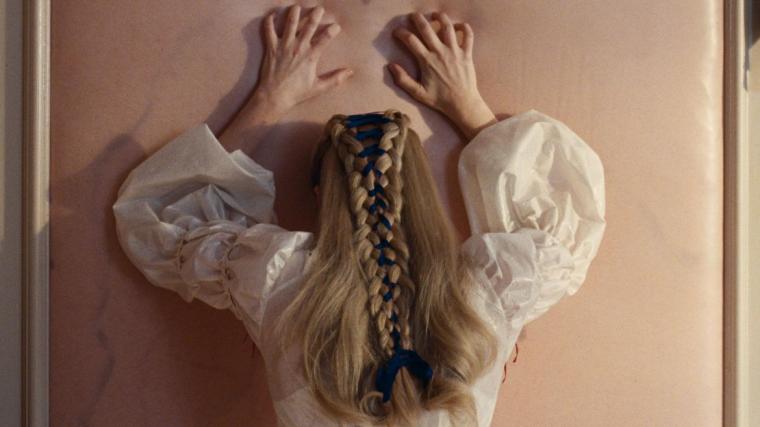
It should be stated up front that I have no particular affinity for Brontë's 1847 literary classic, which I'm pretty certain I read in college, or at least thoroughly skimmed as part of an assignment. I'm also not completely sure that I'd ever before seen a film version, though there have been myriad interpretations over the years. I did recall enough, however, to think that when the new film's previews declared Brontë's tale of high-minded Catherine and her impoverished, pseudo-stepbrother Heathcliff “The Greatest Love Story of All Time,” the sentiment was way off the mark. “The Most Perverse Love Story of All Time” would've been far more accurate. (While Fennell's movie boasts new songs by Charli XCX, whose own movie we'll dive into later, the soundtrack might just as well have played a feature-length loop of Lady Gaga's “Bad Romance.”) The other thing that should be acknowledged immediately is that Fennell's rendition, as the stylization makes clear, isn't precisely titled Wuthering Heights. It's “Wuthering Heights” with quotation marks, implying that this isn't meant to be a wholly faithful rendering of Brontë's novel, but rather an idea of the novel, or maybe a visualized expression of how the novel made Fennell feel. Which, the evidence suggests, was apparently horny as hell.
Everyone I know gets turned off by the adjective “moist,” and Fennell's deliberately overheated period drama might be the moistest movie I've ever seen. Played, as adults, by Margot Robbie and Jacob Elordi, Catherine and Heathcliff are in a constant state of glisten, be it through blood, sweat, tears, or, most frequently, rain. I began to think the pair was incapable of an outdoor confrontation unless they saw storm clouds overhead. Yet Ferrell's soundscape is moist, too. Between the puddles and the mud and the sensuous kneading of bread, “Wuthering Heights” is palpably squishy – even Cathy's bedroom walls appear made of flesh – and Fennell's choice to erotically charge every last moment its leads share would be good for appreciative giggles if she weren't treating their doomed love with such unrelenting self-seriousness. After she stops her petulant-teen act in adult Catherine's early scenes (which underscore her age-inappropriateness), Robbie has a number of affecting sequences, and Elordi does commendable work with Heathcliff's desperation, cunning, and cruelty. But the stars aren't convincingly matched as a couple, at least not this couple, given that their every exchange is so oppressively weighted with solemn portent. Catherine and Heathcliff themselves seem under the impression that theirs is “The Greatest Love Story of All Time” and behave accordingly, which makes Robbie and Elordi the very last thing they should be in this amped-to-11 interpretation: dull.
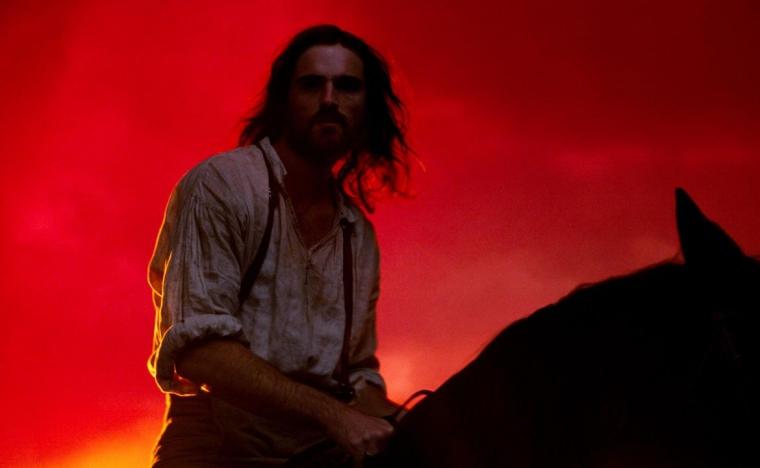
To be fair, there was much here that I admired, though little of it had to do with the leads. The movie's finest Catherine and Heathcliff, in truth, are the ones who open the film: young actors Charlotte Mellington and Adolescence Emmy winner Owen Cooper, whose delicate build of their characters' burgeoning affection is friskier and more touching than anything Robbie and Elordi provide. Although they respectively bring to mind Dickens and Austen rather than Brontë, Martin Clunes (as Catherine's inebriate father) and Alison Oliver (as the pitiable dullard Isabella) deliver rich, ripe caricatures, with Shazad Latif unfailingly empathetic as poor Edgar Linton. Hong Chau, meanwhile, is subtly marvelous as Catherine's adult servant and confidante Nelly Dean, so clearly fed up with her employer/friend's romantic histrionics that she perhaps unwittingly serves as the audience surrogate. Fennell's bitchiest, most delightful dialogue exchange, which I'm reasonably certain isn't in the Brontë, finds Catherine insidiously telling Nelly “I think you like it when I cry,” to which Nelly replies, “Not half as much as you like crying.” Zing!
As photographed by cinematographer Linus Sandgren with a bold, occasionally retina-searing color palette, Fennell's latest looks great, and composer Anthony Willis' swooning score and those vibe-driven, anachronistic Charli XCX tunes make it generally sound great. Yet you also feel “Wuthering Heights” too often straining for great. Depending on the shot, you can see its romantic-epic influences all over the place: a little Gone with the Wind here, a little Douglas Sirk there, a little Baz Luhrmann everywhere. Yet the end result is still a hodgepodge of influences, most especially Brontë's influence, that don't produce a believable or meaningful central relationship that would overcome nearly all quibbles; it's a romantic tearjerker during which it's too easy to stay dry-eyed. And not for nothing, but Fennell, as a writer/director, really needs to start extending her range – in the wake of 2020's Promising Young Woman debut and 2023's Saltburn, she's now three-for-three with films featuring a guy sobbing in despair on top of a corpse. That's pretty niche. In all three instances, it's also pretty icky.
So much for being less wordy than usual. I promise to improve from here on out!
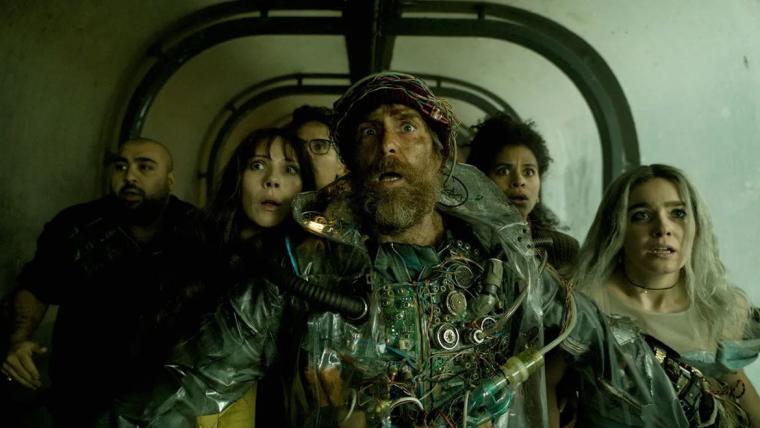
Friday, February 13, 10:30 a.m. I land at Moline's VIP Cinemas to see one of the few 2026 titles, to date, whose preview truly grabbed me … and in a lovely surprise, the movie is even better than its trailer suggested. It's the sci-fi action comedy Good Luck, Have Fun, Don't Die, which is directed by Gore Verbinski, the helmer of the first three Pirates of the Caribbean flicks and The Ring and Rango who, amazingly, hasn't directed a feature since 2016's A Cure for Wellness. Though I could probably find out, I have no idea what caused the decade-long sabbatical. (The term “sabbatical” actually gets quite a workout in Matthew Robinson's GLHFDD script.) All throughout the movie, though, I'm silently bemoaning the fact that we've gone a decade without him, because Verbinski appears to be at the absolute height of his visual inventiveness. This fantastically entertaining film is like a big-screen video game, but not in the stultifying Iron Lung way, and with a trio of topnotch Black Mirror episodes tucked inside as a bonus.
Yet the achievement's true grandness lies in the way it moves – nimbly, dexterously, and not unlike lead Sam Rockwell in its introductory diner scene. Performing a frenzied, heavily expository, 10-minute monologue with only scattered interruption, Rockwell slides from table to booth and leaps on and off countertops randomly sampling customers' dinners, and the fluid grace with which he sustains the stunt is matched by the joyous alacrity with which Verbinski's camera captures it. Rockwell, who can be one of our most physically electrifying actors, once played Bob Fosse, and did so beautifully. In this sequence and elsewhere, Verbinski directs like Fosse, and proves equally up to the challenge.
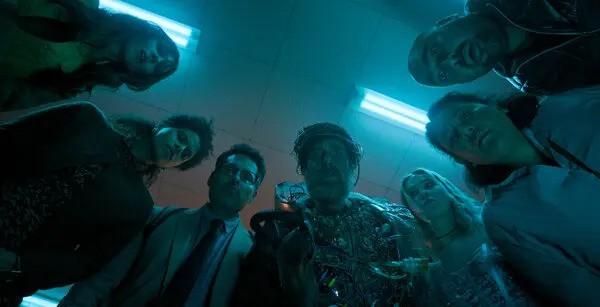
GLHFDD's central conceit finds Rockwell's unnamed man from the future time-traveling, John Connor-style, to present-day Los Angeles to recruit the team he needs to prevent Earth's annihilation at the hands of sinister AI. He announces that he's made 116 trips prior to this one, and has yet to find the right combination of volunteers. The one he amasses for this venture – a crew collectively enacted by Juno Temple, Zazie Beetz, Michael Peña, Haley Lu Richardson, Asim Chaundhry, Georgia Goodman, and Daniel Barrett – doesn't inspire much hope for our survival. But off they go, alternately evading and battling police, lunatics in hog masks, and the occasional skyscraper-tall kitten/centaur hybrid, and no other movie I've seen this year has made me so colossally happy.
Because the film's present-day is, as we eventually discover, the future, or at least a Bizarro-world version of now, the Reservoir Dogs-y flashbacks detailing what led patrons to this particular diner on this particular night are as strange, scary, and sickly funny as the main narrative. (Robinson's script is also intensely subversive, and anyone who thinks the film makes light of school shootings should look again, as it's actually presenting a deeply moral decimation of our national acceptance of school shootings.) And this knowledge of the volunteers' backstories – only the famous actors, admittedly, are allowed any – gives the video-game mayhem genuinely human context while also allowing the pieces of Verbinski's and Robinson's expansive jigsaw puzzle to fall neatly into place. At 135 minutes, Good Luck, Have Fun, Don't Die is almost inarguably overlong, and too cagey about what the AI threat actually is, and certainly sanctimonious about its loathing for the brainwashing effects of social media, particularly in regard to teens. Still, I roared at the imagination and audacity throughout, was knocked out by the portrayals (though one performer, toward the end, definitely could've used some diction lessons), got a little misty-eyed when I didn't expect to, and appreciated that a movie whose finale was so nihilistic also found an ingenious way to keep hope alive. I'd watch this one again in a heartbeat.
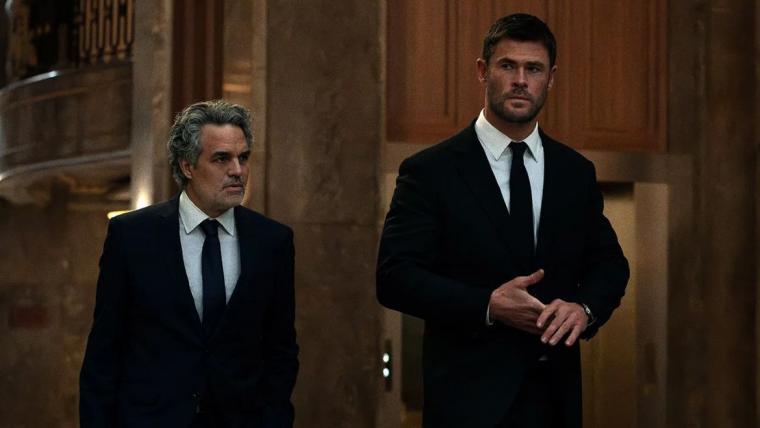
Friday, February 13, 12:50 p.m. Part of me really wants to go home and simply savor the whole, goofy, glorious GLHFDD experience. Yet duty calls, and the timing for this duty is ideal, as writer/director Bart Layton's jewel-heist thriller Crime 101 starts just a couple minutes after the Verbinski ends, and in an auditorium almost right next door. I'm merely hoping that Layton's film won't sully my previous two-plus hours of enjoyment. If anything, it winds up augmenting those hours, because this turns into one of the most winning double features I've attended in quite some time. For many, calling the movie “Heat lite” would be a major pejorative, given the intense fandom that Michael Mann's De Niro/Pacino noir has engendered over the decades. But sue me: I didn't really care for Heat the one and only time I viewed it. I do remember it well enough, though, to know that Crime 101, despite its silly title, is what I was hoping Mann's 1995 movie would be: more varied, less oppressive, open to moments of lightness and spontaneity, and not almost three hours long.
Chris Hemsworth plays James Davis, a.k.a. Mike – a disillusioned career criminal whose string of jewelry-store robberies along L.A.'s 101 freeway has confounded law enforcement for years. Mark Ruffalo plays Lou Lubesnick, the only detective on his force who believes said holdups to be the work of one man with a singular m.o. Halle Berry plays Sharon Combs, a claims adjuster investigating one particular robbery for her insurance company. And as their individual narratives converge, the movie amply displaying a specifically Michael Mann sort of gritty urban bent, Layton's film reveals its chief inspiration not to be Heat, but rather Jackie Brown. The film is nowhere near as funny, twisty, or verbose as Tarantino's 1997 masterpiece, but it's similarly interested in the stresses and practical, potentially larceny-minded considerations of strugglers in middle age, whether encroaching or deep-in-the-midst. If anything truly links Crime 101's three central figures, it's that they're all tired: tired of not having a life; tired of not having the life they want. And for this late-middle-aged viewer, at least, watching Mike, Lou, and Sharon grasp for fixes to their malaise was incredibly touching, just as it was watching Pam Grier and Robert Forster do the same in the Tarantino.
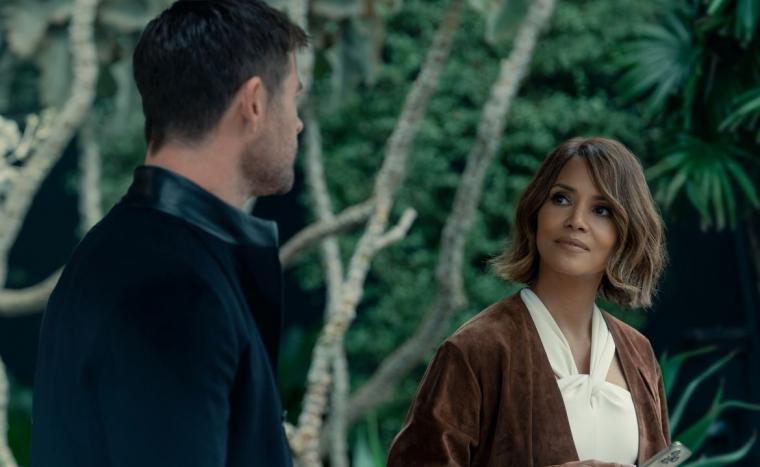
You root for Mike to find happiness with the woman he Meet Cutes with following a routine fender bender. (That this gal is played by the magically charming Monica Barbaro helps immensely.) You root for Lou to not only prove his suspicions correct, but to better himself after he loses his unwise mustache and takes up yoga, his unfaithful wife having recently left him. (Jennifer Jason Leigh plays Lou's spouse for all of a scene-and-a-half, leading me to suspect there is a three-hour cut of Layton's movie out there.) You definitely root for Sharon when her piggish boss rationalizes her not being promoted to firm partner by simply saying “53” – a mean reference to Sharon's age, even though that unearthly beauty Halle Berry doesn't look a day over 40.
I'm probably giving the impression that Crime 101, which is primarily a character piece, isn't exciting. It most assuredly is. Layton stages gripping, knuckle-tightening car chases, the heists are edited with spectacular precision, and a bleach-blond Barry Keoghan is on hand, in supremely feral form, as a fellow thief with a frightening temper and no moral compass. (Keoghan also delivers the movie's biggest laugh with his tantrummy reaction to a foiled escape attempt.) But this first-rate entertainment that also finds room for the equally well-served Nick Nolte, Corey Hawkins, and Tate Donovan is first and foremost a blessedly human entertainment, delivering wonderful genre set pieces around complicated, believable figures who would be sustaining enough without them, and whose personal trajectories enable the tale's true excitement. The fade-to-white at the end arrives like sunshine, and while Layton's movie may bring the Heat, it also offers a most welcome, totally relaxing chill.
Okay. I'm obviously not doing much better on the less-wordy front. Howzabouts a sole (admittedly lengthy) paragraph apiece on the other three?
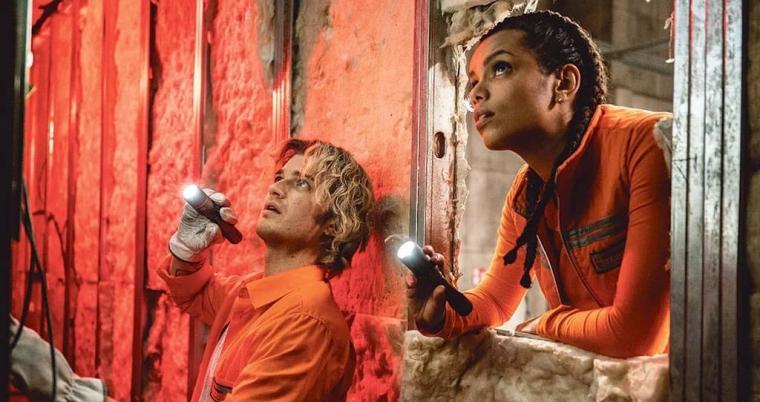
Saturday, February 14, 9:55 a.m. There are more patrons than I expected joining me for VIP Cinemas' morning screening of Cold Storage, and considering the under-the-radar nature of the horror comedy's marketing, I wonder what drew them here. Maybe they're fans of star Joe Keery from his music career and Stranger Things? Maybe they're viewers who instinctively seek out Liam Neeson in anything? Maybe they're cinephiles who heard Vanessa Redgrave was in the cast? Regardless, director Jonny Campbell's slapstick gross-out, its script by the formidable David Koepp, concerns a gooey, murderous fungus that attached itself to a piece of fallen Skylab debris and now threatens to take over Kansas, and … . Hang on. Vanessa Redgrave?!? What the actual eff?!? The 89-year-old acting legend is not figuratively but literally the last person I expected to show up in a rowdy, kinda-endearingly juvenile throwaway such as this. And while it hurt to hear how age has affected her gorgeously distinctive low voice, I was practically giddy at the sight of Redgrave, still eternally beautiful, blowing an infected monster's brains out with a handgun. Redgrave's participation was so dementedly incongruous that it almost turned into afterthoughts the sturdy supporting role assumed by fellow esteemed Brit Lesley Manville (!!!), and the fact that third-billed Sosie Bacon – the gifted Kevin/Kyra nepo baby who starred in Smile – was basically playing the Gwyneth Paltrow part in Contagion. I can't fathom what evil wizardry Campell and Koepp concocted to get these women – and Neeson, and Keery, and Barbarian star Georgina Campbell – on board. But the performers lend considerable charm and/or gravitas to this dopey lark whose insouciance keeps it from ever being adequately intense, and whose sardonic, none-of-this-really-matters-so-why-pretend? smugness keeps it, random chuckles excluded, from being satisfyingly funny. Hopefully, this won't be Redgrave's cinematic swan song. Or perhaps it should be. That would likely tickle the bejeezus out of her.
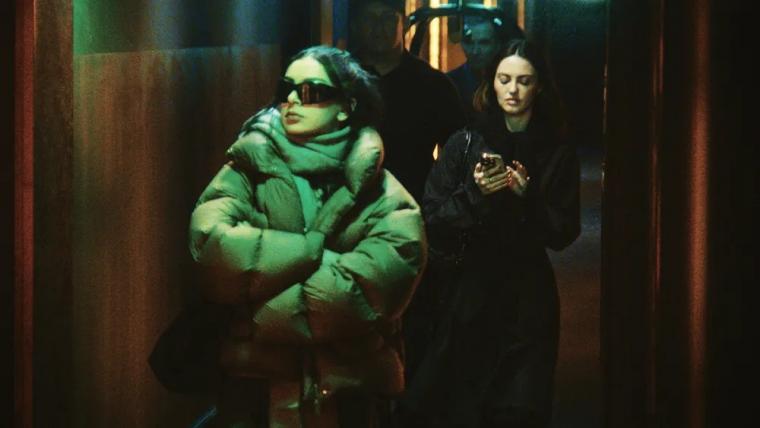
Saturday, February 14, 1:50 p.m. Having somehow missed the Brat summer, and being an old fart who hasn't actively listened to popular music since the heydays of Michael Stipe and Bono, my awareness of Charli XCX prior to Saturday's screening of The Moment at Davenport's The Last Picture House was limited to the songs she composed for “Wuthering Heights.” You know – the songs I'd first heard two days prior. That probably didn't make me the ideal viewer for director/co-writer Aidan Kamiri's mockumentary, which re-imagines that fateful summer of 2024 as a comically hellish season in which nearly everyone in her professional orbit wants the Brat party to go on forever, and the artist herself has little to no control over her fate. It's inconceivable that anyone could mistake this mock doc for a legit doc, given the casting of familiar English comedian Jamie Demetriou, Rosanna Arquette (whom it took me a mortifyingly long time to recognize), and Alexander Skarsgård, the latter with all of his chiseled, grinning assholery intact. There is, however, a case to made for confusion, because unlike most mockumentaries, Kamiri's isn't funny. Or rather, it's sometimes funny, but only in vague, sidelong ways that might be more apparent for those with greater familiarity with its subject. Based on what I've learned about Charli XCX, she doesn't suffer fools gladly. Here, she suffers fools constantly and weirdly willingly, and while she appears to possess a natural comic deadpan and is a totally engaging screen presence, Zamiri's script (co-written by Bertie Brandes) insists on making its lead an inactive participant in her own meltdown. Making her a stooge with no agency effectively neuters the feature-length joke, and it was hard to tell what we were meant to feel for Charli, or “Charli,” by the finale. Sympathy? Pity? Solidarity? It's an inventive-enough stab at a tricky idea to pull off, but The Moment is still little more than a series of moments, and unfortunately for us, Arquette and Skarsgård and the ideally cast Kylie Jenner (as a “fictionalized” version of herself) aren't always around.
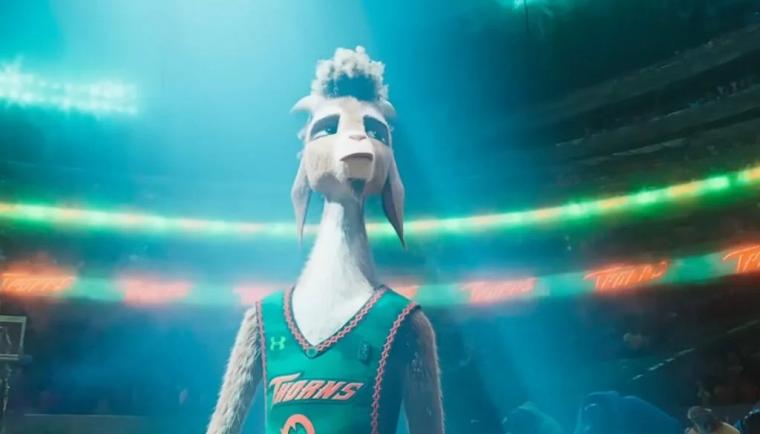
Saturday, February 14, 4:55 p.m. For those of you concerned that my Saturday triple feature didn't allow for a Valentine's Day date, allow me to correct you, because my favorite 11-year-old kindly agreed to join me at Davenport's Cinemark for a late-afternoon viewing of GOAT. (Please don't #PersonOfInterest me; it's because of my young friend that I've been able to review animated family comedies over the last eight years without looking like an aged creep who attends kiddie flicks solo.) My moviegoing companion and I have seen some wonderful films together, most notably The Wild Robot. We also saw Playmobil: The Movie. Director Tyree Dillihay's sports-themed outing, it's safe to say, fell somewhere in between. Telling of a young goat (Caleb McLaughlin) who aches to be a superstar in the anthropomorphic world of animal roarball – which is essentially just basketball with video-game changes in locale – the film doesn't have much on its mind beyond informing its audience that (1) you don't have to be big to be a hero, and (2) grown-ups have hang-ups, too. For anyone who's seen one of these prototypically inspirational animals-guising-as-people entertainments that doesn't posses the preferred Zootopia wit, there's really nothing new to report, and despite the recently ingested Sour Patch Kids (or maybe because of them), my pre-teen pal was slumped in their seat with at least 20 minutes still to go. But the movie isn't bad. Advertising the film as “from the artists that made KPop Demon Hunters and Spider-Man: Across the Spider-Verse” is really just a grabby way of saying GOAT kind of looks like them, but the animation does have some visual kick, and the script provides a number of decent verbal gags that made me (and the only other adult in earshot) chuckle. And with additional vocals provided by Gabrielle Union, David Harbour, Aaron Pierre, Nick Kroll, Patton Oswalt, Jennifer Hudson, and Jelly Roll, the cadences of diva supreme Jenifer Lewis were instantly recognizable, and lushly, imperiously funny. GOAT may have ended my weekend's cinematic sextet on a mild bummer, but at least it was mildly preferable to the bummer that started it.