
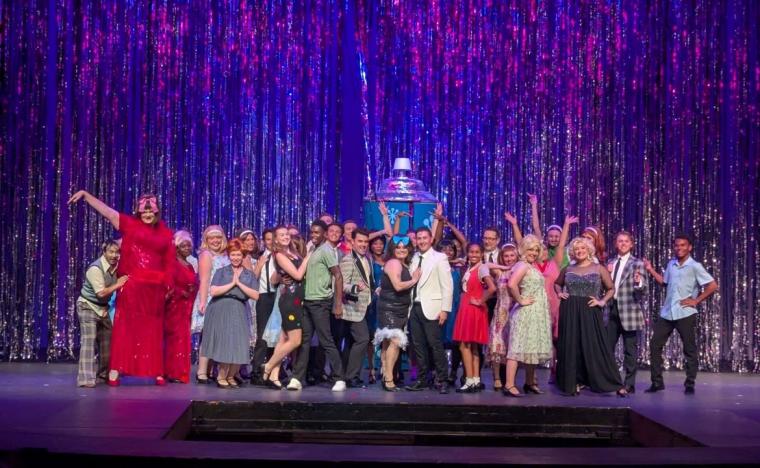
Ensemble members in Countryside Community Theatre's Hairspray
And they said it couldn't be done!
Well, actually, no one to my knowledge ever said that … .
But who cares? It was done, dammit! Our annual celebration of area theatre, the Reader Tony Awards, has made it to its 10th anniversary! This assessment of (some of) the finest in local and local-ish stage entertainments is back, with last year's roster of participants – Pamela Briggs, Madeline Dudziak, Alexander Richardson, recently married authors Mischa and Kitty Hooker, and yours truly – again sharing praise for favorite shows, performers, tech achievements, and memorable moments of 2025! Will miracles never cease?! (To be honest, no one has suggested any part of this event as miraculous. And I'm using too many exclamation points. But it's hard to stop the excitement train after it rolls away from the station.)

Over the course of 12 months, our quintet of intrepid reviewers – two of them bound by wedding rings and generally working in tandem – covered 66 stage productions, with everyone critiquing between a dozen and two dozen shows apiece. But because all of these gifted writers are devoted theatre-hounds, rest assured that they saw way more area presentations than the ones they wrote about, and despite family commitments not enabling me to see as much 2025 theatre as I would've liked, I made it to more than two-dozen area productions myself. All of this is to say, as always, that while this might be a sampling of local stage awesomeness, it's by no means meant to be a definitive account. Greatness abounds in our stage scene. This is merely a taste.
While acknowledging 15 venues or companies the way we did in 2024, a full 42 shows are recognized here compared to last year's three dozen, with the favorite-production and -director citations alone making a case for the breadth of the area-theatre experience in '25. Seriously: Steve Martin, Harvey Fierstein, James Goldman, Edie Brickell, Gilbert & Sullivan, Sarah Ruhl … even the Bee Gees. This year, as every year seems to, truly gave us a little bit of everything.
For those new to this annual online shindig, or for the feverish rules-hounds among you, here are the basics regarding consideration for citation. None of the Tony bestow-ees could cite a show more than three times – this year, no one ventured further than two – and every chosen title had to be produced in the area, making Adler Theatre tour stops, for instance, ineligible. No one could acknowledge a Reader reviewer, editor, or family member, though productions that any of us were involved with were eligible elsewhere, as were spouses if picked by someone other than the person they were married to.
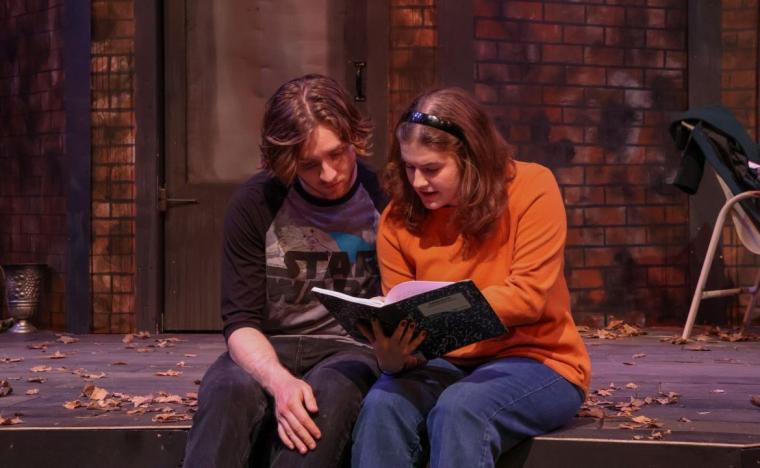
No one could cite any presentations they directly participated in, and ties – as you'll see below, even eight-way ties! – could happen so long as two or more performers from the same show had roughly equivalent stage time and/or impact. And as has been our practice for the past nine years, nobody's individual write-up could exceed 50 words – at least 50 as counted by my laptop's spellchecker that I will readily admonish for considering hyphens words. Hyphens are not words. But as I'll take this argument with Dell to my grave, there's no use rehashing it here.
On behalf of Pamela, Madeline, Kitty, Mischa, Alex, and myself, thanks for being such devoted admirers of – and, hopefully, at-least-occasional participants in – this art form we all love so much, thanks for your continued interest in the Reader's coverage of the area stage scene, and here's to the happiest of holidays and a wonderful new year for us all! See you in 2026!
- Mike Schulz
Production
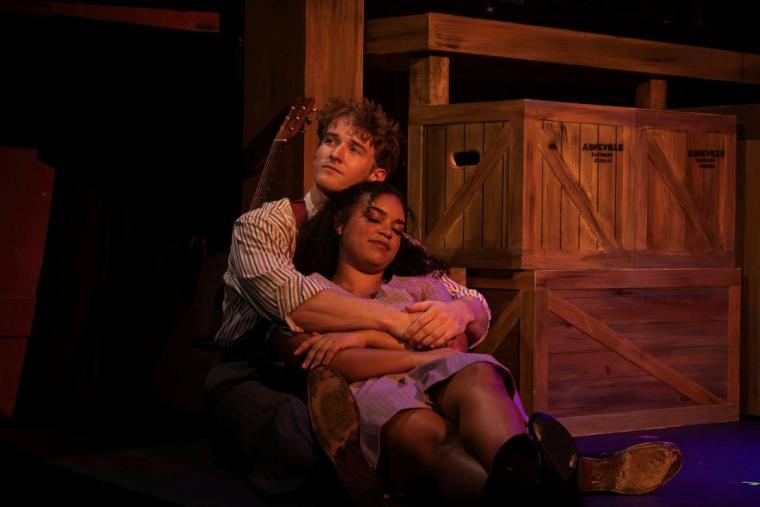
Bright Star, Clinton Area Showboat Theatre (Madeline Dudziak). Bright Star had everything. Between book writer Steve Martin’s soulful story, director Courtney Ryan Crouse’s beautiful staging, the live bluegrass music, and the deeply invested cast, it delivered unshakable energy, emotional resonance, and performances that lingered long after the final banjo note. I only wish I could've seen it again.
Come from Away, Circa '21 Dinner Playhouse (Mike Schulz). I honestly don't know how this glorious 9/11-themed musical could've been better. Between director M. Seth Reines' inventive direction, peerless cast, and unimpeachable tech, it was awfully close to faultless. We frequently laughed, we cried without arm-twisting, and the whole shebang, intermission included, clocked in at two hours. Circa perfection.
Eurydice, St. Ambrose University (Mischa Hooker). A fine Sarah Ruhl script adapting an ancient myth; a cerebral, highly expressive presentation; superb portrayals of difficult characters; an effective, flexible set making complete use of St. Ambrose’s studio-theatre space: Director Daniel Hale's show had it all, with not a weak link to be seen. I was mesmerized throughout.
Hairspray, Countryside Community Theatre (Pamela Briggs). Music, color, dancing, laughs! The libretto: phenomenal. The prodigious talent: breathtaking. The leads, supporting performers, ensemble members, musicians, crew people: fully committed. The overall vibe: pure joy. Co-directors Keenen Wilson and Steph Bley nurtured this seedling, and it blossomed into exquisite, dazzling life. Compassion wins. Let’s dance!
The Lion in Winter, Black Box Theatre (Kitty Hooker). Anchored by James Goldman's brilliant script, director Noah Hill's production found its spark in Jeremy Mahr’s Henry II and Lora Adams’ Eleanor. Their verbal sparring balanced sharp humor with moments that quietly broke my heart. A strong supporting ensemble and eye-catching costumes rounded out a night that never lost momentum.
Saturday Night Fever, Timber Lake Playhouse (Alex Richardson). There’s something to be said for doing a show with passion. There was so much detail and care poured into every element of director Tommy Ranieri's production that I’m hard-pressed to think of what could be improved. And seeing audience members remember their youth is an unmatched communal experience.

Director
Daniel Hale, The Pirates of Penzance, St. Ambrose University (Kitty). Hale’s inventive direction made this show a theatrical playground. A rolling pirate ship entered and exited with flair; cast members handed out props and broke the fourth wall; and the intimate space amplified both the music and the comedy. Hale captained an evening that was lively, cozy, and unforgettable.
Noah Hill, Titanic: The Musical, Spotlight Theatre (Pamela). The epic tragedy played out beautifully, painfully; as massive as an iceberg, as small as a human heart. Ingenious staging – the entire theatre became the ocean liner; detailed costumes; compelling acting; uplifting, powerful singing voices. Hill showed us the big picture and the complex, agonizing realities for each soul.
Jennifer Kingry, Marjorie Prime, Richmond Hill Barn Theatre (Mike). Guiding her remarkable ensemble of Jalayne Riewerts, Lorrie Lord, Kevin Babbitt, and Eric Friedman, Kingry crafted the most unsettling, moving, barely futuristic sci-fi imaginable, her climactic scene underscored by Arvo Pärt's “Spiegel im Spiegel” so staggeringly, hauntingly effective that it'll likely never leave my brain. I never want it to.
Jennifer Popple, Proof, Augustana College (Mischa). There was so much to love in this production, but what impressed me most was how Popple brought out such wonderfully subtle shades of characterization in every single performance. The actors themselves stepped up to the task, but Popple merits paramount credit as the mastermind behind it all.
Elizabeth Shaffer, The Tell-Tale Farce, Richmond Hill Barn Theatre (Madeline). Shaffer unapologetically embraced farce, leaning into absurdity through precise physical comedy, playful sight gags, and committed horseplay. Her staging and cast, reveling in the improbability, delivered exaggerated characterizations and expected ridiculousness, and succeeded – through confident directorial clarity – by never shying away from the implausibility.
Dana Skiles, The Woman in Black, Richmond Hill Barn Theatre (Alex). Bravo. Months later, I’m still trying to figure out how some of the theatrical trickery worked in this killer production. The way every element of the show blended together under Skiles’ excellent direction to tell a ghost story was a sight to behold – and hear.

Lead Actress
Shelley Cooper, Solo Fringe Fest: Rag Doll on a Bomb Site, Black Box Theatre (Mischa). Cooper has written and performed a series of remarkable one-woman shows over the years, but for her latest, she has truly outdone herself, representing the talent and trauma of Lotte Lenya in a way that fully embodies the subject … and writing her own original music for it, as well!
Emily Gardenhire, Waitress, Timber Lake Playhouse (Alex). The role of Jenna was practically handcrafted to fit composer Sara Bareilles perfectly. That Gardenhire often sounded better than Bareilles is accomplishment enough. But on top of that, Timber Lake's lead gave a show-stopping and powerful performance that made Waitress as sweet as pie.
Kassidy Holdridge, Dear Jack, Dear Louise, Black Box Theatre (Madeline). Holdridge brought sensitivity, humor, and heart to her letter-driven role with lively energy and emotional depth. Equally adept at comedy and sincerity, she made Louise’s curiosity, courage, and growing vulnerability feel natural, anchoring the sweetness without tipping into schmaltz. And she was a perfect match for Zach Zelnio. (See below.)
Isabella Holmes, Girls' Weekend, Playcrafters Barn Theatre (Pamela). Holmes' Meg, crushing on her BFF’s son, already had a heaping farcical plate, and the performer piled on more with her full-body comedic prowess and timing. Whether awkwardly hitting on a self-conscious sheriff to distract him or dissuading her relentless younger-by-a-decade swain, she was an uproarious treasure.
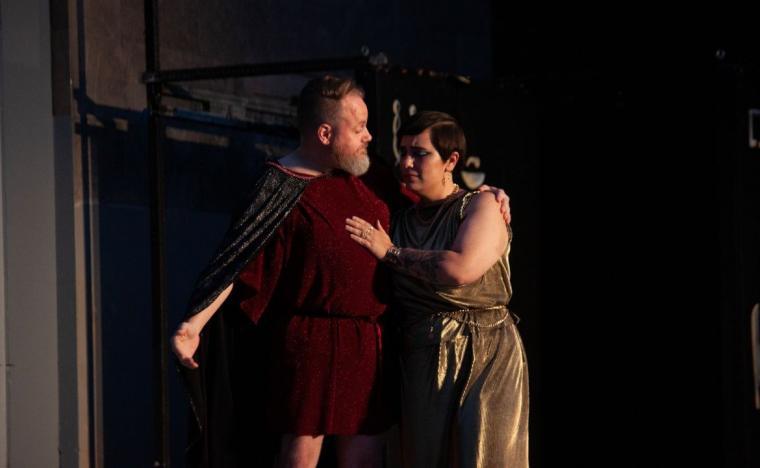
Cayla Odendahl, Much Ado About Nothing, Genesius Guild (Mike). The role of Beatrice is actor catnip. Odendahl, beautifully partnered by Michael Kintigh, devoured every morsel. Bitingly funny, romantically agog, helplessly transparent, this gifted performer was the ideal poster child for this Shakespeare comedy's youthful exuberance – her fearless, endearing, lit-from-within recklessness becoming the living embodiment of a mile-wide grin.
Jessica White, The Half-Life of Marie Curie, Black Box Theatre (Kitty). White’s Marie Curie was clever and affecting. Her vulnerable portrayal made the famous scientist feel like a real person with real (and juicy) personal drama. White’s subtle but consistent Polish accent also added nice texture to the character. She turned a brilliant ideal into a living, breathing person.

Lead Actor
Matthew Call, Young Frankenstein, Spotlight Theatre (Pamela). Dr. Frederick Frankenstein restarted his grandfather’s life-creating business. It didn't go smoothly. But Call was the smoothest operator to wield any scalpel. As his Doktor handled eccentric characters and improbable situations, he exhibited a lively, compelling stage presence and a voice passionate enough to raise the dead. He was electrifying.
James Driscoll and Patrick Kelley, The Woman in Black, Richmond Hill Barn Theatre (Mischa). In a show displaying an intricate interplay of personalities and identities employing (mainly) two actors, Kelley and Driscoll steered masterfully through the potential confusion. Kelley’s flexibility and poise, as he shifted between accents, physicalities, and characters were matched by Driscoll’s solidity in a more stable, equally demanding part.
Brad Hauskins, Misery, Circa '21 Speakeasy (Alex). It takes a great deal of stage presence to captivate while laying down. Hauskins' character was confined to a bed or wheelchair for most of the performance, and yet he still managed to command the room. I hope he’ll forgive the pun, but he made Misery a hair-raising experience.
Jeremy Mahr, The Lion in Winter, Black Box Theatre (Kitty). Mahr’s Henry II had a measured intensity that leaned on charm more than menace. He convincingly portrayed Henry’s fraught relationship with his wife and sons with equal parts love and resentment, creating a king whose emotions were fully felt yet carefully contained, holding the audience rapt with every subtle shift.
Kaden Micklos, The Prom, Augustana College (Mike). Playing a fading actor self-described as “gay as a bucket of wigs,” Micklos was more accurately a box of dynamite. While brilliantly partnering Julie Tarling throughout, his “Barry Is Going to the Prom” was a phenomenally exuberant, gorgeously performed demonstration of past-your-prime abandon – this joyous musical's rainbow-colored boutonnière.
Zach Zelnio, Dear Jack, Dear Louise, Black Box Theatre (Madeline). Zelnio grounded this show with his steady, restrained performance. His deep voice and firm posture established a reserved professionalism that gradually softened, revealing unexpected charm, while his nuanced portrayal charted emotional evolution, making Jack's vulnerability believable and deeply affecting – a delightful balance to Kassidy Holdridge’s immediate warmth.

Featured Actress
Lexi Brown, Whitney Brown, Giovanni Di Giacomo-Milburn, Johanna “jo” Fongie, Lorelei Hinrichs, Maisie Jacobsen, Anastasia McFarland, and Jai Schnaufer, Miss Nelson Is Missing!, Playcrafters Barn Theatre (Kitty). The students of Room 207 collectively stole the show. Their gleeful chaos – climbing desks, tossing paper wads, improvising with the audience – made every scene unpredictable in the best way, while their natural camaraderie and comedic timing turned the onstage classroom into a whirlwind of hilarious mayhem.
Sarah Hayes, Chicago, Circa '21 Dinner Playhouse (Madeline). The phenomenal Hayes blew me away as Mama Morton, commanding the stage with confidence, charisma, and sharp comic instincts. Her rendition of “When You’re Good to Mama” was so strong it nearly stole the show, almost making Mama the musical's most compelling character and leaving the audience wanting far more.
Kassidy Holdridge, The Lion in Winter, Black Box Theatre (Mischa). Given a character who is toyed with, taken for granted, and callously used as a pawn by the manipulative menagerie, Holdridge brought a quiet yet heartbreaking dignity to her role, raising it from a sidelined afterthought to a personified exposé of the cruelty of others.
Alice Lind, Die Fledermaus, Opera Quad Cities (Pamela). Rich, depressive Prince Orlofsky hosted a lavish ball, with frequent glum (but funny) pronouncements undermining his gracious welcome. Along with her magnificent singing in German, Lind rocked her character’s body language and nailed the spoken English dialogue, spicing it with both comical interpretation and an excellent Russian accent. Molodets!
Sydney Richardson, Fun Home, Black Box Theatre (Mike). Richardson never indulged in easy showboating, yet never left you unsure of what her recovering memoirist Alison was thinking or feeling. This was among the most devastatingly subtle, emotionally translucent stage turns I've ever seen. Ever. And yes, Sydney is married to reviewer Alex. I'm not holding that against her.
Emma Theirot, Rock of Ages, Timber Lake Playhouse (Alex). I’m continually impressed every time I see Theirot on stage. They give 11/10 in every performance, and the role of anti-capitalist protester Regina gave them the room to crank that up to a 12/10. In a show already filled with so many highs, Theriot's Regina stood well above the rest.

Featured Actor
Kevin Babbitt, Marjorie Prime, Richmond Hill Barn Theatre (Mischa). Babbitt played the titular Marjorie's son-in-law, and considering that Jordan Harrison's play probes the boundaries between human identity and technology, it was Babbitt's eminently down-to-earth, natural, and, well, just-plain-human presence that was a needed anchor in a world careening toward the “uncanny valley.”
Kirsten Myers, The Sound of Music, Quad City Music Guild (Madeline). Uncle Max may not be a favorite supporting character for everyone, but Myers made a strong case for the figure onstage. Alongside Jen Sondgeroth’s Baroness Schraeder, he seemed to be having incredible fun in David Blakely’s production, with sharp punchlines, strong vocals, and boundless charm allowing Myers’ personality to shine.
Tristan Tapscott, Baskerville: A Sherlock Holmes Mystery, Circa '21 Dinner Playhouse (Alex). Tapscott is frequently cast as the overblown comedic relief on the Circa stage, and it doesn't get much more overblown or comedic than his turn as countless characters in this Sherlock Holmes mystery, with each character somehow managing to get bigger and broader. Leave it to a ham.
Zach Ulmer, The Pirates of Penzance, St. Ambrose University (Kitty). Ulmer captured the Major-General’s absurdity with magnetic charm. His rendition of “I Am the Very Model of a Modern Major-General” was a hysterical mix of physical comedy, crowd work, and strong singing. Fearless and silly, he kept the audience laughing, proving that embracing the ridiculous can make a character unforgettable.
David Weaver, Zooted Suits, Haus of Ruckus (Pamela). In this classic-cartoon homage, Weaver literally weaved around the other actors, playing an animation studio’s entire production staff: animator, supervisor, and more. He sketched, ran, bickered with himself, leapt, and, in a tour de force bit, tossed props across the stage to different staffers – all played by himself.
Tariq Woods, Come from Away, Circa '21 Dinner Playhouse (Mike). Amid local favorites and new, equally fearsome talents, I'm citing Woods because his drunken passenger's “I'm not worried about my wallet, I'm not worried about getting shot …!” was the most hysterical, empathetic admission of the theatre year. Like his co-stars, the actor was exquisite throughout. This reading was unforgettable.
Costuming
Chakira Doherty, Disney's Frozen, Timber Lake Playhouse (Madeline). When adapting an ultra-popular film for the stage, audiences expect instantly recognizable characters. With Timber Lake's musical, Doherty delivered exactly that, crafting detailed, Nordic-inspired costumes that honored the source material while looking rich, theatrical, and unmistakably Disney – satisfying expectations without sacrificing artistry or stage-ready imagination.
Shelby Dupree, Joseph & the Amazing Technicolor Dreamcoat, Clinton Area Showboat Theatre (Alex). Joseph is one of those shows that’s been done so much, no one would blame a designer for phoning it in. Yet Dupree went above and beyond, creating unique looks for all of Joseph’s siblings, multiple times over, even down to the makeup applied on each and every face.
Bradley Robert Jensen, Come from Away, Circa '21 Dinner Playhouse (Pamela). When a cast of 13 represents thousands of airplane refugees on 9/11, the costumer must be a stalwart, efficient pro. Jensen is. Actors playing small-towners, tourists, and more wore ensembles from blue-collar clothing to airline uniforms that were believable, eye-pleasing, and easy to don and doff. Mission accomplished.
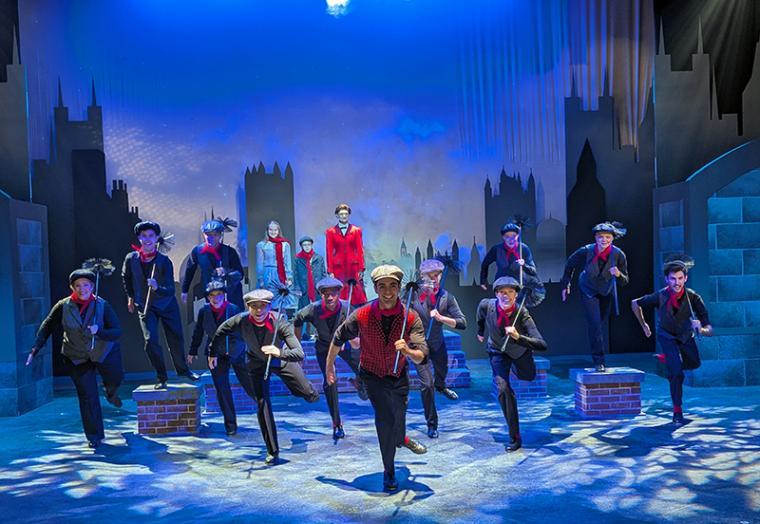
Bradley Robert Jensen, Mary Poppins, Circa '21 Dinner Playhouse (Mischa). From the gray-clad ensemble of tap-dancing chimney sweeps to a striking kaleidoscope of variegated fantasy colors, to Mary Poppins' and Bert's red and white, perfectly paired outfits, Jensen came through, yet again, with an astounding panorama of visual magic that perfectly suited the story and the characters. Bravo!
Liz-King Powers, Hairspray, Countryisde Community Theatre (Kitty). King-Powers definitely captured the larger-than-life style of Hairspray's 1960s. Bold colors, retro silhouettes, and flattering fits helped every performer shine. The wardrobe transported the audience back to a groovier time and gave the musical a visual vibrancy that enhanced the storyline.
Shannon Ryan, Antony & Cleopatra, Genesius Guild (Mike). Reviewer Madeline was dead-on accurate about seeing Ryan's costumes “literally in a new light” after the sun set. The shimmer was unmistakable. But the colors, textures, and subtle reveals of character, even in daylight, were impeccable throughout, the designer again separating “haves” from “have-nots” with laudably clear wit and intelligence.

Scenic/Lighting Design
Emmett Boedeker and Becky Meissen, Misery, Circa '21 Speakeasy (Pamela). A small-stage challenge thoroughly conquered. Outside the main set, a cozy/sinister bedroom, Meissen evoked a kitchen and living room with a few convincing pieces and props in minimal spaces, which were even wheelchair accessible. Boedeker gave cameos to “sunlight,” “lightning,” and a persistent sheriff’s silhouette. I’m this duo's number-one fan.
Jaina Gliva and Chris Sambdman, The Diary of Anne Frank, Playcrafters Barn Theatre (Mike). Has Playcrafters ever employed a two-story set before? Even if not, Gliva's and Sambdman's was ideal for demonstrating how cramped the living quarters still were for Anne Frank's Jewish hideaways, the bare-bones décor underlining the imposed tragedy of eventually doomed figures while suggesting, heartbreakingly, the families' primal need for normalcy.
Heather Hauskins and Becky Meissen, Chicago, Circa '21 Dinner Playhouse (Madeline). Meissen’s stylish Art Deco scenic design gave director/choreographer Ashley Becher’s cast room to move, transform, and command the stage. Hauskins’ lighting elevated each scene, shaping mood and focus with precision. Together, the artists' design elements created a polished, dynamic visual world that enhanced storytelling and performance throughout the production.
Heather Hauskins and Becky Meissen, Who's Holiday, Circa '21 Speakeasy (Kitty). Meissen’s scenic design, its concept by Hauskins, brought Cindy Lou Who’s kitschy little trailer to life with its carefully curated clutter and knickknacks. Even on such a compact stage, they creatively portrayed multiple locations using lighting cues to help shift from warm interiors to the wintry outdoors.
Aaron Hook, Eurydice, St. Ambrose University (Alex). I love when a set spills over into the audience; it adds layers of immersion that make you feel like a part of the show's world. Hook’s design turned St. Ambrose’s black box space into an extension of Sarah Ruhl's underworld, with pipes and crannies hiding all kinds of surprises.
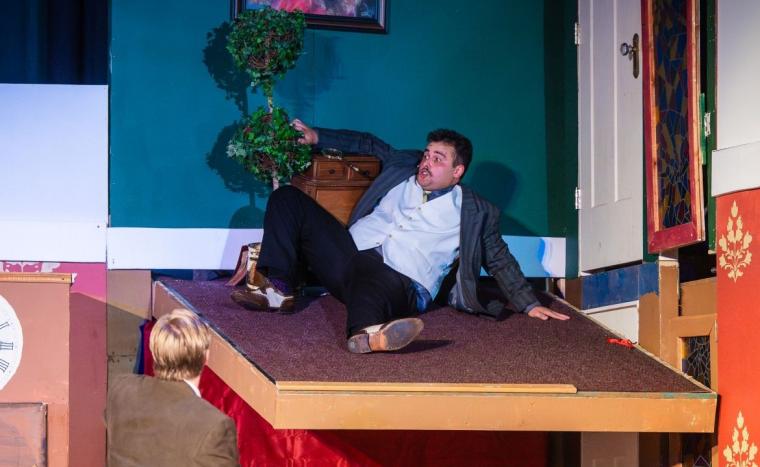
Dana Lisenbee, The Play That Goes Wrong, Spotlight Theatre (Mischa). Of all the things that went wrong in this show (intentionally!), Lisenbee's set and its many moving parts deserve a lot of the credit for the controlled chaos. It successfully represented the manorial interior, and then progressively malfunctioned perfectly on cue, most terrifyingly with the collapse of the second-floor study.
Music/Sound
Antony & Cleopatra, Genesius Guild (Madeline). Gabriel Thompson’s inventive, playful sound design energized director Alaina Pascarella’s production, proving how thoughtful sound can heighten live theatre’s impact. From the Roman drinking scene infused with modern flair to the stylized, music-driven Battle of Actium, the music shaped the mood, clarified storytelling, and enhanced the Shakespearean evening overall.
Bring It On: The Musical, Spotlight Theatre (Pamela). In this cheer-themed teen-rivalry musical, 28 powerful young voices soared energetically through 19 catchy numbers – sometimes while executing acrobatic stunts. Music director Matt Bishop’s cast hit all the right notes, and also flew through the high-speed verbal gymnastics in Lin-Manuel Miranda’s raps. It was an experience to cheer for.
Heartbreak Hotel, Circa '21 Dinner Playhouse (Mischa). Being the story of the development of a beloved musical icon, this show was all about the music and sound. Circa's production beautifully pulled out all the stops, serving up blues, country, gospel, and rock 'n' roll, and featuring live musicians on stage, along with Corey McKinney's fabulous Elvis Presley.
Marry Me a Little, Playcrafters Barn Theatre (Kitty). This story lived in its music, and Sondheim’s score shone thanks to seamless vocal blending and crisp sound design. Sydney Crumbleholme's and Thayne Lamb’s voices, backed by lovely recorded accompaniment, allowed the musical’s intricate harmonies and emotional shifts to come through clearly.
Ordinary Days, Black Box Theatre (Mike). With Adam Gwon's compositions providing challenging, character-based opportunities for co-stars Evan Gagliardo, Bradley Robert Jensen, and Kira Rangel, Sarah Lounsberry created magic in “I'll Be Here,” a rather manipulative 11-o'clock number transformed into a heart-wrenching lament-slash-argument for future happiness through unbridled emotionalism and stunning musicality. Four minutes of pure transcendence.
The Woman in Black, Richmond Hill Barn Theatre (Alex). The scene in the marsh alone, with a frantic dog stuck in the mud and a horse screaming in pain in the distance, would be enough to net my citation for the year. The fact that the rest of the show was as exceptionally designed was the cherry on top.
Memorable Moment
The Breakdown, The Prom, Quad City Music Guild (Pamela). A school throws a secret “straights-only” prom, a closeted girlfriend is there, and she won’t leave. Alone at this fake dance, Addison Jorgensen's Emma sobs into the silence, sinking to her knees, then the floor, her elaborate gown pooling around her, as the curtain slowly descends and we squirm. Devastating.
The Kids, Fun Home, Black Box Theatre (Kitty). On Fun Home's opening night, the Bechdel children (Lucy Emerle, Jack Carslake, and Kylah Garris) singing “Come to the Fun Home” was pure joy. Brimming with energy and playful choreography, the number was funny, charming, and so memorable that I still catch myself smiling about it months later.
The Mannequin Heads, The Thanksgiving Play, Black Box Theatre (Madeline). Covered in fake blood, thrown around the stage, these things became unforgettable thanks to the actors’ reactions, which were comedic gold. Cole McFarren and Celeaciya Olvera elevated the scene with perfectly timed, unmissable responses, turning an already funny rant into the biggest laugh I had in the theatre all year.
The Room-Building, Eurydice, St. Ambrose University (Alex). There's a moment in Eurydice in which a father builds his daughter a shelter. There’s no dialogue, no urgency … . Only the contemplative sounds of dripping water echoing in a vast cave. It’s a moment that'll stick with me for years – so much care conveyed through so little.
The Panic Attacks, The Play That Goes Wrong, Spotlight Theatre (Mike). So much delightful anxiety here. Would Adam Sanders' heart explode? Would Kady Derbyshire and Jessica Taylor legit kill each other? But the gradually collapsing upstairs was a giddy nightmare only relieved by a backstage visit demonstrating the safety-conscious magic. I still held my breath 'til the show completed its run.
The Progression, Marry Me a Little, Playcrafters Barn Theatre (Mischa). I'm not citing one moment, but rather an unfolding series of perfectly realized moments of synchronicity – tracking the movements and fantasies of people on the same stage who don't inhabit the same space – that made this Jake Ladd-directed musical ultra-charming. The precision of each moving piece was remarkable.