A number of Iowa court fees increased Wednesday as a result of Governor Chet Culver's signing of Senate File 478, the standings budget bill, late Tuesday night.
It now costs twice as much to file for divorce with a stipulation attached -- $100 instead of $50. The fee for filing a small-claims case increased from $50 to $85, while the fee for filing a civil petition including a petition for dissolution of marriage went from $100 to $185.
Other fees more than doubled: The fee for filing a statutory lien, as well as the fee for a change of title in real estate, went from $20 to $50. The criminal-penalty surcharge increased from 32 percent to 35 percent of the amount of the fine or forfeiture imposed.
In an interview Thursday, Culver maintained he did not increase taxes this year. But a number of court-fee increases, a franchise fee that cities are now authorized to charge, and a nonresident hunting- and fishing-license fee increase were in the standings budget bill he signed into law.
"There were no new taxes, and I remain opposed to an increase to the gas tax; that would be have been a direct tax on every Iowan that drives a vehicle," Culver said. "It's common for agencies to have the authority to raise revenue on their own. We feel good about the fact that we were able to stop any major tax increase on Iowans."
Meanwhile, the Iowa Supreme Court was expected to issue an order late this week canceling the June 5 and 19 court-closure days and restoring public hours of all clerk-of-court offices effective June 1, following Culver's signing the standings budget bill.
Senate File 478 includes a $760,000 supplemental appropriation to the judicial branch for the current fiscal year. It also decreased the judicial-branch budget shortfall in fiscal year 2010 from $15.4 million to $4.2 million.
Policy Bills Among Those Signed by Midnight-Tuesday Deadline
Culver signed into law 15 policy bills just before the midnight-Tuesday deadline.
Policy bills signed at the last minute include one that requires gender balance on local boards, another that gives Iowans the right to sue those who defraud them, and a third that bans farmers from applying manure on frozen and snowy ground during a specified period.
Iowa Attorney General Tom Miller on Tuesday hailed Culver's signing a bill that allows Iowans to sue for consumer fraud. "Iowans now finally join the citizens of every other state in having the important right to be able to go to court to protect their rights as consumers," said Miller, whose office pushed for the law for years.
AARP said its top legislative priority this year was to remove Iowa's dubious 10-year distinction of being the only state in the country that did not allow consumers to have an individual legal remedy against consumer fraud.
"While AARP sought a broader law with fewer exemptions, this bill will provide necessary protections in key areas where consumers have been especially vulnerable to dishonest business practices such as unscrupulous and predatory home-mortgage companies, home-improvement contractors, and auto dealers," said Bruce Koeppl, AARP Iowa senior state director.
But Iowa CCI said House File 712, the Private Right of Action for Consumer Fraud Act, was watered down with numerous exemptions for certain businesses as a result of "the many corporate interests" that lobbied against the bill.
"It makes me wonder whose voices were being listened to by our legislators -- big business or their constituents," said Adam Mason, community organizer for Iowa CCI. "In a time of bank bailouts, credit fraud, mortgage fraud, and other corporate fraud, one would think the political will would have been there to stand up to these corporations and say enough is enough. Hopefully they revisit this legislation next session and take a more principled stand for our consumers."
Budget Bills Line-Item-Vetoed; Executive Order Issued
Culver line-item-vetoed cost-saving measures in seven budget bills and instead signed an executive order to promote greater transparency and efficiency in state government late Tuesday night.
Executive Order 13 requires every executive-branch department to institute cost-effective and transparent practices to track reimbursements paid to state employees for meals, travel, and other work-related costs. Culver vetoed similar language in seven budget bills, which he called piecemeal. He said the executive order is more comprehensive and applies to all state departments.
"As governor, I am committed to ensuring that state government uses taxpayer dollars wisely," Culver said. "Under Executive Order 13, we are ensuring that state employees are only reimbursed for the expenses they incur. This will help manage tax dollars wisely, and is one more sign that the Culver/Judge administration's commitment to sound budgeting practices will not waiver."
Budget bills affected include those for administration and regulation (House File 809), health and human services (House File 811), agriculture and natural resources (Senate File 467), economic development (Senate File 469), education (Senate File 470), justice (Senate File 475), and standings (Senate File 478).
Culver also vetoed several provisions in budget bills such as those dealing with vehicle costs, Department of Human Services reorganization, and elimination of a Department of Corrections chief security officer. He said those moves would have infringed upon the executive-branch authority.
He said the same about legislation that would have required the departments of elder affairs, human services, and veterans affairs to develop plans for a 5-percent reduction in their budgets and report those cuts to the legislature by December 15. "A budget process is already delineated in law that starts with the executive branch, and this language infringes on the executive branch's duties to develop the state budget," Culver wrote.
In the administration and regulation budget bill, Culver vetoed a measure that directed departments to keep vehicles longer to reduce motor-vehicle-fleet operation and purchasing costs by 7.5 percent -- an expense much talked about by Republicans this year.
"I agree with the goal of decreasing state-fleet costs, and that is one reason I disapprove of this section," Culver said. "Maintaining vehicles beyond their useful lifetime may actually increase fleet costs."
Republicans Criticize State Spending
Republicans this week ramped up their criticism of state spending practices as Culver signed the final bills of the 2009 legislative session into law, including 10 budget bills.
"This governor just finished signing significant overspending and what amounts to the largest general-fund spending in the history of Iowa," said House Minority Leader Kraig Paulsen (R-Hiawatha). "Furthermore, it raises multiple fees and will definitely result in Iowans paying more in property taxes."
Senate Minority Leader Paul McKinley also criticized Culver: "Instead of using his line-item-veto authority to make needed and necessary budget cuts to the largest budget in the 163-year history of the state, Governor Culver used his veto pen to strike the rare cost-saving measures enacted by this legislature that would have provided more transparency and reformed state government."
But Culver, a Democrat, maintained in an interview Thursday that the state spent 2.2 percent less in the general fund and cut $135 million over the past two years.
"They are on their political, partisan, negative talking points; we're balancing the budget," Culver said. "They want to play games. We're cutting budgets. ... Look, we'll have an election next year. We just had a fantastic legislative session, and that's what we're celebrating right now."
Statewide Preschool Will Take Longer Than Expected
It will likely take Iowa longer than the anticipated four years to meet Culver's goal of having 90 percent of the state's four-year-olds enrolled in preschool programming.
Culver's goal was to reach that goal of "universal preschool" in his first term, or by 2011. But Judy Jeffrey, director of the Iowa Department of Education, acknowledged Thursday that it may take longer given current economic conditions. The program got $11.5 million instead of an anticipated third installment of $15 million this year. The money is expected to add 3,247 children to those attending preschool, for a total of 12,923 four-year-olds in 172 school districts.
"We felt very fortunate that we got 11.5 million new dollars at a time when they struggled," Jeffrey said. "Now, we've got to slow down a little bit because of the economic conditions, so it may take us five or six years, depending on the economic conditions, depending on what they can afford next year."
Field of Republican Gubernatorial Candidates Likely to Grow to Four by June
Three Republican state legislators are close to formally announcing a run for governor -- a move that political observers say has to be made by this summer or early fall to mount a viable candidacy in the June 2010 primary and November general election against Culver.
"I am seriously giving consideration to entering the race," Representative Rod Roberts (R-Carroll) said Thursday. "At some point in early summer, I would make my mind up as to whether I would establish that exploratory committee. ... I am two to three weeks from making a final decision."
Senator Jerry Behn (R-Boone) also said he's definitely thinking about it. "I'm leaning towards it but I haven't made a full decision yet," he said. "There's no exact date, but I'd like to get things lined up as soon as possible. I'm testing the waters to see what kind of support I get."
And state Representative Christopher Rants (R-Sioux City) has been traveling the state, speaking to interest groups and gauging support. The former House speaker has already logged more than 5,000 miles, gives his followers updates on Twitter, and reportedly stated Tuesday night at a meeting of the Polk County Republican Central Committee: "I'm running for governor."
As the field of Republican candidates for governor takes shape, it appears that there may be at least four candidates in the race by June. The three legislators would join three-time candidate Bob Vander Plaats of Sioux City, who has been campaigning since January.
A handful of others are considering a run, including former Iowa Senate President Jeff Lamberti of Ankeny, U.S. Representative Steve King of Kiron, Bettendorf businessman Mike Whalen, Iowa Agriculture Secretary Bill Northey, and Senate Minority Leader Paul McKinley of Chariton.
"If someone is going to get into this race, they'd probably want to get into it this summer or early fall," McKinley said, calling the timeline conventional wisdom. "With the rigors of modern-day campaigns at this level, it's going to require that amount of time for people to do those things necessary to run for office."
State-government spending, leadership, and marriage appear to be three key issues that Republicans will base their platforms on. Many Republicans point to state spending for fiscal year 2010 being the highest in history, and say the state will have nearly a $1-billion shortfall heading into next year. Most sharply criticized is Culver's pushing for the $830-million I-JOBS bonding-for-infrastructure plan.
"I think with the current state of affairs ... Iowans are outraged," McKinley said. "They believe government's too big, too out of touch, too out of control. It's little wonder that Republicans are stepping up. We will field a very good candidate."
Behn, a Boone farmer elected to the Iowa Senate in 1996, said he's been thinking about running for governor since 2006. He decided against it at that time when Jim Nussle, a U.S. Representative with good name recognition, got into the race. But the economy and state spending under Culver may lead Behn to enter the race this time around.
"His philosophy as governor is to tax and spend, [get] bailout money and spend, borrow money and spend. Do you see a common theme? His whole concept is to spend, spend, spend," Behn said. "His plan to pay it back is to use gambling revenues and depend on an economic recovery. That's not a plan. That's gambling with our children's future."
For Roberts, a development director with Christian Churches/Churches of Christ in Iowa who is serving his fifth term in the Iowa House, the 2010 gubernatorial race is all about leadership. He said Iowans have been yearning for a leader with the kind of temperament of former Republican Governors Bob Ray and Terry Branstad, and he believes he fits the bill.
"People are hungry for leadership, where the individual is transparent enough so people can know who you are, understand what you bring," Roberts said. "They want you to be respectful, civil, collegial. They want you to practice the golden rule -- watch your tongue and be civil, respectful of others. That's one thing that people are finding appealing about me."
Roberts, who is opposes abortion and supports a traditional definition of marriage, said his inspiration to run for governor came when Culver decided not to push for a gay-marriage-ban constitutional amendment after the April 3 Iowa Supreme Court ruling in Varnum V. Brien.
"Many of us were amazed at the 180 the governor did in terms of his previous public statements that he would be right out front leading the charge for traditional marriage. He didn't do what he said he would," Roberts said. "In that moment, that's where the question for me considering entering the race prompted me to say, 'I'm going to look at this carefully.' If I hear from others and there was strong encouragement to do so, I'll respond to that."
This weekly summary comes from IowaPolitics.com, an online government and politics news service. IowaPolitics.com staff contributed to this report.

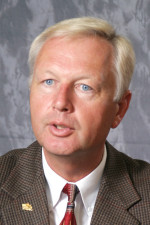 A New York Times article this week listed Iowa's 2010 gubernatorial race as one of eight "highly competitive races" in the nation.
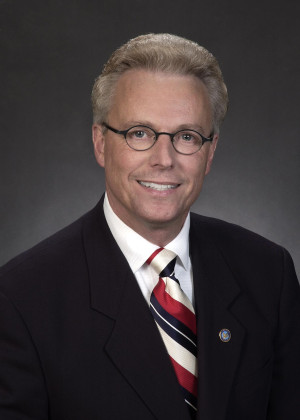 Saying that "I don't want my voice diminished" as the independent watchdog of state finances, State Auditor David Vaudt announced this week that he will not run for governor in 2010.