
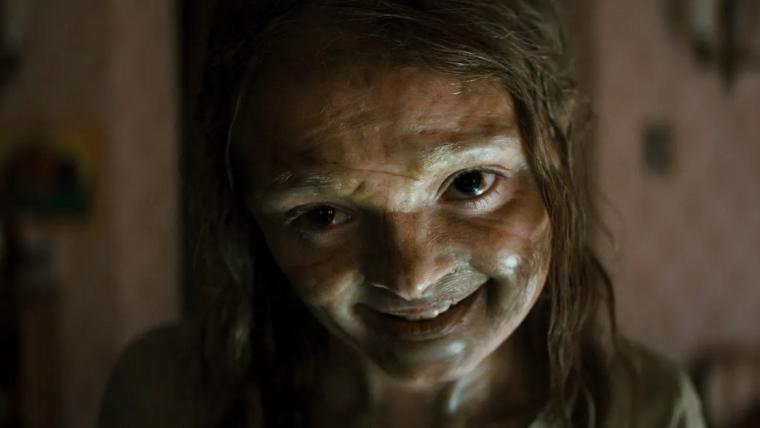
Natalie Grace in Lee Cronin's the Mummy
LEE CRONIN'S THE MUMMY
Probably like a lot of you, upon hearing the title of the latest horror flick to hit cineplexes, my immediate question was “Who the hell is Lee Cronin?!”
This wasn't, after all, Lee Daniels' The Butler or Tyler Perry's Boo! A Madea Halloween, where the films' creative forces were recognizable by either brand or Oscars recognition. To answer the query, Cronin is the guy who helmed 2023's pretty-decent franchise entry Evil Dead Rise, and titling the film Lee Cronin's the Mummy, I'm presuming, was a convenient way to separate this one from the Brendan Fraser Mummy and the Tom Cruise Mummy and, for classicists, the 1932 Boris Karloff Mummy. So my followup question is “Why not just call it something else?” Sure, the chief villain was cased in a sarcophagus for eight years and boasts supernatural powers, and her skin absolutely looks mummified. Yet given how little this tedious, crude, draining shocker has to do with Mummys of yore, weren't there other options? Tomb Toddler? Wreak Like an Egyptian? Sarcophagross?
In any event, the two Cronins I've now seen, having missed his 2019 debut The Hole in the Ground, do share stylistic (I hesitate to cal them auteur-driven) similarities, in that their monstrous figures spend an awful lot of time staring directly into the camera, and they're inordinately obsessed with goo: blood, bile, vomit – the whole shebang. On a cheerier note, Cronin has also proven quite adept at working with child actors, which would be more heartening if he weren't so determined to cause their characters grievous injury. This Mummy gets rolling after grade-schooler Katie (the wonderfully naturalistic Emily Mitchell), daughter of American news correspondent Charlie Cannon (Jack Reynor) and his wife Larissa (Laia Costa), goes missing in Cairo. What we know that they don't is that Katie was apparently abducted, for reasons unknown, by an Egyptian witch (Hayat Kamille) who lures the child in a manner familiar from Snow White, with a nectarine in place of an apple. Katie remains missing for eight years, by which point the Cannons have relocated to Albuquerque, their son Sebastián (Shylo Molina) now a teen, and with another daughter (Billie Roy's Maud) almost eight. It seems like a miracle when the Cannons get a call saying that Katie (now played by Natalie Grace) has been found alive, albeit barely, as she appears to have spent quite some time entombed. Would the parents mind picking the kid up and bringing her home?
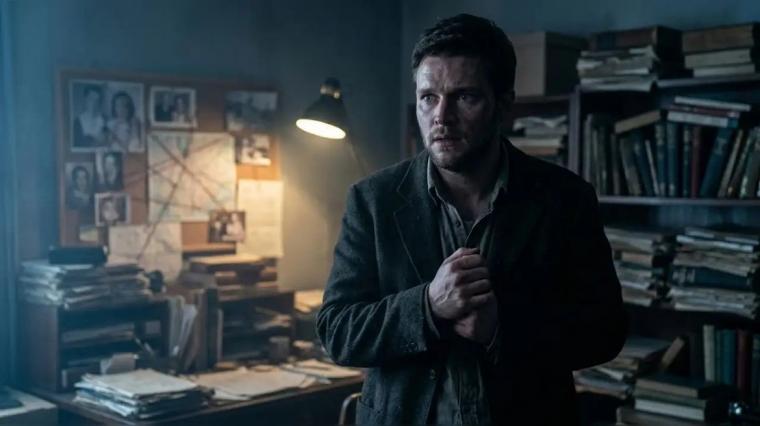
By this point in the film's very, very long 134 minutes, I already had so many questions, most of them not ever answered by The Mummy's writer/director. How did Katie survive what appear to be years inside a sarcophagus without access to food or water? Why did Egyptian police not investigate the home of young Katie's friend Layla, who was the girl's playmate in the wooded area where Katie was taken, and whose mother is the aforementioned kidnapping witch? And why, for the love of God, did everyone apparently agree that the best course of action for the surviving Katie wasn't to get her to a hospital, but to have her recuperate in her Albuquerque home, despite the victim now resembling Linda Blair at peak possession?
I understand that a mother's love is boundless. (Dad, as played by a typically pissy, one-dimensional Raynor, couldn't appear to care less.) But surely, given Katie's horrifically choked breathing and embalmed gray skin and tendency to bite and head-butt everyone who gets near her, a few weeks under a doctor's supervision wouldn't have been out of line? But it was clear pretty early on that logic wasn't going to get in the way of Cronin's gore-minded mission. When they first reconnect with Katie in Egypt, her folks are told not to disturb or rattle the child in any way. Upon bringing the girl to New Mexico, instead of carrying Katie up the stairs, they haul her, step by bumpy step, up a two-flight staircase in her wheelchair, jostling her with such thunderously loud ferocity that she was sure to lose some tooth fillings, and I instinctively laughed. No “parents of the year” trophies for these two.
From then on, this Mummy isn't a Mummy, but rather an Exorcist, with spiritually possessed Katie's behavior and actions both unpredictable and totally predictable. She levitates. She inflicts bloody self-harm and harm on others. She pukes – a lot. She somehow, in addition to being possessed, is able to simultaneously possess the other Cannon kids, forcing Sebastián to repeatedly bash his head against a desk and adorable little Maud to pull out her teeth with pliers and call her teacher the C-word … the worst of the C words. (Also an Exorcist staple.) Yet because it's never evident what this demon wants or the extent of its powers, it's easy to stop caring about the relentless atrocities. And because both parents are so nonsensical and stupid in their dealings with their returned child from Hell, you don't care about the Cannons' fates, either. Though I should probably take that back, because I legitimately did want Katie to become un-possessed. That would mean the movie was over.
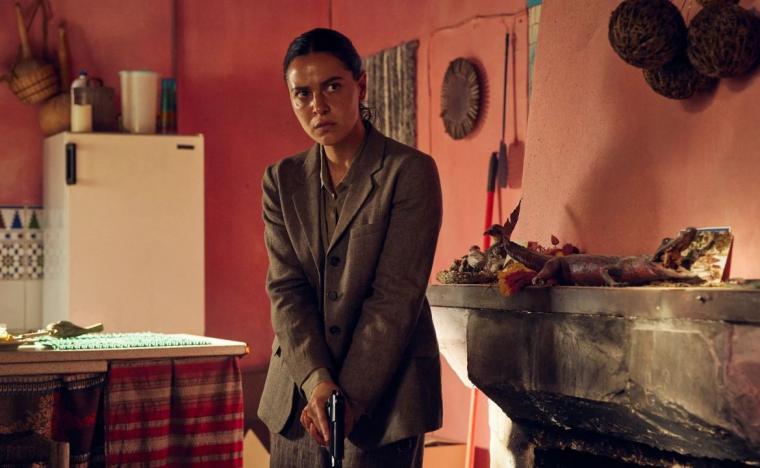
On rare occasion, though, I did find myself invested in the goings-on – but only when the Cannons were off-screen. In a not-unwelcome series of narrative detours, the action routinely shifts away from Albuquerque and back to Cairo, where Detective Dalia Zaki (May Calamawy), who initially investigated Katie's disappearance, continues to hunt down the cause of the tyke's eight-year absence. Even though another Fraser version is scheduled for 2028, I don't personally need any more Mummys. I would, however, happily accept a film series involving Calamawy's detective, the performer so engrossing and grounded and the character so promising – her eating habits are already a riot! – that you can easily imagine Zaki as a modern-day Hercule Poirot, quietly, determinedly sussing out clues while everyone around her acts with maximum broadness. Calamawy makes Lee Cronin's the Mummy bearable. She can't make it good, mind you, but given this sorry splatter-fest, no one conceivably could. Mo mummy mo problems.
NORMAL
There are so many good ideas floating around in director Ben Wheatley's Normal that it's a shame the movie focuses so intently on its least interesting one: that Bob Odenkirk, American entertainment's reigning Regular Guy, can be wholly convincing as an ass-kicking action star. This is by no means a bad idea. It's just that the conceit was already sustained quite nicely in 2021's Nobody and, less nicely, last summer's Nobody 2, both also written or co-written by Normal scribe Derek Kolstad. Among his other screenwriting credits are the first three John Wicks, and happily, his latest project demonstrates that Kolstad does have a bit more on his mind than über-violent revenge. Still, it feels like we've been here before, and far too recently.
After my sister attended an advance screening two weeks back – an event held in Normal, Illinois, despite the film's titular burg being a fictional locale in Minnesota – she mentioned Fargo and Northern Exposure among its apparent inspirations, and Wheatley's and Kolstad's opening half-hour definitely delivers those vibes. (Another feature she mentioned, Kill Bill, would evidently be referenced later.) Stationed in wintry Normal in an eight-week interim position, middle-aged Sheriff Ulysses is a familiar Odenkirk type: earnest, unassuming, mild-mannered, mildly put upon. Ulysses accepted the job following the apparent suicide of Normal's former sheriff, who was found outdoors, in his underwear, clutching a bottle of booze. And although that eyebrow-raising demise appears to be the only thing about Normal that isn't, well, normal, one of the early pleasures of Kolstad's script is how non-stereotypical its setting is. In the way of similar (fake) small towns ranging from Cicely, Alaska to Mayberry, North Carolina, the locals are largely friendly and accommodating. In an admirable surprise, they also drop the F-bomb a lot, and on at least two occasions early on, it's up to Ulysses or his deputy Mike (Billy MacLellan) to curtail citizens' arguments before they turn into fistfights. The shopkeepers, the tavern owner (Lena Headey), the mayor (Henry Winkler) – they all welcome Ulysses into the fold with smiles. But for whatever reason, there's clearly some simmering tension in Normal.
Based on the movie's introductory scene, which finds a Yakuza boss forcing two underlings to hack off their pinkie fingers before he blows another goon's head off, we're well aware that trouble is coming Minnesota's way. What all that profanity and those verbal assaults indicate is that trouble is already there, a notion that becomes inarguable when a pair of amateur robbers (Reena Jolly and Brendan Fletcher) demand the opening of the town's bank vault. The twist that follows – though it's more accurately the movie's central concept – is so juicy that, in deference to Kostad's (and “story by” contributor Odenkirk's) cleverness, I won't spoil things. Suffice it to say that Sheriff Ulysses arrives on the scene and winds up siding with the robbers, who have unwittingly initiated a falling-dominoes nightmare that will directly involve local law enforcement, the Normal townsfolk, the Yakuza, and, granting the John Wick and Nobody of it all, one instance of viscera-splattering comic violence after another.
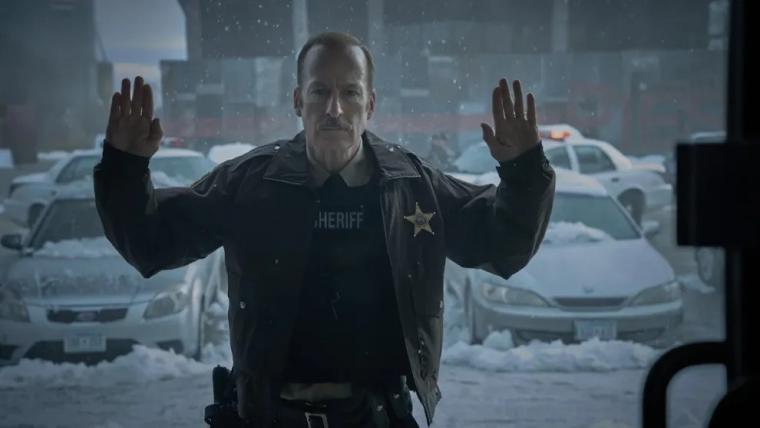
A lot of this is fun. Unlike the Wick helmers, Wheatley doesn't deliver any truly novel action sequences, and the choreography is mostly limited to running. But he does stage a number of memorable, gruesomely amusing killings, including of significant characters who depart the film long before you expect. Despite the dire scenarios and escalating threat, the winning, folksy humor of the movie's first third (it runs a crisp 90 minutes) doesn't vanish following the rug pull; this is the rare ultra-brutal endeavor that maintains some semblance of charm. Plus, with 20 minutes of movie to go, Kostad and Odenkirk prove to have one more delicious narrative turnaround up their sleeves. I'm not gonna spill the beans on that one, either. But if Normal does indeed swerve into Tarantino territory, this near-climactic switcheroo, inspiring the widest grin of my screening, manages to suggest Kill Bill as directed by Frank Capra.
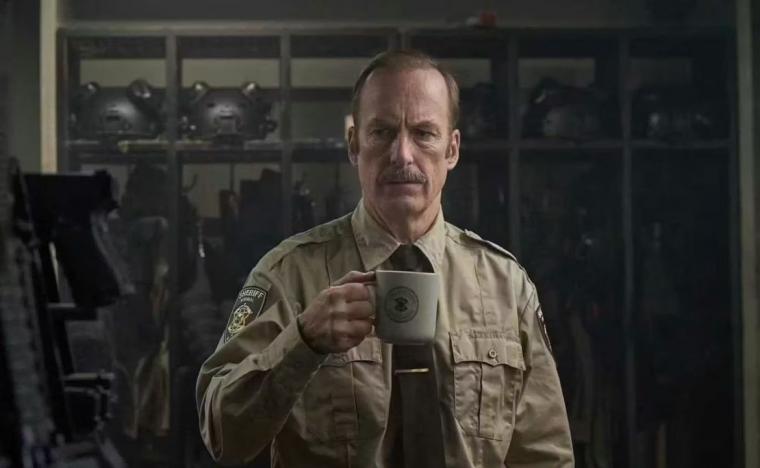
If only the experience as a whole didn't feel quite so been-there/winced-at-that, a reaction that unfortunately had a lot to do with Bob Odenkirk's participation. His is by no means an insufficient portrayal; the performer hits every mark with schlubby finesse (I loved how Ulysses' wrinkly work shirt indicated a guy who never lifted an iron in his life), and his low-key charisma and considerable comic chops are especially well-employed in the film's first half. Bob Odenkirk is ideal semi-ironic casting in a movie titled Normal. Yet as opposed to Nobody, and even its way-inferior sequel, there's no variance to Odenkirk's ordinary-man-under-extraordinary-circumstances act here. Even when perpetrating obscene acts of violence, a few of them accidentally, you sense Ulysses' blood pressure not rising by a single degree, and while it's certainly meant to be a riot when the lawman contentedly sips a cup of coffee following some bloody skirmish, the bit merely comes off as a bit – script-mandated nonchalance masquerading as organic character. In the end, Wheatley's outing seems too self-consciously pleased with itself for our own pleasure to matter much, and I may have audibly sighed when the finale implied the initiation of a franchise. That may be unsurprising, but I sure wish it weren't the norm.
LORNE
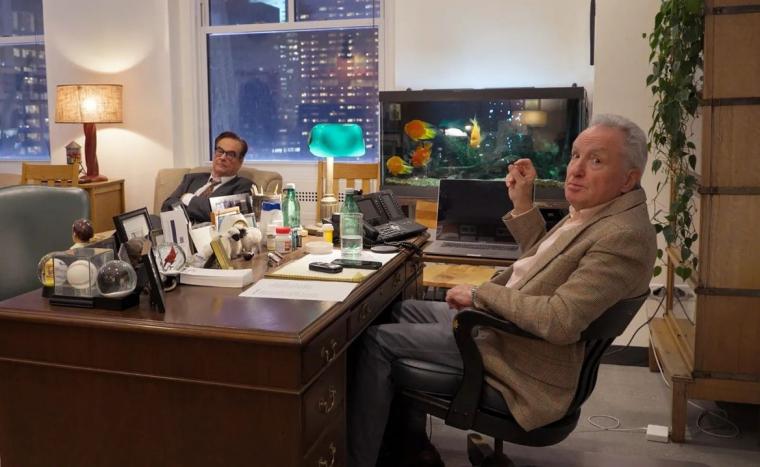
How do you make a documentary about someone who steadfastly doesn't want a documentary made about him? If you're director Morgan Neville, and your focus is Saturday Night Live creator Lorne Michaels, you make one anyway, peppering your film with so many tangential asides that audiences will barely notice, or care about, how cannily the titular subject is all but ignored.
You're not going to learn much about Michaels from Lorne, and that's by the man's own design. His life history, as is revealed, remains a blind spot for even those who've known and adored him for decades (to say nothing of those responsible for his Wikipedia page), and while Neville is granted access to the man in on-on-one interviews and even a rare visit to Michaels' sacred getaway in Maine, the elusive SNL mastermind remains an avuncular unknowable. For the purposes of Neville's doc, I'm fine with that, because all I wanted from this thing were thoughts and recollections from former cast members, inside scoop on the daily workings at 30 Rock's Studio 8H, and classic clips. We get 'em all in abundance.
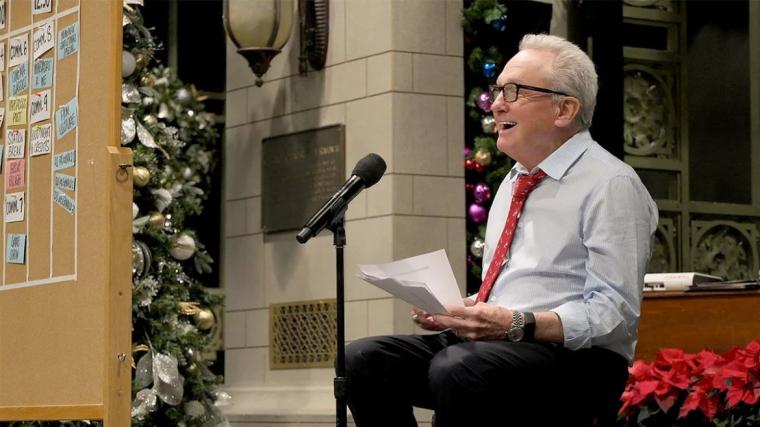
Timed almost in tandem with the 2025 publication of Susan Morrison's bestseller Lorne: The Man Who Invented Saturday Night Live, Lorne might not offer much fresh perspective, especially if you continue to down the bitchy, wildly informative joys of James Andrew Miller's and Tom Shales' occasionally updated nonfiction Live from New York: An Uncensored History of Saturday Night Live. (There's nothing even the least bit “uncensored” about Neville's witness accounts; the meanest the film ever gets comes with some participants' imitations of their boss' Canadian vocal rhythms, all of which are performed with love.) But nearly everyone you want to hear from – at least among the Michaels supporters – is heard from, the reminiscences offered are continually upbeat, and the entire experience goes down with absolute, convivial ease.
Every once in a while, Neville's latest threatens to be not merely engaging, but actively interesting – when an immediate cure is sought for host Ryan Gosling's sore throat hours before showtime; when a dress rehearsal leads to more uncomfortable audience silence than Michaels can withstand. Yet the overriding sensation of Lorne is purely pleasurable, and given current cineplex options in which simple, undemanding happiness is an increasing rarity, a little hagiography with topnotch fawners goes a long way. I enjoyed the anecdotes, chuckled at the cheeky animation, smiled at the taped memories (how had I forgotten the delightfully nauseating “Bird Family” sketch?), and, all told, had a ball. There's certainly a better, more tough-minded movie to be had from this subject. Lorne Michaels himself, though, no doubt wouldn't have participated in one. For 100 minutes here, I didn't need him to.
BUSBOYS
One of the few former Saturday Night Live cast members to not appear as a Lorne talking head is David Spade. Did Michaels, perchance, see an advance screening of Busboys and tell Morgan Neville, “Get whomever you want on the record except that moron”?
Because reviews of Spade's and co-star/co-writer/co-producer Theo Von's self-financed project are so hard to come by – a critique can't even be found on RogerEbert.com, and that site covers everything – I'm venturing into somewhat uncharted waters here. Yet is it possible that credited director Jonah Feingold's comedy, a term I'm using with unparalleled looseness, is this decade's current low point in moviegoing? (As of this writing, Feingold's latest isn't mentioned on the man's Wikipedia's page.) For kicks, I went back to my last five year-end wrap-ups to see what I named those years' worst cinematic offenders, and from 2021 through '25, they were Red Notice, Spirited, Wish, Here, and Now You See Me: Now You Don't. They're all so less noxious than Busboys that they may as well be entirely different entities, to say nothing of screen entertainments. It would be like comparing the Mona Lisa to a pothole.
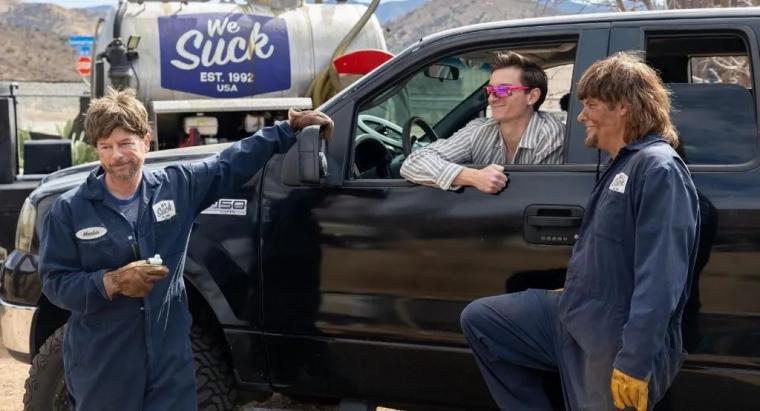
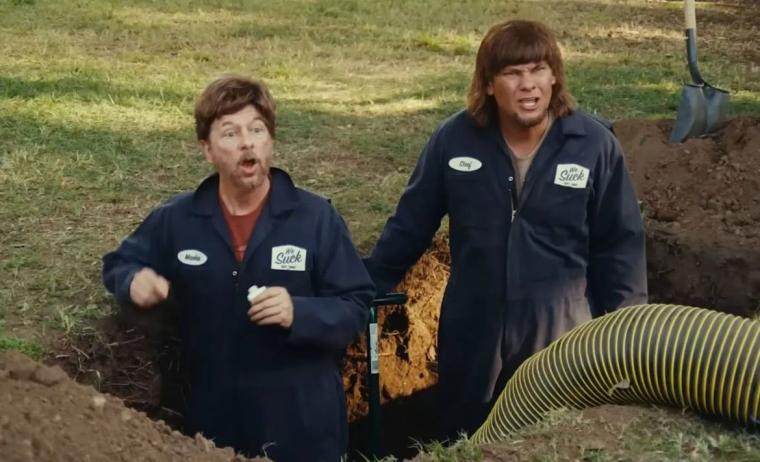
At its best, by which I mean generically terrible, I watched this grimly unamusing slapstick about the low-balled career goals of two imbecile besties with stone-faced resentment, even though the only reason I went was anticipating a godawful embarrassment. (“Morbid curiosity” might be the most generous term to explain my presence.) At its most heinous, I imagine my face resembled the expression in Edvard Munch's The Scream, though I'm pretty sure I was having less fun than that painting's tortured soul. How can any movie, in 2026, be this bad – this full of comedic setups with no punchlines; this many abandoned conceits; this chock-full of repellant supporting buffoons; this much raunchiness with nothing in the way of wit, or even perspective? To my knowledge, I've had no previous exposure to standup comedian Von, whose questionable gifts are at least admired enough to have secured him a 2024 headlining gig at Moline's Vibrant Arena amphitheater (seating capacity 12,000). As memory serves, though, Spade isn't wholly untalented; he did occasionally make me smile on SNL 30-plus years ago, and was decent enough on Just Shoot Me. Do these guys really think Busboys' sub-juvenile anti-comedy, with its inexplicable wigs and incomprehensible running gags and 61-year-old Spade as the romantic ideal of vivacious 20-somethings, is funny? Sophie's freaking Choice was funnier.
It should be said that I wasn't alone in my auditorium when watching this; my Sunday-afternoon screening had maybe a dozen other attendees. And every once in a while, patrons would giggle, though that they tended to giggle whenever someone said “faggot” made me more than a little uneasy. So this sickly little toss-off may very well have its crowd, if not a crowd much interested in going to the movies during daytime hours. I hope to never meet any of these people in person. Without question, I got what I deserved from Busboys; I went in expecting – hoping for! – the worst and received it. How does that adage go? “When the gods wish to punish us, they answer our prayers.”