
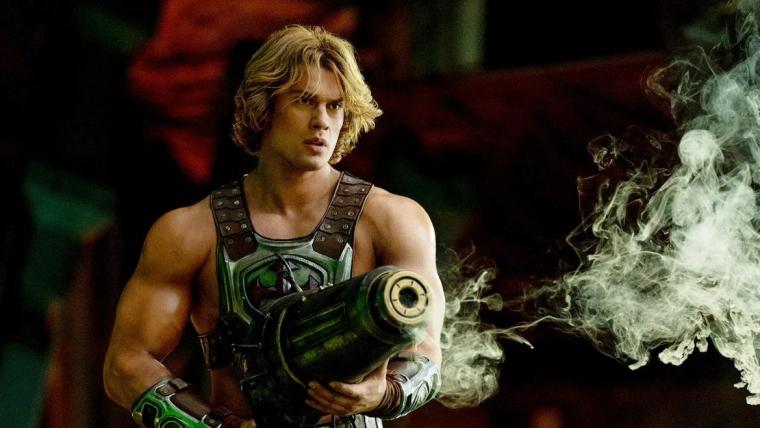
Nicholas Galatzine in Masters of the Universe
MASTERS OF THE UNIVERSE
Even in a sword-and-sorcery saga with considerable sci-fi elements, just how seriously are we supposed to take a movie whose protagonist goes by the moniker “He-Man”? Perhaps anticipating this question, the team behind the new Masters of the Universe has a locked-and-loaded reply: “Not seriously at all.” And when I say “not at all,” I mean Not. At. All.
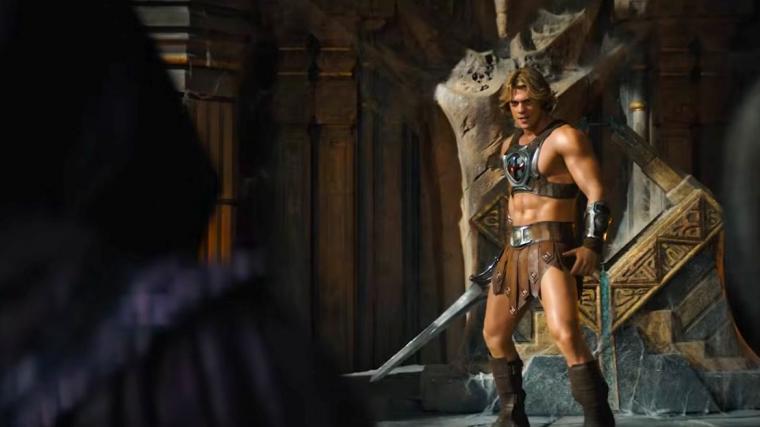
As you're likely aware, director Travis Knight's mega-budgeted blockbuster is based on an obscenely popular line of Mattel action figures that debuted in the early 1980s and led to numerous animated TV series, video games galore, and a rather unfortunate live-action feature from 1987. (Gotta love Frank Langella, though.) Toys, of course, are meant to be played with, and the most wonderful surprise about Knight's film is that the same directive was apparently given to his quartet of screenwriters, who play with the IP like nobody's business. This is a movie in which, following some mild joke, people throw back their torsos and roar with laughter like freeze-framed characters in a '70s cop show, A movie in which a bruiser's nickname is revealed to be Fisto because, as he's told, “You're good at fisting people.” (Fisto agrees.) A movie in which He-Man is commended – by the nefarious Skeletor, no less – for the “long sword dangling between your glorious thighs.”
I should stress that this über-cheeky take on the material won't be to everyone's liking, particularly that vocal breed of humorless “Don't f--- with my childhood memories!” fanboys – the ones who repeatedly watched all 130 episodes of the original He-Man & the Masters of the Universe series and maybe took their playtime a bit too seriously. But speaking as someone who had already aged out of the toys before the first set landed (my six-years-younger brother was probably their ideal demographic), I thought Knight's movie was absolutely fantastic. It's quick-witted, fast-paced, blessedly inconsequential, and awfully damned funny – so funny, in truth, that the eventual, traditionally dreaded sentimentality and schmaltz is legitimately affecting due to how much you've grown to love He-Man and his fellow oddballs. After making us giggle practically nonstop for 90-ish minutes, these super-powered jokesters have earned the right to get tearfully earnest in the final half-hour.
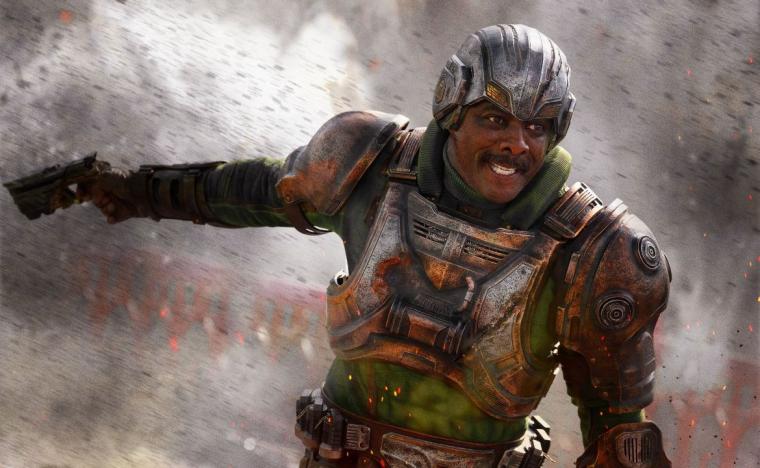
Not everything about Masters of the Universe succeeds, and either fortunately or otherwise, most of what doesn't is confined to the extended, heavily expository prelude. To be sure, not having seen a He-Man adventure in almost 40 years, I appreciated the refresher on how young, skinny, uncoordinated Prince Adam (Artie Wilkinson-Hunt) was, for his safety, expelled from Eternia and sent to Earth after Skeletor captured Adam's folks (James Purefoy and Charlotte Riley) and took over their planet. Despite, however, some amusing voice-over as the now-grown Adam (Nicholas Galatzine) recounts this tale, the frenetic action and blandly serviceable visuals don't do much to capture our interest, and the familiarity of the prologue's story beats is a downer; we appear to have been tossed into the middle of every generic, post-A New Hope sci-fi ever released. But Knight and his screenwriters wrap up this rather interminable opener with a terrific gag: Adam isn't narrating for us, but rather for his dinner date, who promptly walks out of the restaurant when Adam's sincere insistence about his royal space lineage and the Sword of Power convince her he's a loon.
It turns out that, during the 10-year-old's initial wormhole trek to Earth, Adam accidentally let go of the aforementioned sword – his only possible means of returning to Eternia. Consequently, he has spent the last 15 years in Oklahoma City searching for it, and evidently living the life of a mild-mannered Clark Kent who never gets to become Superman. (It should be said that the guy's untucked long-sleeve shirts do a woefully weak job of convincing us that Galatzline isn't completely swole.) Adam is stuck in a dead-end human resources job; his love life is nonexistent; he shares a crap apartment with a roommate (solid deadpan comic Chjristian Vunipola) who insists that his friend stop with the Eternia stuff already. But everything changes when, after years of Internet hunting, Adam finally gets word that the Sword of Power has been found, and is available for a mere $300. (That the weapon is on display at a nearby hobby shop is one of those things you just have to go with, because you'd think that would've been the first place Adam looked for it, and that he'd routinely pop in afterward just to check.) Before long, Adam is again is possession of his precious family heirloom … and it doesn't do shit. Not, that is, until it's revealed that the weapon did send a beacon to Eternia, prompting Earth visits by the growling Beast Man and Adam's childhood pal/crush Teela (Camila Mendes), the latter of whom whisks Adam back to their home planet for the ultimate battle against Skeletor. And we're off to the races.
It's entirely possible that none of Masters of the Universe would work, or at least work half so well, without Nicholas Galatzine. To call this surprising would be a massive understatement. The British actor is just fine amid the genius ensemble of The Sheep Detectives. But dating back to his 2023 breakthrough in the gay romance Red, White & Royal Blue, Galatzine has always seemed an especially recessive, almost blank screen presence – handsome, yes, but noticeably lacking in interior life. So maybe those many pounds of musculature he added for this role were somehow packed with personality, because lord how he demonstrates it here. Galatzine is likable from the start. Yet as the movie progresses, we more and more notice the subtle cleverness behind his comic readings and expressions, and he proves sensational with the big swings, too; the actor attempts an ill-conceived, cool-dude slide across his car's hood like a slapstick master. As most of Adam's pre-He-Man attempts at heroism end with him flat on his rear in man-spreading embarrassment, Galatzine is goofy, adorable, and deeply winning, and remains so after the sword's magic is unleashed and the loincloth-clad warrior takes over. He loves being this new, kick-ass version of himself, but would still like to know where his shirt and pants went, and if he'll ever get them back.
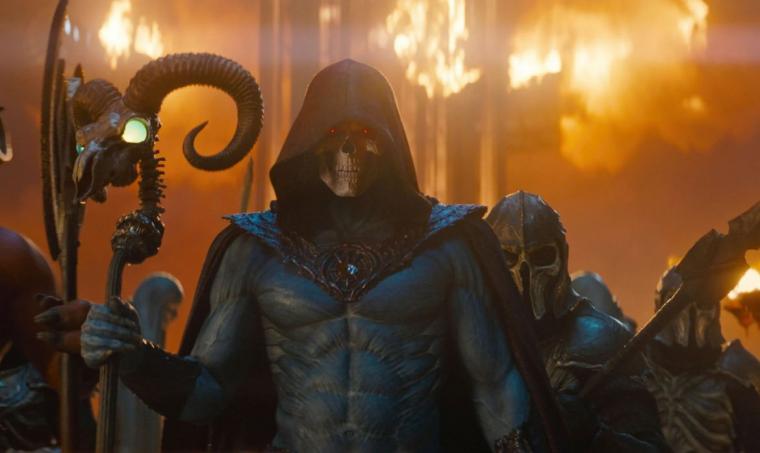
We all do, frankly, and the fact that the movie knows we do – that we want to know a lot of things, some sillier than others – is key to its many charms. I don't know how much of this MotU is canon, but I, for one, loved learning that such action-figure characters as Ram-Man and Mekaneck and, yes, Fisto are only known by those monikers because that's what Adam called them when he was a child. (Most of the Eternians hate that Adam has nicknamed them based on their most evident super-talents.) Is Skeletor admired by his minions or simply feared? The answer seems to come when the villain, per genre requirement, roars in malevolent laughter but is forced to stop when he realizes his underlings aren't laughing with him, and making him feel like an idiot, to boot. Is there something sexual going on between Skeletor and his second-in-command Evil-Lyn? Based on Alison Brie's thrillingly suggestive, even lascivious take on the witch, I would say it's a definite maybe, unimaginable though that physical coupling might be.
All of these informational nuggets are dropped, or hinted at, with tongues firmly in cheek, and Knight's cast members dive headfirst into the joyous nuttiness: Mendes, exuding intense, and intensely welcome, Mila Kunis energy; Idris Elba as Teela's “Man-At-Arms” dad, seeming to have a better time on-screen than in many a year; Monica Barrarin, occasionally dropping the benevolent-sorceress stereotype to offer amusingly grounded sensibility. (Humorless fanboys be warned: Sidekick favorite Roboto is voiced by a sardonic, riotous Kristen Wiig, who also briefly ruined your childhoods in 2016's Ghostbusters reboot.) But I'd argue that except for Galatzine and Brie, no one appears to be having more fun than Jared Leto … if it's indeed him. You may have heard that he plays Skeletor. I'd say the jury's still out, and not merely because, like Jeremy Allen White currently “playing” Rotta the Hutt, you never see the man, and his voice has been electronically altered beyond recognition. But when, precisely, did Jared Leto become so funny? And so physically witty? This Skeletor isn't not threatening, but he's more accurately a figure of supreme comic-book mirth – a megalomaniacal fool whom you love seeing get his just deserts. Leto being such a riot does lower the stakes for both the film's plot and its emotionalism. But truth be told, those stakes weren't high to begin with, and I was happy to trade being scared by Skeletor for wanting him around as much as possible.
Obviously, this isn't the first time in recent years that Mattel has allowed filmmakers to tinker-around-and-then-some with one of its properties. But despite sharing a similarly teasing sense of humor, this isn't Barbie. It's more like a slightly sophisticated variant on 1980's Flash Gordon – the cult classic that found Dale Arden rooting on the former football hero with cheerleader moves, and Max von Sydow's Ming the Merciless generating equal amounts of shivers and yuks, and Freddie Mercury and Queen providing the soundtrack. (At a moment of particular comic peril in MotU, composer Daniel Pemberton delivers what sounds like an uncanny nod toward Flash Gordon's title track.) I saw that delightfully tacky sci-fi opus when I was 12, and remember watching it with a big, stupid grin plastered on my face. Forty-six years later, I'm pleased to report that I'm still capable of big, stupid, feature-length grins at entertainments that totally deserve them. Had Frank Langella showed up, I would've applauded. But you can't have everything, and the sight of Dolph Lundgren figuratively passing the torch to Nicholas Galatzine got applause all on its own. Masters of the Universe is spectacular fun. In bulk.
POWER BALLAD
Rarely have I seen a feature start as well yet end as poorly as Power Ballad, Irish writer/director John Carney's latest modern fable about musicians – principally songwriters – gaining and losing success, and a league removed from the charms of Begin Again, Sing Street, Flora & Son, and his Oscar-winning Once. All the proper elements would seemingly, initially, be in place: likable leads; realistic struggle; calmly assured filmmaking; an original earworm you can't get out of your head for hours. (Though just because, here, “How to Write a Song (Without You)” refused to leave my brain doesn't necessarily make it good – absent-minded humming tends to naturally result after you've heard a single roughly 147 times over the course of two hours.) But nearly everything you enjoy about the movie's first half winds up trashed in the second, including all existing relation to reality. Power Ballad begins on notes of undeniable humanity. It ends as a Muppet movie … though casting it with Muppets would've made this thing more fun, and no less believable.
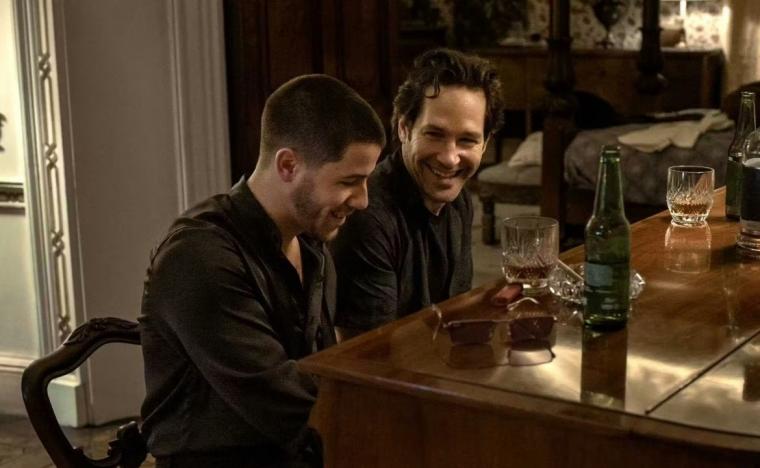
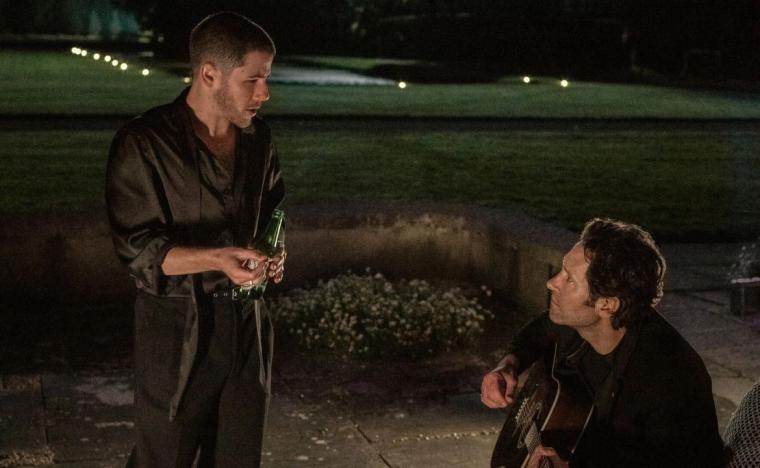
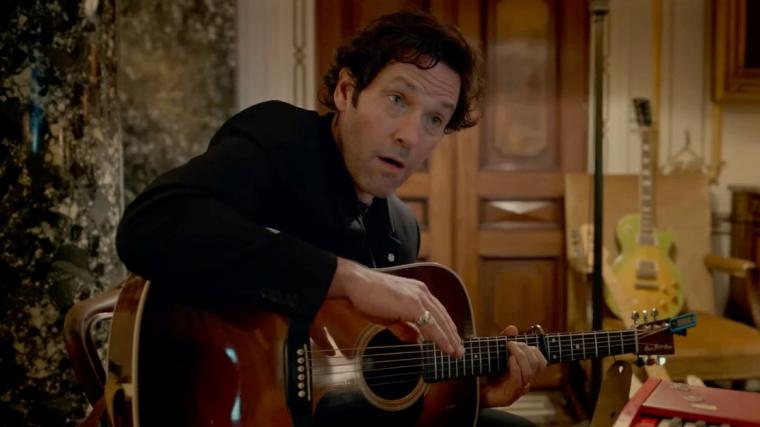
Paul Rudd plays Nick Power (which I'm praying is a stage name), a middle-aged American rocker of middling former glory now fronting a wedding-reception band, The Bride & Groove, in Ireland. Nick has a loving wife (Marcella Plunkett) and dismissive teen daughter (Beth Fallon), as well as what appears to be a semi-successful gig with his bandmates, who churn out renditions of classic '80s hits along with, to the others' annoyance, whatever self-written song from Nick's past the singer feels should cap the night. (Those numbers routinely kill the party.) During an especially upscale event at a literal castle, Nick makes friends with one of the reception's guests: the onetime boy-band star and currently struggling solo performer Danny Wilson (Nick Jonas). After a successful on-stage duet, the men run into each other outside the castle, and spend the rest of the night sharing stories, drinking, smoking weed, and jamming, including on the unfinished “How to Write a Song” that Nick wrote many years earlier. The night ends well; Danny gifts Nick a rare guitar; both men are happy they met. Until, that is, Nick is at a mall some six months later, and amid the Muzak, hears the world's new chart-topping hit: “How to Write a Song,” its music and lyrics credited solely to one Danny Wilson.
This is a phenomenal setup – one arguably juicier than anything Carney (sharing screenwriting credit with Peter McDonald) previously delivered – and what makes it additionally blissful is how much you genuinely care about Nick's and Danny's one night of collaborative bliss. We've already witnessed how stuck Nick feels in his safe, contented, hardly fulfilling existence as a post-rocker. And as he and Danny develop their rapport, you see both men come mutually alive in the exhilaration of musical creation, which is something that Carney is more gifted at expressing than perhaps any other current director. Jonas, obviously, can sing, and Rudd isn't shabby in that regard, either, and Power Ballad approaches the sublime when the two are just allowed to riff and harmonize and get enjoyably effed-up; it's like the musical-comedy equivalent of the climactic Salieri/Mozart “collaboration” in Amadeus. There's electricity in the scene, and joy, and hilarity – like the scene's characters, you might find yourself wishing that night would never end. But like all great highs, it inevitably does. And what comes after is one increasingly discouraging low.
One of my chief beefs lies with the character of Danny, who turns out not to be the super-famous pop star with the heart of gold we were led to expect. That disappointment, admittedly, is my own fault; I bought his act as thoroughly as Nick did. But Carney and McDonald make Danny so squishy an individual that it's never entirely clear where his priorities lie. He sometimes seems to feel vaguely bad about not sharing credit with Nick; at other times, he seems wholly devoid of introspection, and capable of almost Machiavellian cruelty. Compounding the problem is the terminally unpleasant Jack Reynor as Danny's agent, who's such a cartoon version of L.A. greed and corruption that you can't believe that Danny would believe a word out of his mouth. (Reynor was fabulously endearing in Carney's Sing Street, so could the director please get him to start speaking with his natural Irish brogue again? Reynor is consistently execrable playing generically hostile Americans.) Because we're never given a proper grip on who Danny is, and despite Jonas' solid attempts at fashioning a complete performance, the second half of Power Ballad is distractingly ponderous. It's the stuff with Rudd that makes it insufferable.
Even at age 57, Rudd remains eternally winsome (occasionally to his and/or his films' detriment), and the actor has a few exceptionally strong moments here, including the one in which Nick directly confronts Danny about how much the pop star's subterfuge has hurt him. It almost pains me to say that this rare showcase of Rudd's dramatic talents takes place after Nick has entered Danny's house uninvited and steps into Danny's jacuzzi – where Danny sits in his bathing suit – fully dressed. Such is the level of “hilarity” that Power Ballad forces us to endure after its plot-goosing incident is revealed, with Nick quickly unspooling, losing his family and job, and taking off to California alongside the one bandmate (co-screenwriter McDonald's Sandy) who believes Nick's claims to songwriting greatness. This despite neither Nick's friends nor family remembering the guy ever playing a tune titled “How to Write a Song (Without You).”
From the moment Nick heard that damned tune in the mall, I didn't believe anything that happened in Carney's latest. Not the popularity of that mawkish number that apparently led to staggering Billboard success and Grammys attention and the revitalization of Danny Wilson's career. Not that Nick's 80's cover band would be asked to perform a 2026 smash at a wedding reception. Not that an on-stage brawl would occur after Nick declined to sing the song that should've made him rich. Not Nick's wife and daughter, who surely knew how delicate the issue was, demanding to hike up the volume and sing along when the song aired on their car radio. Not Nick's reconciliation with Sandy, a teary spectacle that fellow audience members laughed at (appropriately) even though I think we were meant to take the scene seriously. Not the financially strapped Nick and Sandy making a hasty jaunt to L.A. Not them sneaking into a sold-out Danny Wilson concert with impossible ease. Not them sneaking into Danny's house party with even-less-possible ease. Not Nick pushing Danny off a second-floor balcony, and falling off said balcony himself, with nothing more than the mildest of bruises to show for their falls. Not. Not. Not.
In case I've made it at all unclear how much I disliked this movie, rest assured: I really disliked this movie. I even kind of hated the film's momentary lean toward rehabilitation at the end, because after so much out-of-character nonsense, Carney manages to land on an ideal climactic moment – and promptly ruins it with a completely unnecessary postscript that exists just to demonstrate, again, what a nice guy Nick Power is. Easily Carney's cinematic low point to date, Power Ballad ends up dismissing all shades of gray as either black or white, and muddles its issues further by not detailing exactly how we get to our completely predictable Happily Ever After. Perversely, the thorniest and most potentially interesting scenes are left wholly to our imaginations, and beginning with its midpoint, that's true of the film as a whole. It's all choruses and no verses.
SCARY MOVIE
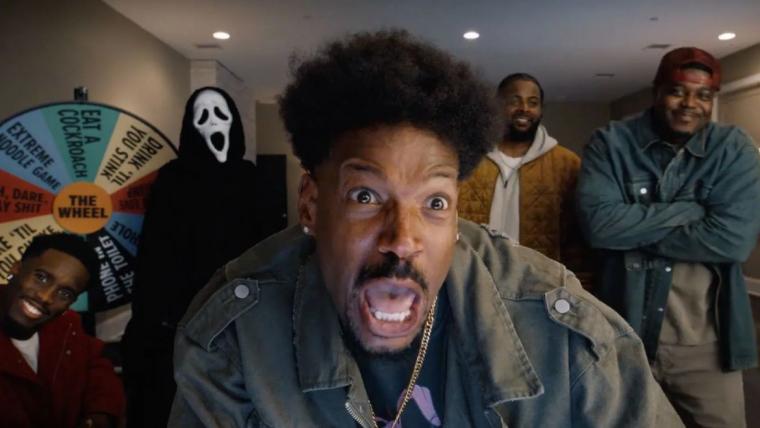
I don't know whether I'd call it a “promising” opener, but I did like that director Michael Tiddes' Scary Movie (the fifth sequel in the comedy franchise that dates back to 2000) started with Teyana Taylor as this Scream spoof's requisite First Victim. I liked that she shouted “Viva la revolución!” upon downing a shot and made no bones about being, yes, that Teyana Taylor. I was also really impressed when she was ultimately assaulted by this slapstick's Ghostface – the knife to her gut causing no damage because, as Taylor explained, “My abs have abs, bitch” – and he attempted to chastise the performer for not winning the Academy Award for One Battle After Another. (Whoa! That happened fewer than three months ago!) Taylor accepted the insult in stride, though, and promptly pummeled the masked attacker with the Golden Globe she did win.
Although Teyana Taylor is an undeniable force of nature, I didn't laugh during this prologue, despite smiling in recognition of its inside-baseball humor and freshness. (The prelude reminded me of how Scary Movie 5 parodied the 2013 Evil Dead only one week after director Fede Álvarez's reboot hit multiplexes.) But much later in the film, I not only didn't laugh, but was actively confused by a bit on an Oscars-related subject. One of Scary Movie's less-famous leads was emoting in a way that seemed overboard to one of its more-famous leads, and the girl was told to not so blatantly beg for a statuette, because performers never win Academy Awards for horror movies: “Just ask Demi.” Okay, fair, Moore didn't get that Oscar for The Substance … in 2025. But this is 2026, and not only did Michael B. Jordan win Best Actor for Sinners (a film this comedy actively appropriates), but Amy Madigan won for Weapons (a film this comedy acknowledges, although the sight of a Wayans in Aunt Gladys attire is perhaps blessedly denied us). Madigan, of course, won the Best Supporting Actress prize that Teyana Taylor didn't. So why is the “actors don't win for horror” cliché being employed if even the movie's own prelude implies that they sometimes do? Hell, a full half of this year's winners did!
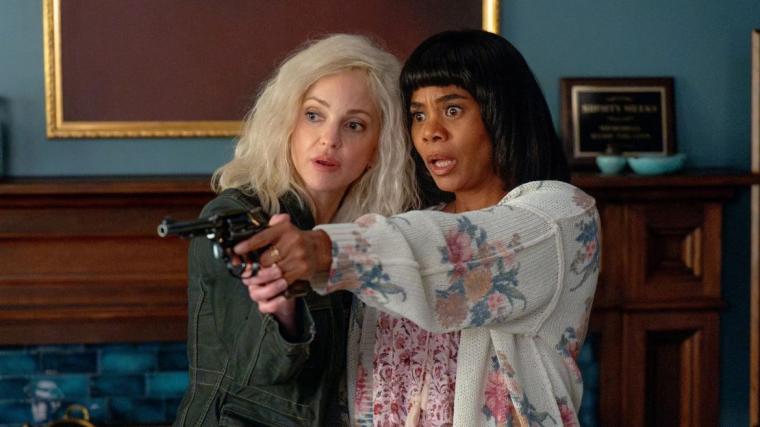
This is the 2026 Scary Movie in a nutshell: an experience that's frequently thisclose to being timely without ever really getting there. (It might be telling that my sole out-loud laugh came from a comparatively timeless bit: Marlon Wayans' brief impersonation of Shaquille O'Neal, delivered in front of O'Neal.) In fright-flick terms, especially given the mad output, 13 years is an awfully long time to wait for a new spoof on the genre, and in addition to Sinners and Weapons, there are visual or verbal references to everything from Get Out to Smile to Longlegs to M3GAN to Ma to Terrifier 3 to the most recent Final Destination. (Tiddes' directorial talents are never more evident than when he's presenting fatal roller-coaster rides as hysterical background sight gags.) As a lifelong devotee of such movies, I was kind of bummed that several high-profile favorites released since '13 – Jordan Peele's Us, Ari Aster's Hereditary and Midsommar, Robert Eggers' The Witch – were left untouched. But there was at least a reference to It Follows from 2015, which Scary Movie stars Anna Faris and Regina Hall, reprising their roles as Cindy Campbell and Brenda Meeks, opted to not expand on because Robert Mitchell's film was too obscure. That alone was a pretty-good joke, as was Hall's description of the film as “a bio-pic for STDs.” But was it also meant to be a joke that Hall pronounced “bio-pic” to rhyme with “myopic”? Because if so, that gag didn't land; it just seemed like Hall goofed up the word and no one on set or in the editing room noticed.
But who cares, right? Scary Movie will either make you laugh or it won't. Except during that Shaq impression, I didn't … although two-dozen-ish others in my auditorium sure did. They dug Marlon Wayans' stoner gags and Shawn Wayans' mincing-queen act and the ICE raid and the micro-penis and the Anthony Anderson cameo and the White Chicks callback and the poke at KPop Demon Hunters. And they really seemed to enjoy one of the film's more well-sustained sequences: a parody of the Michael trailer, with Kenan Thompson starring in Jermaine. I wouldn't dream of judging those folks for having such a good time; I'm glad someone did. As with the first two Wayans-driven Scary Movies, though, their latest doesn't boast constructed jokes so much as mere references, and while it kind of had to be for the whole “rebootiquel” theme to pay off, I'm confused about why the central storyline is so staunchly a Scream spoof. When we finally learn the identities of the Ghostface killers here, the reveal actually makes more narrative sense than its equivalent did in February's Scream VII. How can you parody something that has essentially become a parody of itself?
FALLEN ANGELS
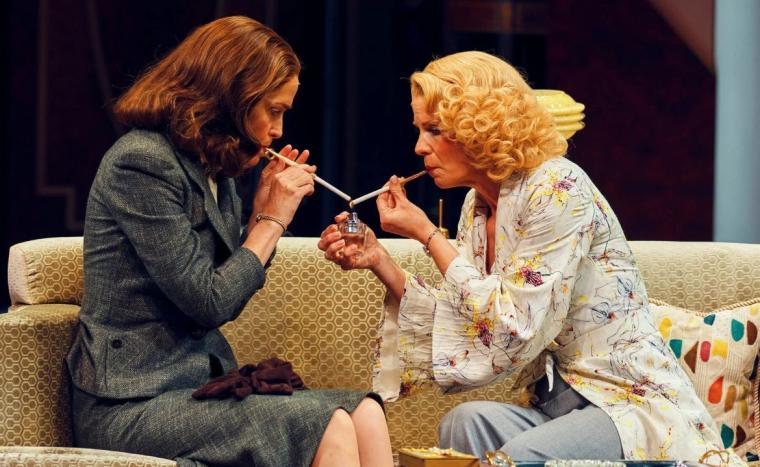
Without question, the least high-profile win during last night's Tony Awards was designer Jeff Mahshie's Best Costume Design of a Play victory for the Noël Coward revival Fallen Angels. For one thing, the prize wasn't given during the main, three-hour hour telecast that aired on CBS and Paramount+, but rather during the 70-minute “pre-ceremony” that aired on Pluto TV. For another, Mahshie didn't deliver a speech, which was understandable considering he wasn't in attendance. But I did want to mention his triumph, because unlike Schmigadoon! and The Lost Boys and Death of a Salesman and Sunday's other Tonys champs, you can actually see Broadway's Fallen Angels without traveling to New York. (Not that you could see it there even if you wanted to; the show finished its run yesterday afternoon.) Filmed before a live audience, director Scott Ellis' production is available for streaming on Broadway HD through June 19, and not only can you catch this dazzling showcase for deserved Tony nominees Kelli O'Hara and Rose Byrne, you absolutely should.
Originally staged in 1925 and kept in period for its 2026 incarnation, Coward's comedy of (frequently ill) manners casts O'Hara and Byrne as Julia Sterroll and Jane Banbury, English socialites and best friends whose spouses (Aasif Mandvi and Christopher Fitzgerald) leave them for a day-long golf trip. The timing couldn't be better – or, for the husbands, potentially worse – given that both women have recently received postcards from one Maurice Duclos, a devastatingly handsome bachelor with whom Julia and Jane separately had pre-marital flings. Maurice is coming back to town and would love to see the ladies again, and Julia has invited him to her home. But the now-married ladies are, understandably, more than a bit anxious about how they may react when they see the man again. Perhaps a sip of champagne would help soothe their nerves?
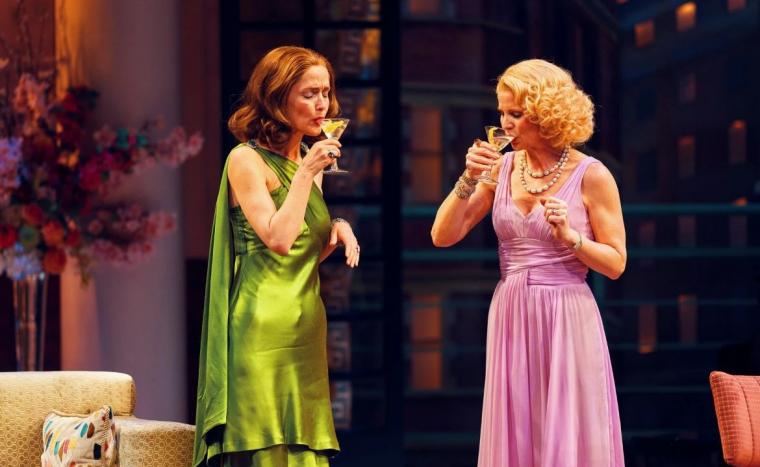
Suffice it to say that the sips turn into full glasses, the glasses turn into a full bottle, the bottle turns into another bottle of much harder liquor, and outside of Dudley Moore in Arthur, I'm not sure I've ever seen more hysterical drunk acting. Few sights in (fictional) life are more hilarious than that of the well-to-do losing every last molecule of their composure, and O'Hara and Byrne go to soused seed with uproarious relish, their sloshed – yet entirely comprehensible – words cascading helplessly and their bodies twisting into seemingly every unnatural position possible. You feel inebriated just watching them.
As Julia's and Jane's solidarity morphs inevitably into suspicion and spite, Byrne stomps across the couch and O'Hara slides on the stairway face down, and I practically bust a gut at the stars' comic brio and Ellis' ingenious slapstick staging. (This really was a dangerous viewing experience, because I also laughed so hard at the disarray of Byrne's hangover hair – kudos to the wig team – that it induced a coughing fit.) And despite being more than a century old, Coward's delectable conversations and witticisms continue to sparkle. As a play, Fallen Angels (its streaming presented directed by Annette Jolles) isn't the masterpiece that Blithe Spirit and Private Lives are; as in most farces, the opening 20 minutes are a bit stiff, and the resolution is too pat and predictable. But the presentation being shown on Broadway HD (for just a few days more!) is divinely worthwhile for O'Hara and Byrne, as well as for the Tony-cited costumes, specifically the leads' gowns, that prove as funny as they are fetching. Cheers!