
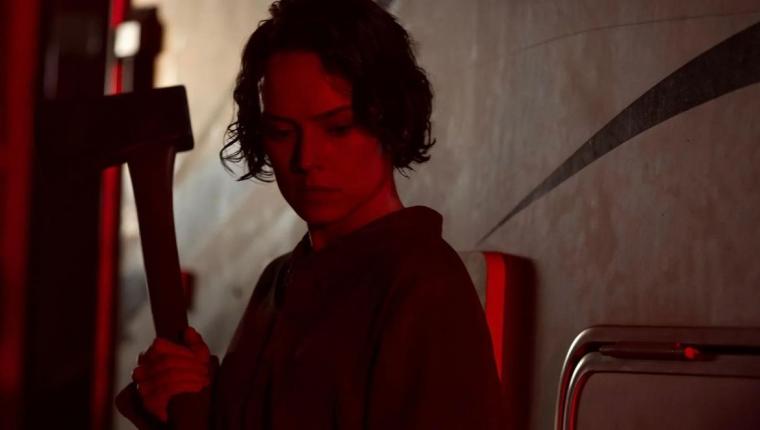
Daisy Ridley in We Bury the Dead
WE BURY THE DEAD
As has become a common ritual, the first weekend of the new year brought with it a low-budget horror movie. Unlike releases of the M3GAN/Night Swim variety, however, this most recent release doesn't appear all that interested in being a horror movie – which is largely to its credit.
It's zombie-apocalypse time again in writer/director Zak Hilditch's Australian indie We Bury the Dead, and wouldn't you know it, American hubris is to blame. After one of our country's experimental weapons is detonated, presumably by accident, in Tasmania, all life on the island state is effectively wiped out in a millisecond. Kind of. Though most of the humans and animals are, to quote the Munchkins, really most sincerely dead, those finding and gathering the corpses have noticed that a few are starting to wake up brain-dead but ambulatory, and just a teensy bit agitated. Relief crews are consequently formed and sent to bury to deceased and, if necessary, alert authorities to which newly revived fatalities require bullets in their skulls, and among their number is American physical therapist Ava Newman (Daisy Ridley). Ava's husband Mitch (Matt Whelan) happened to be on a work assignment in Tasmania when the tragedy struck, and his spouse, joining a massive disaster-relief effort, has traveled Down Under to find him. If he's alive, great. If he's dead, she'll at least know. And if he was dead and is now something else … Ava might be able to work with that.
For almost half of We Bury the Dead's brisk 95 minutes, it seems entirely possible that Hilditch will sustain a rather remarkable feat, crafting a world of wholly innocent zombies at the mercy of human monsters. In her task of hauling corpses to the sidewalk in the capital city of Hobart, Ava finds herself partnered with Clay (Brenton Thwaites), a tattooed, chain-smoking swarthy Jesus in a muscle shirt. Clay has the upper arms for heavy lifting, but doesn't see what Ava does when she encounters her first resurrected victim in a repair shop. The motor-oil covered man standing before her doesn't move, and doesn't look at all threatening; indeed, his glassy eyes appear filled with tears. Predictably, Clay (re-)kills the guy anyway, and relishes doing so. But the idea persists, for Ava and for us, that these beings are to be pitied more than feared; one member of the volunteer relief teams even posits that the regenerated humans, like ghosts in a haunted-house movie, are sticking around because they have “unfinished business.” And with U.S. and Australian soldiers staunchly unsympathetic and Clay ready to split some skulls, we seem on the verge of a completely original take on traditional formula – still wanting to yell “Run!” at the screen, but wanting the zombies to heed that advice.
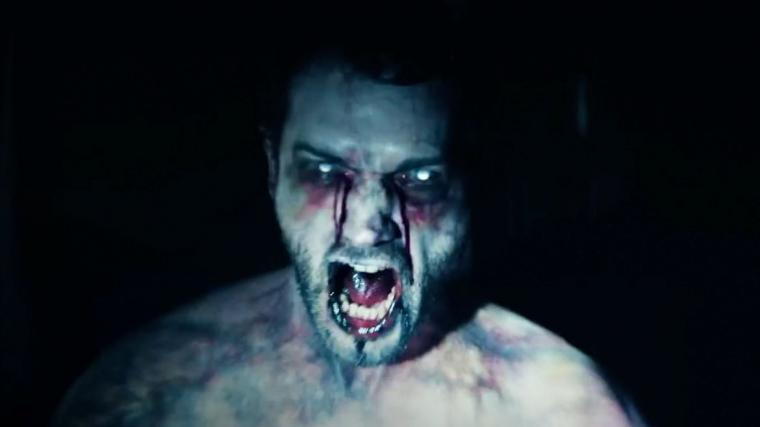
Unfortunately, there are genre imperatives at stake, and around the film's midpoint, many of the undead we subsequently encounter become the same growling, drooling, unnaturally speedy beings familiar from all those Walking Deads and 28 Days/Weeks/Years outings (with a new one landing a week from Friday). Hilditch shoots their attacks decently enough, yet it's never clear what the creatures want from those they assail. Do they want to eat us? To infect us? To merely rip us apart? And because it's believed that their return to “life” is due to some chemical rewiring of the central nervous system – a piece of halfhearted explanation it felt best to ignore – why are only humans resurrected? Why not birds and puppies, too? (Now that would've been original.) Some of the zombies do appear to have unfinished business, and there are unsettling yet unexpectedly touching moments in which Ava recognizes that possibility: with the father of a family of four who wants to dig a grave; with a nine-months-pregnant woman who definitely has something on her to-do list. Inclusions such as these are effective and weirdly intimate enough to make you wish the more routine zombie thrills had been edited out completely, especially considering how little they affect the narrative. Hilditch's is the rare horror film in which the scares aren't the point; they're just the filler.
What the movie more accurately delivers is a feature-length exploration of grief, guilt, and the pressing need for closure (with occasional zombie mayhem), and it sits squarely on the shoulders of Ridley, who's impressively up to the task. Like those of many of her peers, the Brit's accent is on the iffy side; she doesn't sound English, but doesn't sound recognizably American, either. Yet that's the only element of Ridley's stinging portrayal that doesn't fully register, and her expressions, frequently shown in the tightest of closeups, tend to be devastatingly subtle. While cinematographer Steve Annis does wonderful work with expansive vistas and overhead shots, his camera functions best when it's simply focused on Ridley's face, registering Ava's tears and speed of thought when confronting some new threat either beastly or human – which, in the form of Mark Coles Smith's Australian solider Riley, proves even more beastly. We Bury the Dead is a so-so fright flick but an unexpectedly resonant drama that Daisy Ridley gives her all to, and having arrived on a weekend generally devoted to guilty pleasures, it's starting the 2026 movie year on an admirably sober note.

THE SECRET AGENT
You'll probably need to be aware of Brazil's political history dating back to the 1960s to get the most out of The Secret Agent, writer/director Kleber Mendonça Filho's decades-spanning dramatic thriller that recently made the shortlist of titles eligible for this year's Best International Feature Oscar. But you might only need to be human, and willing to embrace challenging material, to find this 150-minute achievement riveting, even if you don't wholly understand what's going on. As routinely happens at Iowa City's FilmScene, our Sunday-afternoon screening was prefaced with a welcome by a friendly staffer, who admitted that he found the film confusing, though he did quickly add, “But you all look a lot smarter than me.” During the film's first hour, I was pretty sure he'd overestimated my intellect. Yet by the final scenes, I was staring at the screen with open-mouthed excitement, and not quite ready for the experience to be over.
Because I'm sadly ignorant about most of the particulars involving Brazil's military dictatorship of the '60s through '80s, much of The Secret Agent's first third was lost on me. Because I'm a major fan of last year's International Feature champ, Walter Salles' Brazilian drama I'm Not Here, I was at least not completely in the dark. An introductory title card, with a wink, establishes the new film's 1977 setting by calling it “a period of great mischief” for Brazil, and we're given a sense of Mendonça Filho's presentational leanings in the first scene, when Marcelo (Wagner Moura), in a shiny yellow VW Bug, pulls up to a gas station. Greeting him, and us, is a corpse underneath some pieces of cardboard, one that the station attendant assures Marcelo will be removed as soon as the police show up – though it's already been several days, and they've yet to arrive. When the cops do come, it's not for the dead body: They're on-site because they were alerted to the presence, or rather the recognizable car, of Marcelo. The police question him, they check out the Bug, and at no point do the officers tend to the covered fatality in front of the pumps, though some lingering flies and a pack of dogs certainly do. It's an odd, unsettling, morbidly funny intro, but two things are instantly clear: The police can't be trusted to do their jobs, and Marcelo, for reasons initially unclear, is on their radar.
From that moment on, Mendonça Filho's narrative gradually takes shape, and there are an extraordinary number of moving parts – several of which aren't made immediately clear. Marcelo moves into an apartment complex managed by 77-year-old Dona Sebastiana (the majestically throaty Tânia Maria), the other tenants, like Marcelo himself, being political refugees. Marcelo, a widower with a young son (Enzo Nunes' Fernando) living in the care of his grandparents, takes a job with the city of Recife's registration archive, looking for written evidence of his mother's existence. A corrupt police chief and his sons offer Marcelo protection in between grievous misdeeds. A pair of hit men are on Marcelo's tail. A political-resistance leader attempts to secure Marcelo a way out of the country. Oh yeah … and an amputated leg, first seen in the mouth of a dead tiger shark, is on the loose during carnival season, and has apparently murdered a number of gay men cruising the public park.

Obviously, this last bit didn't really happen. But to the delight of schoolchildren clamoring for copies of the new edition, the Recife newspaper says it happened, and that Mendonça Filho actually visualizes the paper's obvious lie (a cover-up story hiding the fact that cops themselves were the murderers) demonstrates The Secret Agent's unexpectedly cheeky bent. Here we are at an intense drama about political oppression and there's a freaking human leg hopping about the community and kicking people in the nuts. To be sure, Mendonça Filho wants us to be alarmed by Marcelo's plight and horrified by the Brazilian dictatorship and country-wide corruption. But he always wants us to have fun – it's carnival! – which he does with blasts of music, color, sexiness, unanticipated hilarity, and cinematic reverie, Fernando's obsession with Spielberg's Jaws, a film the kid is too young to see, proving to be a central plot point. You never stay on any particular mood for very long in this gorgeously expansive work that netted Mendonça Filho the Best Director citation at last May's Cannes Film Festival. His movie, while frequently urgent and scary, is also freewheeling and wildly adventurous, and your patience during the deliberately inscrutable first half is rewarded tenfold in the second. Hints turn into undeniable truths, breadcrumbs turn into full meals, and the shocking introduction of modern-day cell phones and laptops leads to a finale of spectacularly earned perseverance.
And my God, the faces in this thing! Oscar hounds know that this is the first year in which a long-argued-for Academy Award for Best Casting will be presented, with Mendonça Filho's film already having made the list of 10 eligible shortlisted titles. Although I fully expect the prize to go to either Sinners or One Battle After Another, if The Secret Agent doesn't at least make the final five, I'll readily sign a petition demanding a recount. Wagner Moura, whose magnificent, heartrending, slow-boil performance won him Best Actor at Cannes, is traditional-movie-star handsome. But as the end credits remind us via the actors' names accompanying their on-screen visages, there are at least two dozen significant supporting figures in this jubilant epic, and every single one of them is visually distinct and, even better, character distinct – Mendonça Filho's rapturous offering is like a political-thriller take on Robert Altman's Nashville. It was a true pleasure to spend two-and-a-half hours in this cast's collective company, and I'm already eagerly anticipating a reunion.