
Timothée Chalamet in Marty Supreme
MARTY SUPREME
Viewed in retrospect, director/co-writer Josh Safdie's Marty Supreme is never funnier, more clever, or more thematically on-point than during its opening credits. Much like 2019's Uncut Gems, which Josh directed alongside his brother Benny, I found this latest showcase for “hilarious” abhorrent behavior grossly self-satisfied and almost unfailingly obnoxious. The opening credits, though, are a hoot, landing right after two characters sneak off for a quickie, and demonstrating, through retro animation, one feisty spermatozoon leaving millions of others in its wake en route to fertilizing an egg.
Right from the start, you could argue that Josh Safdie is already repeating himself. Upon returning to my original Uncut Gems review to make sure I didn't overuse adjectives such as “ugly” and “exhausting” for this one, I was reminded that the 2019 film practically opened with interior footage of a colonoscopy. The metaphor was obvious, and if that sequence immediately hinted at a feature-length study of an asshole, Marty Supreme's opening credits suggest that we'll be spending the next two-plus hours reckoning with the actions of a dick. Yet the sperm-and-egg intro is unexpected and amusing regardless, and it being scored to Alphaville's “Forever Young” – despite the movie being set in the early 1950s – somehow intensifies the gag. Clearly, and with laughs intended, this will be the tale of one fiercely dedicated competitor determined to succeed while countless others fail. (“Can you imagine when this race is run? / Turn our golden faces into the sun.”) After all, isn't the fertilization process nature's grandest triumph-of-the-underdog story?
Safdie's and co-screenwriter Ronald Bronstein's take on that story appears to be aiming for similar grandeur, and the movie's borderline-unbearable advertising campaign is selling Marty Supreme as the ultimate American Dream saga – a pull-yourself-up-by-your-bootstraps adventure bathed in grubby realism and coated in orange. (Why, you may wonder, has the film's star been donning that color for his relentless PR tour? Because his character Marty Mauser wants to market a signature orange ping pong ball. That it's the exact same orange hue that influencers used to promote Billy McFarland's 2017 Fyre Festival is eyebrow-raising, to say the least.) If you're so inclined, you can also finds any number of ideological leanings in the script's design and presentation. It's about the American class struggle! No, it's about the immigrant experience! No, it's about post-war Jewish assimilation!
But because the experience of Josh's latest felt so familiar, I'm currently unwilling to give Safdie and Bronstein points for presumptive Deep Thoughts, and am sticking with the far simpler “It's about making another Uncut Gems, but with Timothée Chalamet in the Adam Sandler role!” Undeniably propulsive through it was, the Safdies' 2019 feature was about a raging narcissist who continually crapped on everyone around him, and who we were expected to root for in his every nanosecond of noxious, entitled behavior. Josh's solo outing, for my money, is just as frenzied and equally irritating, but if I can't quite hate Marty Supreme the way I loathed Uncut Gems, it's solely because the ping pong scenes are a lot of fun. Too bad there weren't more of them. Like two dozen more.
Because he's on-screen almost constantly, your mileage on Safdie's most recent cinematic panic attack will depend on how much of Chalamet's motor-mouthed, helplessly insulting huckster you can stand. I lasted about 10 minutes, and there were 140 to go. First shown, in his job as a New York shoe salesman, trying to squeeze a size nine-and-a-half foot into a size eight-and-a-half heel – a deliberate ploy to make his customer buy a more expensive pair – Marty Mauser knows he's destined for better things. One thing in particular: He wants to be known as the best table tennis player who ever lived. Marty Supreme consequently follows the unorthodox path he takes to achieve that recognition, which Marty imagines will be initiated with a victory at the 1952 British Open, and cemented with his ultimate triumph in Japan's World Championship tournament. Let's just say that things don't go according to plan, beginning with Marty's attempt to procure the $700 needed to fly to England in the first place. What starts as a simple request for the money allegedly owed him turns into a mildly apologetic armed robbery, and as anyone familiar with Sandler's increasingly unhinged Uncut Gems desperation will anticipate, events only get more cringe-comically convoluted from there.
Credit where it's due: Safdie and Bronstein have crafted an impressively, almost ridiculously Byzantine narrative for their striving-loser scenario, and with some (major) adjustments in presentational style, this might've been a screwball-comedy classic – something akin to a coked-up Marx Brothers. Before its completion, Marty's demented hero's journey will have involved a kidnapping, a purloined necklace, a lost dog, a Broadway opening, a pair of adulterous affairs, a few car chases and shootouts, a bathtub crashing through a ceiling, and the Harlem Globetrotters. If you threw in Margaret Dumont clutching her pearls, Groucho would've had a field day. But the movie's tone is the opposite of screwball-light; it's woefully oppressive. Darius Knondji is an ace cinematographer and provides naturalistic, grungy decay by the truckload. His camera, however, is so routinely employed for extreme closeups (usually of unhealthy-looking faces) that the images barely breathe, and the naturalistic performances, heightened though they are, have the effect of making every bit of business seem plausible – which wouldn't be a criticism if these happenings weren't so wildly implausible.
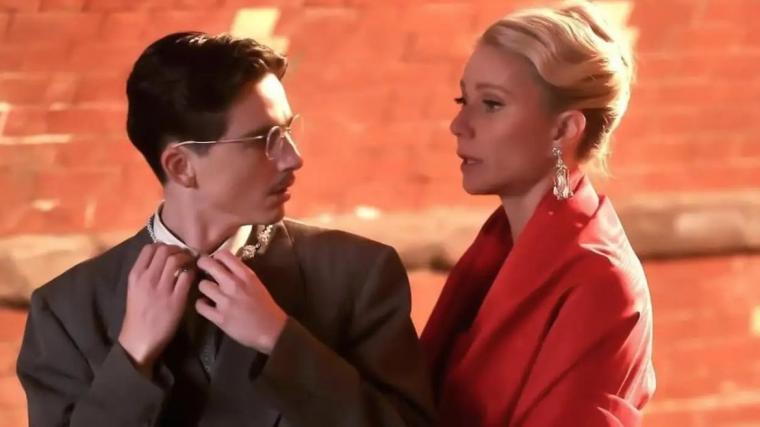
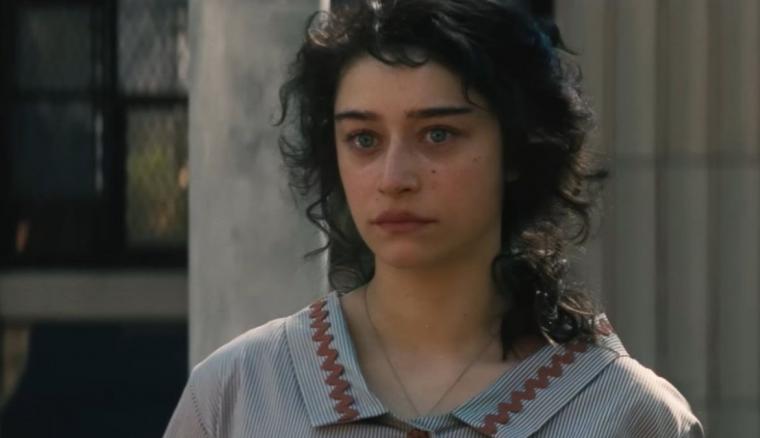
With the possible exception of Marty's, given that he's only acting in his own self-interest, nobody's actions make sense in this thing. Odessa A'zion, as the childhood friend and adult f--- buddy whom Marty impregnates, boasts a lovely, bruised presence and considerable acting chops. (A'zion is also great, and very funny, in the recent HBO series I Love LA.) But it's impossible to believe that her Rachel would carry such a torch for a guy who treats her this abominably, going so far as to become a co-conspirator in violent escapades during her eighth month of pregnancy. (If the goal was merely to demonstrate how dopey Rachel was, that could perhaps be forgiven, but I'm afraid Safdie and Bronstein want us to instead consider her a fiercely loyal, salt-of-the-earth Gal Friday.) It's wonderful seeing Gwyneth Paltrow actually act again, and she's quite touching as retired film actress Kay Stone. She's also too stately and sane to be remotely persuasive as someone who would find Marty irresistible, and the moronic choices Kay makes to continue their clandestine hookups makes you feel she deserves the reprehensible treatment she receives.
That proves to be a running motif. Over and over, even the most sympathetic peripheral figures – such as Luke Manley's Dion, who helps Marty pitch the orange-ball idea – drain your reserves of empathy for being such nitwits, primarily for blindly following Marty into the abyss. Yet whether it's Tyler Okonma's Wally, a taxi driver who assists in our lead's hustling, or Kevin O'Leary's Milton, Kay's cuckolded husband who gives the scoundrel way too many second chances, you can't trust anyone in Marty Supreme to behave in ways that don't feel dictated by contrived plot necessities. It isn't a requirement for movie characters to be likable, and as evidenced by any number of adored dumb-ass laugh fests, it isn't a requirement for them to be smart, either. Unlikable and foolish, though, is a toxic combination, and it's applicable to too many in the land of Marty Supreme: Larry “Ratso” Sloman as Marty's uncle who can't stand his nephew's job performance but promotes him to manager anyway; Abel Ferrara as the crook with an unhealthy attachment to his dog; Géza Röhrig as the table-tennis champ with an intensely specific Holocaust-survival story that Safdie perversely treats as a sick joke. I didn't want to spend time with any of these people … but they were at least finer company than Marty himself.
Look. I know people find Timothée Chalamet adorable. I know they consider his nakedly expressed desire to be the GOAT of screen acting refreshing. It's admirable that he spent so many years of his nonexistent free time mastering a Bob Dylan impression and practicing his ping pong. And lord knows he's talented. I love him in Call Me by Your Name and Lady Bird and Beautiful Boy and Little Women and A Complete Unknown, and as of last year, am even getting on-board with him as Paul Atreides. But despite the critical hosannas for his latest portrayal and the loud insistence of many that the new 30-year-old is "overdue" for an Oscar (some of that insistence seemingly implied by the star himself), I found Chalamet utterly insufferable as Marty Mauser, and for the same reason Sandler was hellish in Uncut Gems: He's too good at his job.
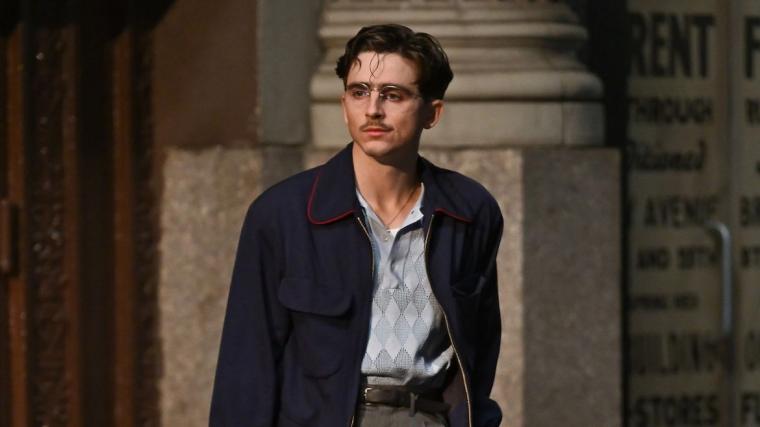
Marty, as written, is a shitty friend and worse lover, genetically incapable of performing a single act that doesn't benefit him personally. He's also unspeakably cruel, blithely brushing off the murders committed for his gain, debasing the sacrifices of fallen soldiers, and making a Holocaust crack so heinous that fellow patrons at my screening gasped. Yet the movie persists in applauding Marty's gumption and drive, failing to view his quest as the psychopathic trajectory it is, and asking us to laugh at his “Oh no he didn't!” verbal offenses that would be pathetically juvenile if they weren't so actively offensive. To be sure, this sort of logorrheic misanthropy is thrilling for some – their boy Tim owning those stuffed shirts. As a character conception, it's also tedious, one-dimensional, and, over the course of two-and-a-half hours, phenomenally unsustaining. And Chalamet plays it to the hilt, only softening his approach toward the very end, while the thunderous d-bag Marty Mauser is still being rewarded past the point of propriety. He's like a one-man Entourage: charmless, spoiled beyond measure, getting the world, and somehow, right when you think a reckoning is in store, managing to get a little bit more.
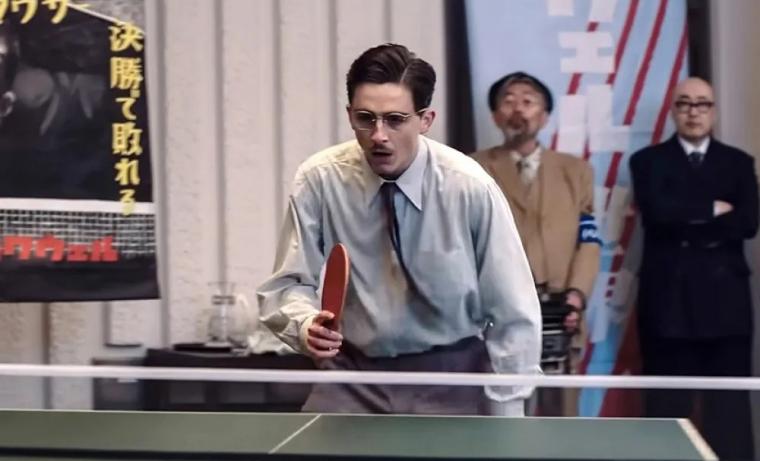
At least there's the ping pong. I'm not sure how much of the witnessed table tennis required CGI or other forms of cinematic trickery to make the miraculous serves and volleys and spikes happen. I'm hoping none. Regardless, these showcases of physical prowess, with Chalamet and his competitors fashioning their bodies into the unlikeliest of shapes to keep the ball on the table, are truly dazzling – the lone element of Safdie's solo venture guaranteed to get me, and keep me, grinning. For a ping-pong movie, there isn't nearly as much ping pong here as I would've preferred. But what we got was choice. I could've watched those scenes all day. The rest of the time, it felt as though I was watching Marty Supreme all day.

SONG SUNG BLUE
On some multiverse version of Earth, there's probably a rendition of Song Sung Blue, with the same cast and script, that's absolutely atrocious – and I'll readily concede that for a number of viewers, that Earth might very well be this Earth.
Adapted from the documentary of the same title that received Jury and Audience Awards at the 2008 Sundance Film Festival, this musical tearjerker follows Mike and Claire Sardina (Hugh Jackman and Kate Hudson) while they make a name for themselves as Neil Diamond “interpreters” Lightning & Thunder, a popular Wisconsin act that went from playing casinos and VFW halls to opening for Pearl Jam. (Amazing-but-true story.) The region requires Jackman and Hudson, among others, to adopt you-betcha-yah accents in between covers of Diamond's enormous repertoire, and the particulars of the Sardinas' journey are such that had their tale not been a verifiable one, you would've instinctively reacted to each new factoid and complication here with a disgruntled sigh and a muttered “Only in Hollywood.” Mike is a recovering alcoholic and traumatized war vet with a serious heart condition. Claire survives not one but two freak automobile accidents on the very same spot, one of them leading to emergency surgery, severe depression, and pain-killer hallucinations. Not to be snide about other people's troubles, but this is already a cornucopia of traumas built for reflexive Golden Globe recognition – Hudson, at least, got hers this year – and I haven't even mentioned the couple's prior divorces, financial difficulties, troubled children, and questionable management courtesy of Jim Belushi.
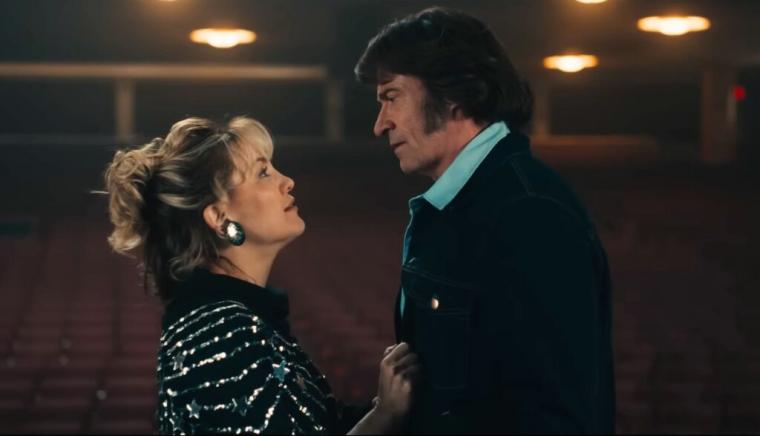
In other hands, Song Sung Blue might've been mawkish as hell, and there are moments in which the earnest stars can't fully extricate themselves from the manipulative whirlpool. (Tears come a little too easily for both actors.) Happily, though, we're in Craig Brewer's hands, and while he can certainly be sentimentalist, the writer/director of Hustle & Flow and Black Snake Moan is hardly saccharine. The many, many hardships endured by the Sardinas are treated with respect and a welcome absence of melodrama, and he guides Jackman and, especially, Hudson to formidably strong portrayals when Mike and Claire hit their lowest ebbs. (For Jackman, it's the scene of Mike checking his wife into rehab; for Hudson, it's Claire's subtle panic, and heartbreaking faked smile, when sensing that she may never be happy in front of a live audience again.) Brewer also elicits a rather devastating performance from Ella Anderson as Claire's overwhelmed daughter with Globe-ready issues of her own, and the staging of two horrifying incidents – one on a front lawn, one in a bathroom – is potent enough to cause viewers to yelp. All told, Brewer delivers a first-rate interpretation of his serviceable yet rather by-the-numbers screenplay, and none of what I've thus-far referenced gets to the best thing about Song Sung Blue: Give or take Zootopia 2, it provides joy like nothing else in current release.
There's a terrific running gang in which Mike continually bristles at the suggestion that Lightning & Thunder open their set with crowd favorite “Sweet Caroline,” preferring to start with the mood-setting ambiance of “Soolamon,” which is hardly one of Diamond's bangers. But nearly all of the musical numbers, even low-key ones such as the title song, tend to exude the same thrill you get from being in a packed barroom “Ba ba ba-a-a-a!!!”-ing at a first-rate karaoke performance – or even a third-rate one. Mike's and Claire's first, pre-relationship collaboration as they work out the piano fingering and harmonies on “Cherry, Cherry” is low-key electrifying, and Jackman's and Hudson's vocals throughout match that number's infectious spirit. “Play Me,” “I'm a Believer,” “Brother Love's Travelling Salvation Show,” “Holly Holy,” even Hudson's soaring take on Patsy Cline's “Sweet Dreams” – they're suffused with fantastic energy but also palpable warmth and respect, and make Song Sung Blue, despite the melancholy, a frequent mile-wide grin. When the movie trips up, it's merely conventional and blah. When it works, however, it's – shout along with me – so good! So good! So good!
ANACONDA
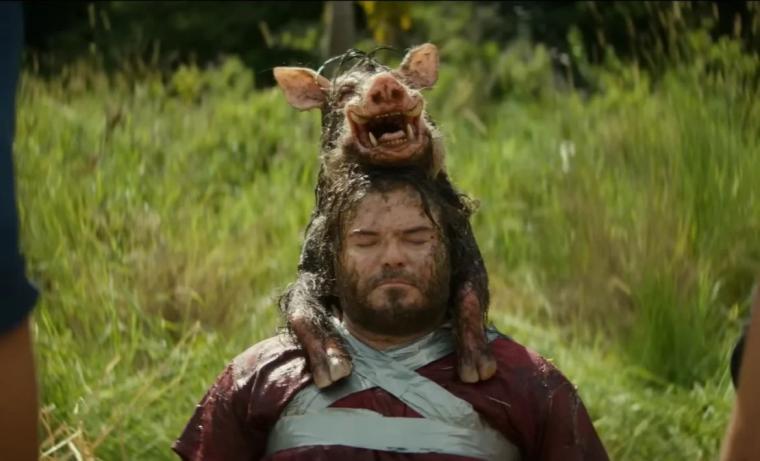
Heaven knows it has little competition, but the most well-sustained joke in director/co-writer Tom Cormican's action-comedy Anaconda reboot is the notion that 1997's original is remembered as fondly as it is. When Cormican's heroic quartet of now-grown childhood friends reunite after many years apart, they expound on the merits of that camp spectacle, roaring with laughter as they recite favorite lines and attempt to replicate Jon Voight's unfathomable accent. When said buddies are actually in the Amazon creating what they hope will be a “spiritual sequel” and indie smash, their boat is passed by another vessel whose crew is filming their own take on the material. When, earlier in the movie, Paul Rudd's flailing actor walks down a hallway at Sony Pictures (née Columbia), he passes posters of the some of the studio's most cherished works: Close Encounters of the Third Kind followed by All That Jazz followed by … Anaconda. The world of Cormican's film is a world in which an exemplar of '90s crap cinema is regarded with almost lunatic esteem – a kind of guilty-pleasure Citizen Kane – and this might've been be a sensational comic premise if the awfulness of the new Anaconda didn't make the '97 version look like an unhailed masterpiece in comparison.
Although it's admittedly novel to see a buddy comedy in which Rudd plays the anxious, excitable one and Jack Black is the (theoretically) calmer, more rational one, the stars' chemistry feels off, as if both became aware, too late, that they were in the wrong roles. But Anaconda is nothing if not a series of pairings that just don't work out. The kiddie slapstick doesn't blend with the situations predicated on middle-aged ennui. The goofiness of the “Let's remake Anaconda!” conceit doesn't connect with the weird seriousness of the illegal-gold-mining subplot. The puerile stabs at gross-out humor don't mesh with the not-always-dumb Hollywood satire. And on a purely technical level, the movie's a mess, with the anaconda attacks, in particular, so poorly shot that you can't tell how or even if certain characters meet their makers. I'm never unhappy to see Steve Zahn Thandiwe Newton, or Ione Skye, and Selton Mello, as an intrepid snake wrangler, delivered a few line readings whose off-kilter inflections took me by surprise. Otherwise, though, this Anaconda is a depressingly unfunny chore to sit through – a promising scenario with, in a thematically fitting demise, all the life squeezed out.