
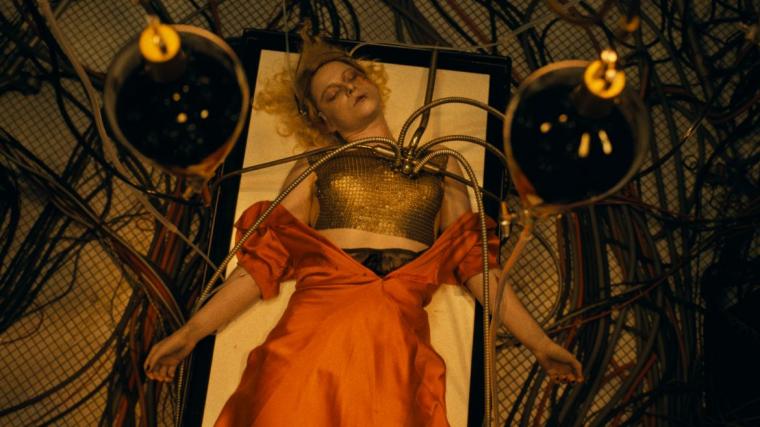
Jessie Buckley in The Bride!
I am dying to know what Mel Brooks must think of writer/director Maggie Gyllenhaal's The Bride! (Exclamation point hers.) When he released his 1974 masterpiece Young Frankenstein, and over the 52 years that have followed, Brooks must've thought he'd be the only filmmaker on Earth to showcase Frankenstein's monster in a plucky dance number scored to “Puttin' on the Ritz,” with the creature himself caterwauling the song's title in ecstatically garbled fashion. Now, another director has given it a whirl. And if possible, Gyllenhaal's intensely watchable, intensely problematic revisionist salute is an even nuttier achievement than Brooks', if not always nutty in appreciable ways.
We may as well begin with the narration, which will continue throughout the movie, and which establishes a suitably, almost incoherently lunatic tone right off the bat. The first character we meet is none other than Mary Shelley (Jessie Buckley), whose first novel Frankenstein; or, The Modern Prometheus was published in 1818 when the author was 20. Shelley informs us, in The Bride!'s on-screen prelude, that she has no idea where (or when) she is, and given that cinematographer Lawrence Sher only provides extreme close-ups of Buckley's face in these black-and-white encounters with the author, we haven't a clue, either. What Shelley does know for certain is that she's dead. What we're pretty certain of is that she's also extremely pissed and likely insane. (Despite her understandable mental imbalance, considering Shelley lost three children and a husband before turning 25, she throws her head back in maniacal laughter a few too many times for comfort.) Regardless, Shelley insists that she has a story to tell – one she's been fixated on since Frankenstein's publication – and the only way she can tell it, apparently, is by possessing the soul of a 1930s good-time gal in gangster-heavy Chicago. Ummm … o-o-o-okay.
Cut to: a Windy City nightclub, where the clearly edgy Ida (also Buckley) is being uncomfortably wined and dined by several uncouth goons. It seems that only a miracle could save Ida from being pawed at and worse, and the miracle arrives when Mary Shelley violently inhabits Ida's body, causing her to make an aggressive spectacle of herself while revealing, at top volume, how nearby mob boss Lupino (Zlatko Burić) has ordered the killings of numerous women. Lupino dispatches his henchmen Clyde (John Magaro) and James (Matthew Maher) to remove Ida, which they do by throwing her down a staircase to her death. Problem evidently solved.
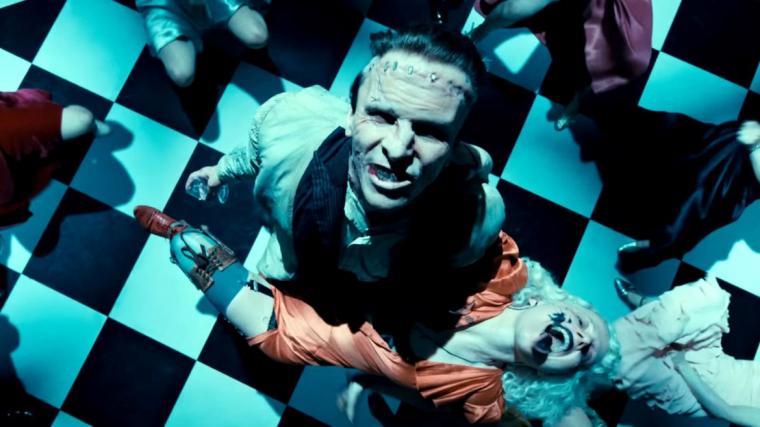
Cut to: a mid-town Chicago brownstone, where a tall, trench-coated stranger named Frank (Christian Bale) is seeking the aid of published resurrection expert Dr. Euphronious (Annette Bening). With grave calm and unexpected sweetness, Frank explains that he's Victor Frankenstein's original monster – the staples in his forehead appear to back up his claim – and he's hoping that Euphronious will do him a solid by creating, for him, a bride. The good mad doctor is dubious about Frank's claim, which would make him more than 100 years old, and equally leery about using her medical know-how to reanimate life. But scientific curiosity and sheer craziness win the day, and before long, she and Frank are digging into a grave and bringing departed party gal Ida back to the lab. A few jolts of electricity later, Ida is again alive, or nearly alive, and Frank is beside himself with joy. Ida? Maybe not so much.
Let's pause for a moment, because by this point – we're roughly 20-ish minutes into Gyllenhaal's 126-minute film – The Bride! is already gonzo as hell. A healthy chunk of the weirdness comes from watching Jessie Buckley, with staggering fearlessness, spasmodically shift between the personalities, physicalities, and accents of the Chicagoan Ida and the British Shelley in that nightclub sequence. Buckley is essentially performing a feral, terrifying rendition of what Steve Martin did in All of Me, which she'll continue to throughout the movie, and the oft-repeated routine is gloriously demented. Some of the early strangeness, however, doesn't feel quite so intentional. After Euphronious finally agrees to house Frank, it's off-putting, as though a few scenes went missing, when she subsequently screams about how reanimating the dead is a crime against nature and she absolutely will not do it … only to back down seconds later and all but reach for a shovel. (Yes, she's a mad scientist, but this character switcheroo is mad even for that stereotype.) The reanimation process occurs in what feels like record (abbreviated-for-time-concerns?) time. And what's with the conceit of having Mary Shelley possess Ida in the first place? Is this a universe in which, somehow, both Mary Shelley and her most famous literary creation share the same plane of existence? I'm not necessarily complaining, mind you; I love the ballsiness in Gyllenhaal's real-world/imagined-world hybrid. But it does cause you to question just how seriously we're meant to take The Bride! The answer, it turns out, is “Not at all.” Except for those times, more disappointingly, when it's actually “Very very seriously.”
I'll be skipping a beat-by-beat synopsis from here on, partly because the story is less notable than the style and content, and mostly because the narrative grows so overstuffed and Byzantine that I could barely recount the plot if I wanted to. Frank and Ida, the latter of whom prefers to simply be called “The Bride,” take to the streets and occasionally cause (mostly accidental) murderous mayhem. Detective Jake Wiles (Peter Sarsgaard, the writer/director's real-life husband) and his iconically named associate Myrna Malloy (Penélope Cruz) begin investigating the deaths left in our monstrous lovers' wake. There are big-screen and real-life encounters with matinée idol Ronnie Reed (Jake Gyllenhaal, the writer/director's real-life brother), whom Frank credits for unknowingly saving his life. Lupino sends Clyde and James out to re-kill the woman they killed before. Dr. Euphronious and her unsettling maid Greta (the ever-welcome Jeannie Berlin) pop back into the picture.
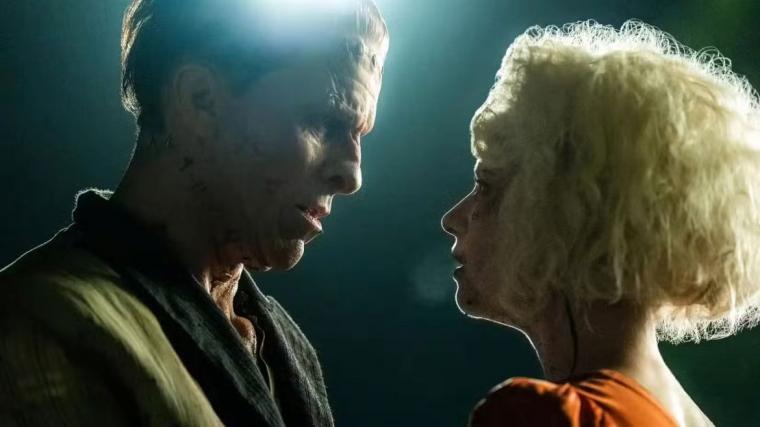
And through it all, there are choreographed musical numbers – lots of musical numbers! – and intentional anachronisms and low-comedy gross-outs and high-comedy banter (thank you, Sarsgaard and Cruz) and Bonnie & Clyde and steampunk and grand romantic gestures and unresolved detours and angry diatribes and, yes, “Puttin' on the Ritz.” It's all way too much. It's also, for some of us, too much in a delightfully unhinged way, causing your mouth to stay agape, practically from start to finish, at the sheer, joyous chutzpah of Maggie Gyllenhaal's experiment. In the wake of the critical success for her 2021 feature debut The Lost Daughter, a thrice-Oscar-nominated Netflix drama that also co-starred Buckley, Gyllenhaal was certainly going to get the green-light on a sophomore project. But The Bride! suggests that she maybe wasn't certain she'd get a third; this feels somewhat like every single movie Gyllenhaal ever wanted to make rolled into one.
The unignorable crowdedness means that potentially arresting diversions inevitably get short shrift. After Frank's and Ida's antics turn the (female) public on their side B&C-style, and women sporting Ida's signature ink-blot mouth tattoo instigate nationwide vengeance of their own, the murderous cultural movement is barely mentioned before the development is ignored entirely. Song-and-dance man Ronnie Reed, too, is set up to be of fundamental importance, only for the grinning lothario to be weirdly dropped from the film right when he begins to become interesting. The impetus behind Detective Wiles' involvement is so foggily explained that I'm still not entirely sure what his relationship to the living Ida was – nor even, for that matter, if Myrna is Jake's Gal Friday, a fellow detective, or, as he condescendingly describes her to other cops, his secretary. (There's a lot of The Silence of the Lambs' Crawford-and-Starling in their repartee, but the relationship here is frustratingly undetermined.) And I doubt I was the only one in Sunday morning's audience who produced an instinctive eye roll when, at the height of rage against worthless men, Ida suddenly started shouting, “Me too! Me too!” Not to diminish the impact of this essential 21st-century rallying cry, but I suppose we should be grateful that Ida didn't also verbalize the hashtag itself.
Still, I won't pretend that this everything-and-the-kitchen-sink mess wasn't, in general, a whole lotta fun. Buckley would make it worth a watch regardless, and Bale appears sweeter, more instinctive, and more jovial than usual – although, distractingly, he does tend to swap out his lightly European accent for brash, heavy-handed Chicagoese, and doesn't have a dead author possessing his soul to vindicate the choice. All of the aforementioned supporting presences are alert and winning, with Sarsgaard, Cruz, and the subtly unhinged Bening proving co-bests in show. The visual invention is frequently breathtaking; the soundscape choices flabbergasting; the thematic resonance considerable (when Gyllenhaal isn't so nakedly forcing the issues). Its problems are evident and, at least on occasion, kind of massive. Yet The Bride! remains a consistently engaging, risk-taking explosion of imagination and guts. Qualms and all, do I want to see more mainstream movies like it? As most hopeful brides have at one point said: I do.
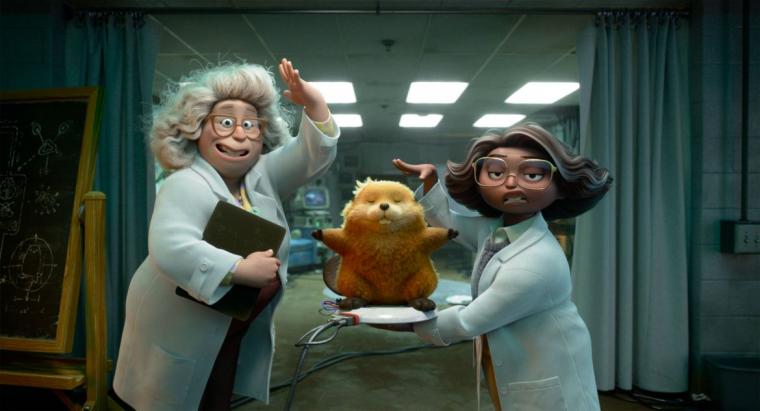
HOPPERS
In its candy-colored, family-friendly way, Disney/Pixar's Hoppers is just about as nutty as The Bride!, and comes with far fewer reservations attached.
Determined to save her beloved grandmother's forest glade from becoming a freeway that, we're told, will shave a whole four minutes off travelers' commutes, 19-year-old Mabel lucks into the means by which her brain can enter the figurative “brain” of a robotic beaver. Employing this familiar sci-fi process (“This is not Avatar!” her scientist mentor unconvincingly insists), Mabel's goading presence will theoretically attract wildlife back to the locale and thwart the mayor's plans, all the while learning more and more about what connects humans to animals and animals to nature and all of us to each other. Based on its trailers, I expected director Daniel Chong's and screenwriter Jesse Andrews' outing to be imaginative, and it was. I expected it to impart significant Life Lessons to kids of all ages, and it did. Yet even though I giggled through those previews, I did not expect this 105-minute charmer to be so unfailingly hilarious, nor for it to be Disney/Pixar's non-sequel high point since 2020's underrated Onward, or perhaps even 2015's Inside Out.
One of the downsides to the computerization of big-studio animated features over the decades – and Pixar, of course, was instrumental in that change – was that the images were no longer able to move with the lightning-quick velocity of, say, the old Chuck Jones and Tex Avery shorts. (A Road Runner cartoon remade with CGI is unimaginable … not that this might stop someone from trying.) There are moments in Hoppers, however, in which you tend to forget that. We're given a spectacular brief montage of Mabel (voiced by Piper Curda) and Mayor Jerry Generazzo (the pricelessly oily Jan Hamm) waging verbal warfare that had me out-loud cackling at the speed and wit, and a hefty number of cuts boast the sort of razor-sharp comedic precision that still leaves you roaring at “Duck Amuck” a half-century after you first watched it. More often than not, the comic gambits here feel timed with a stopwatch, which I absolutely mean as a compliment.
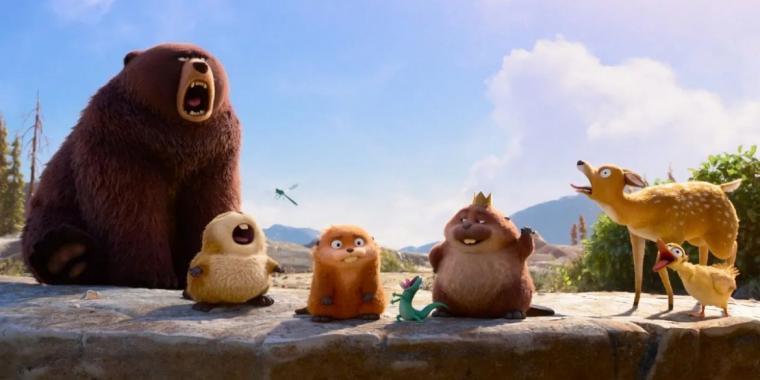
Yet Chong's bighearted achievement, one in which even that pesky mayor is more nuisance than symbol of Evil Incarnate, also knows when and how to breathe. We're treated to divinely serene visual and aural wonders in the glade and the more sizable pond where Mabel spends most of her time, as well as some lovely, quiet kinship between the teen and the accidentally promoted beaver monarch King George. (Bobby Moynihan performs comic wonders on his monologue describing the King's career trajectory.) Because it's Disney/Pixar, you can also expect a gentle tug on your heartstrings, though that aspect isn't exactly the movie's strong suit. While you can feel Hoppers straining for Up-esque melancholy in the scenes with grandma, composer Mark Mothersbaugh, despite a nice try, ain't no Michael Giacchino.
Where the film most excels is in its determination to make us laugh, which it routinely does through Dave Franco's hysterically crazed Insect King, and the Great White that pops out of freaking nowhere, and the imperious creature voiced by Meryl Streep who, despite a number of memorable on-screen deaths prior, meets her end in perhaps the grimmest, most riotous fashion imaginable. I had the time of my life at Hoppers, and only mildly winced when a building-a-dam montage went on for way too long, inevitably scored as it was to Loverboy's “Working for the Weekend” from 1981. Why are we, for such scenes in modern family flicks, foisting pop-rock anthems on audiences who not only weren't alive when those songs came out, but whose parents likely weren't alive when those songs came out? Is it Hollywood's way of perpetually keeping us in the blithe-entertainment fun house of the 1980s? I truly don't get it. It would be like watching The Muppet Movie in 1979 and finding the score composed solely of tunes by the Andrews Sisters.
2026 OSCAR-NOMINATED SHORT FILMS: ANIMATION
If we're in the days leading up to the Academy Awards ceremony, that means it's also time – and bless the venue programmers for this – for Davenport's Last Picture House to screen this year's Oscar nominees for Best Animated and Live-Action Short Film. (Along with their documentary cousins, the shorts will also be shown, at least through the end of the week, at Iowa City's FilmScene at the Chauncey.) This is the third conecutive year in which our awesome local institution has continued this tradition, and unfortunately (yet, personally speaking, very happily), an über-busy weekend of a continuing stage commitment and hosting out-of-town friends meant that the live-action showings didn't mesh with my availability. The animations did, however, and although I didn't enjoy all five with equal fervor, there wasn't a bummer in the bunch. The only disappointment came with the one un-nominated title included, which was culled from the animation branch's long-list of 15 possible Oscar nominees as a way to bulk the entire package up to feature length. I'm not sure it was worth the bother.
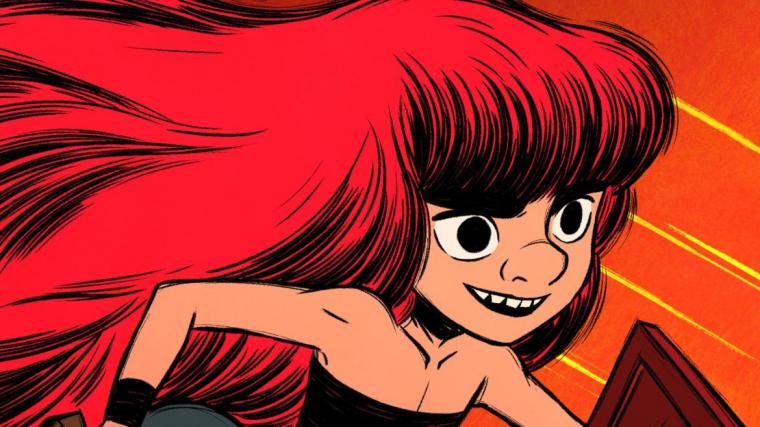
Just to get its mention out of the way early, that title would be writer/director Giovanna Ferrari's Èiru, a 13-minute Irish short in which a feisty wannabe warrior embarks on a quest to find the missing wells of water that mysteriously vanished from her village. Obviously, because they're fierce and brutish and male, the adults surrounding her think that young Èiru can't do anything. Also obviously, because she's perky and redheaded and starring in a short bearing her name, Èiru can do anything. So it's kind of like Disney/Pixar's Brave, though much shorter and less appealing, and with one of those “We're essentially all the same so why are we fighting?” endings that even the littlest of kids will see coming a mile off. (In that regard, the short also reminded me of 2023's War Is Over! Inspired by the Music of John & Yoko, an Oscar winner of such noxious sentimentality that it made me forever judge voters in this category.) It's not that Ferrari's achievement – a prize winner at five international festivals to date – is bad. It's just obvious, dull, and not particularly visually distinct, and certainly didn't need to (mildly) sully the experience of seeing the five legit nominees by landing at the program's tail. If you feel the need to duck out of the auditorium before this “special presentation” starts, do so with no guilt.
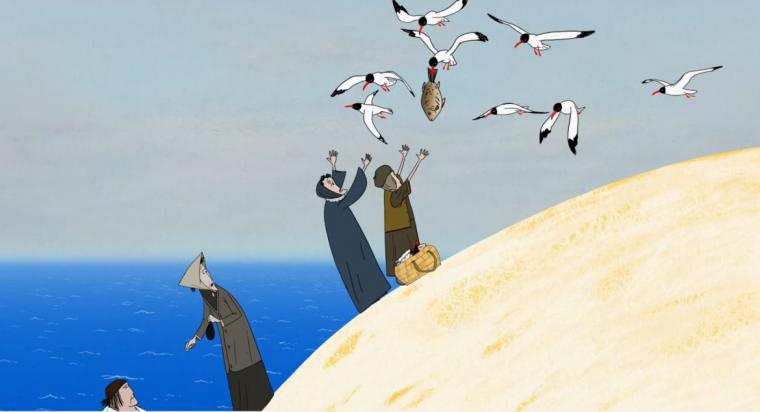
The other entries were considerably better, and Russian director Konstantin Bronzit's 15-minute, hand-drawn The Three Sisters proved an ideal opener, as it allowed Friday's well-attended matinée audience, myself included, to laugh heartily and frequently. Before the six shorts were presented, we were informed by an on-screen title card that some of the works might not be suitable for very young children, and that a warning would appear when we were in for something geared specifically toward adults. No such warning came for the Bronzit … which proved a little surprising after it featured rear male nudity and partial female nudity. (What are we in for later?, I thought.) But the nakedness was tame and comical, like when SpongeBob drops his shorts, and the film itself was a delight, telling of three spinster sisters who collectively lose their minds, and their collective sense of decorum, when a burly sailor rents a room on their otherwise-deserted island. Chekhov this clearly ain't. But Bronzit's wordless short augmented merely by occasional grunts, shrieks, and guffaws is an absolute hoot that should easily appeal to all ages and demographics – a miniature slapstick with no visible agenda beyond entertainment. More Academy Awards nominations should go to works this sublimely silly.
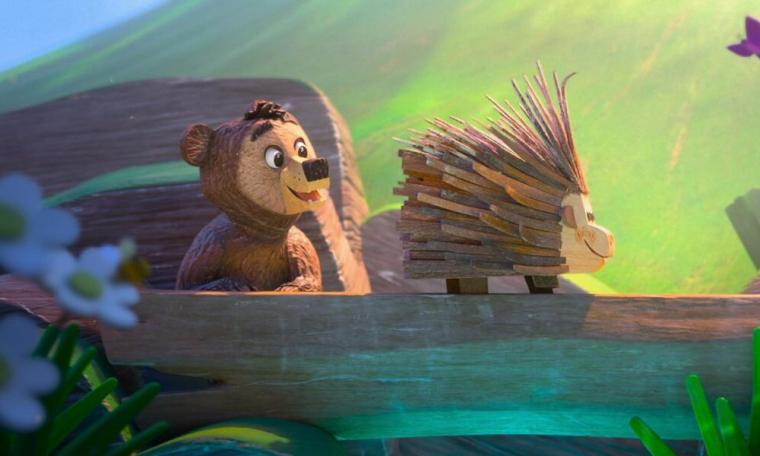
Following The Three Sisters was directors Nathan Engelhardt's and Jeremy Spears' 13-minute Forevergreen, which felt like all agenda, making it my least-favorite of the nominated bunch. In it, an abandoned bear cub bonds with a ginormous forest tree that provides sustenance and shelter as the creature grows into adulthood, only to have the influence of Those Damned Humans threaten to destroy the bucolic beauty. The animation is lovely and the intentions certainly evident, and there's just enough personality, on the bear's part, for the short to not descend into toxic sentiment. Still, the mini-narrative's arc is too preordained, and the grasping for tears too blatant, with memories of Bing Bong's demise in Inside Out surely, and rather maddeningly, intentional. It was endearing enough for me to not actively dislike Forevergreen, which, like Èiru, is a multiple prize winner. Admittedly, though, I was actively pulled from the experience when I realized that the entirety of the film's threat came from its bear landing upon, consuming, and desperate to find another bag of store-bought potato chips. The film may not win an Oscar (here's hoping), but by a wide margin, it's liable to be RFK Jr.'s favorite.
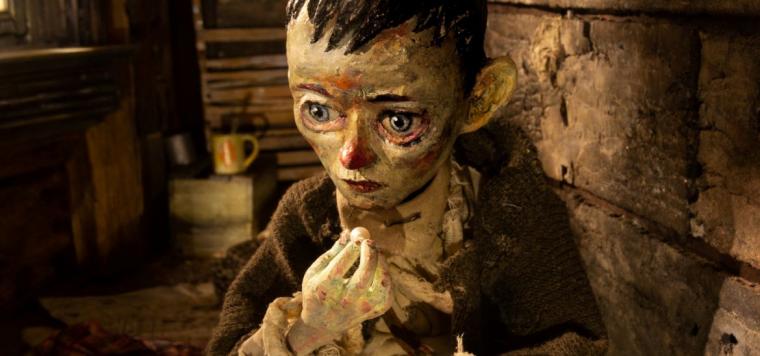
Program presentation number three was one of my favorite types in the Animated Short category: a film more upsetting than it needed to be. The Girl Who Cried Pearls, a 17-minute Canadian offering by directors Chris Lavis and Maciek Szczerbowski, is a memory piece in which a wealthy grandfather explains to his granddaughter how he amassed his riches, his tale involving abject poverty, larceny, brutality, and a neighbor who, to our protagonist's literal great fortune, could perform the miracle of the title. It's a gripping recollection, as well as a wonderful reminder of the basic power of storytelling, and up until the rather too-ambiguous finale, I was invested throughout. But the animation is creeeepy. Employing stop-motion animation, and with characters' mouths never moving, Lavis' and Szczerbowski's visuals make the impoverished figures look less sick, or even diseased, than zombified in their latter states of decay; it's as though all the characters were played by Griffin Dunne during his final scenes in An American Werewolf in London. To be sure, I was engaged. TGWCP was also the rare animated outing that made me want to take a shower directly afterward.
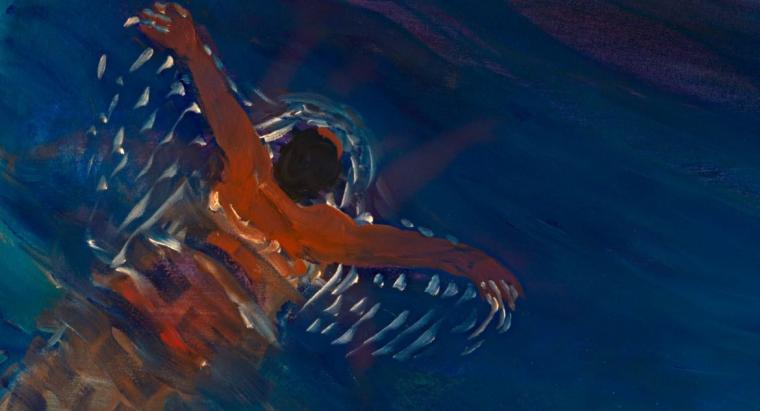
Beginning with entry four, director Florence Miailhe's 15-minute Butterfly, we were officially warned by a title card to perhaps take small kids out of the auditorium before the next two shorts' presentations. As no one in attendance apparently had children in tow, everyone stayed seated. But there wasn't anything in this impressionistic biopic that youths shouldn't see; it was more a matter of them likely not understanding it. A visually sumptuous flashback tale animated with what appears to be finger paint, the film follows the journey of French swimmer Alfred Nakache from his childhood through his participation in the 1936 Olympics through his imprisonment in Auschwitz (where his wife and daughter were killed) and beyond. It's a truly moving survival tale given just the right/necessary amount of animated distancing for the work to not leave you a wreck, and the bold colors and tactile immersiveness of the experience more than make up for the fact that, as a narrative experience, it's a little tedious. In truth, the work is more affecting in retrospect (after biographical details emerge before the end credits) than in the moment, yet it's an arresting work nonetheless.

My hands-down favorite of the 2026 lot, however, was Irish director John Kelly's visual poem Retirement Plan, which is simply seven minutes of rumination (available on YouTube!) in which the near-elderly Ray voices all the many varied, wonderful things he's going to do after his work life ends – many of them plausible, some cheekily implausible, nearly all of them unconditionally relatable. As voiced, incomparably, by Domhnall Gleeson, and with a haunting piano refrain playing beneath his alternately hilarious and gutting “I will …” pronouncements, Ray is adventurous and funny and sane. He's also overly ambitious and imperfect and silly. He is, in short, human, and no offering among this year's animated shorts so sidelined me with its humanity, leading me (and plenty of others at my screening) to laugh out loud while doing my/our best to curtail helpless sobs. In a perfect world, the software animation Retirement Plan would win its Oscar in a walk, and despite the film's brevity and simplicity, it's the eventual winner I'm predicting. At the end of the day, I'm just happy it got nominated. And also immeasurably grateful for the subsequent, more-necessary-than-I-thought presentation of Èiru, which at least allowed me 15 minutes in which to compose myself and walk into the Last Picture House lobby pretending I hadn't recently been emotionally clobbered in the most gratifying way.