
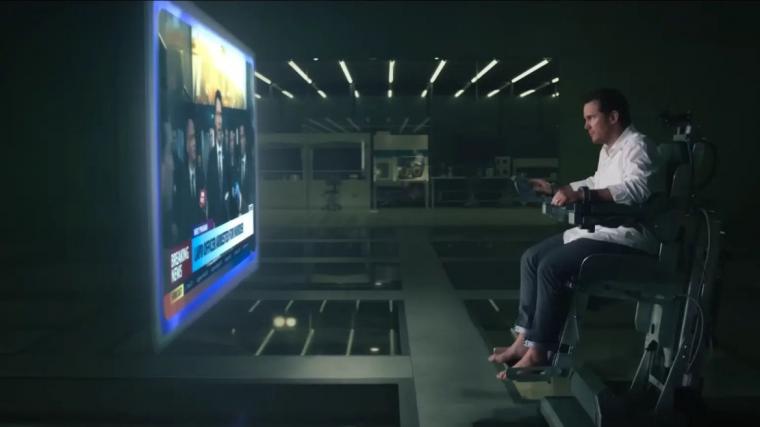
Chris Pratt in Mercy
MERCY
The mildly futuristic, vaguely sci-fi thriller Mercy is a rather confused movie, which, of course, isn't the same thing as a confusing one. Though they're frequently frustrating, confusing movies can at least provide the pleasure of trying to figure them out. Confused movies feel like they haven't figured themselves out. And one of the biggest problems with director Timur Bekmambetov's tangential addition to the screenlife genre (his producing credits include Searching, Missing, and Unfriended) is that it wants to eat its artificially intelligent cake and have it, too, presenting AI as evil incarnate before backpedaling with a wishy-washy “Is it, though?” By the finale, Bekmambetov's and screenwriter Marco van Belle's film is practically sucking up to AI. The sucking beforehand was more general.
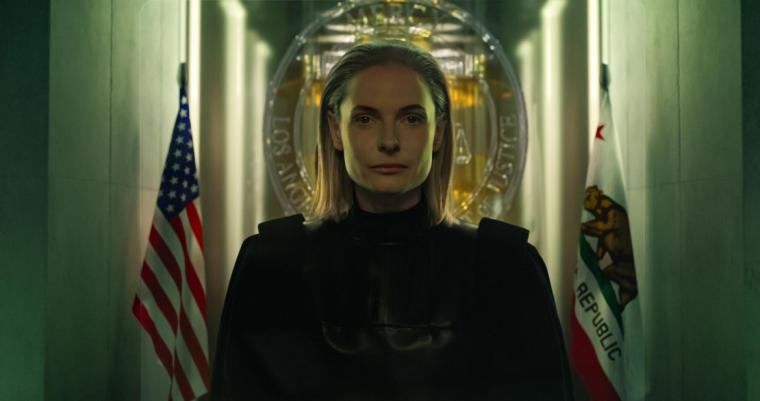
It's 2029 in this world of Mercy, and rampant crime in Los Angeles has forced a major change in the city's criminal-justice system. Now, instead of trials with human prosecutors and defense attorneys, potential death-penalty cases are put before the Mercy Capital Court, in which an AI overlord – here, it's Rebecca Ferguson's Judge Maddox – gives the accused 90 minutes to make their case before a verdict is rendered. If those in the hot seat can prove their innocence, great. If they can't, the defendants' chairs will become de facto electric ones, executing them on the spot. As the movie opens, the Mercy system has been employed 18 previous times, and that each of those 18 resulted in a guilty verdict isn't terrific news for case 19: Chris Pratt's LAPD detective Chris Raven, who was a gung-ho advocate of Mercy before being arrested for murdering his wife.
Every so often in the upper-right of the screen, a countdown clock shows us just how long Chris has left to clear his name. I found this really helpful, because it gave me visible evidence that, at the start, I was having fun for at least 15 minutes. To be sure, the expository world-building could've used some fleshing out. Cops appear to like it, but how does the rest of L.A. feel about Mercy? How does the rest of the country, to say nothing of the planet? Who decides when the Mercy Capital Court and shouldn't be employed? Lingering questions aside, though, there's definite kick to the notion that all electronic surveillance – smart phones, body cams, traffic cameras, and the like – is connected through Mercy to give a full, instant picture of a person's whereabouts and actions at any given time. That's what makes the movie so initially grabby, because based on the visual evidence, it really really looks like Chris did indeed kill his spouse. Meanwhile, the man getting blackout drunk right after the crime was committed, assaulting fellow officers before he was apprehended, and admitting that he doesn't remember the day's events does nothing to aid his case. Mercy teases us with the idea that Chris Raven – that lovable lunk Chris Pratt – might actually be a monster, and had it sustained that air of macabre curiosity the way that, say, Presumed Innocent does, this might've been a first-rate potboiler.
Very quickly, though, it becomes apparent that we're not meant to secretly fear Chris. Either of them. Raven has clichéd, woe-is-me trappings attached like barnacles: a wife (Annabelle Wallis) who refuses to see him; an angry teen daughter (Kylie Rogers) with whom he can't communicate; continued struggles with alcohol addiction; sustained grief over the death of his former partner (Kenneth Cho). In Hollywood cop thrillers, these are the ingredients for a victim rather than a victimizer. And Pratt, as an actor, can sand down the rough edges on any character – even that unacknowledged psycho from 2016's Passengers who woke Jennifer Lawrence from life-sustaining hypersleep because he was lonely. Pratt is never not Star-Lord: genial, goofy, the guy you want to have a beer with. But those qualities don't lend themselves to mystery (or haven't yet, at any rate), and after his teary protestations of innocence have concluded, the rest of the film is merely devoted to watching Chris employ his deductive skills to outwit AI – which would've been more entertaining had Pratt exuded the smarts and savvy to match his too-familiar everyman charm.
Then again, I'm not sure what any performer could've done with Mercy's material, which slips so casually and hastily into ludicrousness that it practically produces whiplash. Bekmambetov does solid, moderately propulsive work with the numerous screen images and images of screens, and Ferguson gives an amusingly robotic performance, even if she's too thoroughly human to ever be convincing as a being without a pulse. Yet by the time van Belle's plotting brought the stealing of precious chemicals, the reveal of long-lost siblings, and a planned terrorist bombing into the mix, I had thrown up my hands at the escalating silliness. And once I realized that Raven was not just going to one-up AI but actually teach it a little something, primarily about how to trust your gut instincts, the film had thoroughly devolved from a somewhat promising trifle into a full-blown embarrassment. Astonishingly, the moral in this tale of eventually symbiotic human and artificial intelligence turns out to be “Hey, we all make mistakes!” That we do. Making and seeing Mercy are two of them.
THE LOST BUS, COME SEE ME IN THE GOOD LIGHT, and THE UGLY STEPSISTER
Due to family obligations in Chicagoland and a general unwillingness to travel in sub-Arctic temperatures, Mercy was the only new cineplex release I attended this past weekend, for which I hope I'll be forgiven. (While I do want to see The Testament of Ann Lee, I can't imagine anyone genuinely caring about my opinions on Return to Silent Hill, H is for Hawk, or Clika.) Yet I didn't take a movie sabbatical, because in the wake of last Thursday's announcement of Academy Awards nominees, this period always leads to one of my favorite annual pastimes: getting caught up on cited films that slipped by me the first time around. While it's an ongoing process sometimes leading right up to Oscars night, a handful of personally missed titles are currently available for home viewing, and the three I recently watched are certainly deserving of their nominations. A couple of them are deserving of far more.
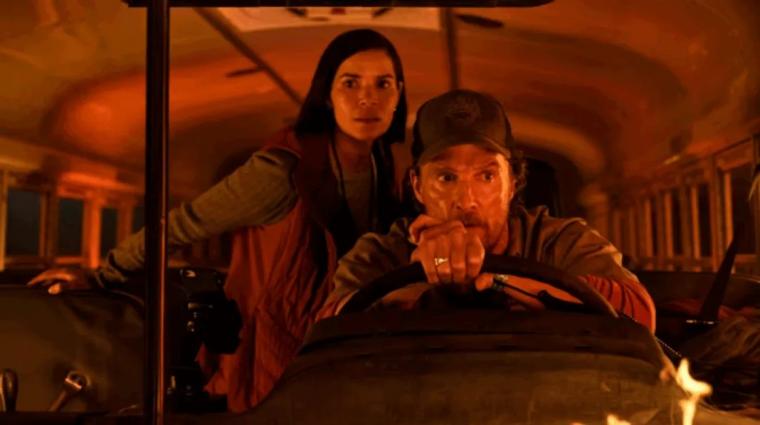
Truth be told, I was aware of The Lost Bus' Apple+ debut when it began streaming in mid-September. I chose not to review it, however, because I also chose not to view it at all. A real-life disaster thriller centered around the 2018 Camp Fire that ravaged Northern California and became (at the time) the deadliest inferno in the state's history, the movie's primary focus was on the school-bus driver, Kevin McKay, who rode his vehicle many miles through horrifying, seemingly impossible conditions to reunite his 22 child passengers with their parents. The movie promised innumerable scenes of traumatized grade-schoolers shrieking in panic, which I wasn't up for, and starred Matthew McConaughey as McKay, which I also wasn't up for. Adding that the reported response to The Lost Bus' Toronto Film Festival premiere was tepid, it seemed like the sort of thing I could easily bypass. Had I known the movie would eventually be nominated for Best Visual Effects, I would've watched it. Had I bothered to learn, back in September, that the film's director was Paul Greengrass, I would've watched it sooner.
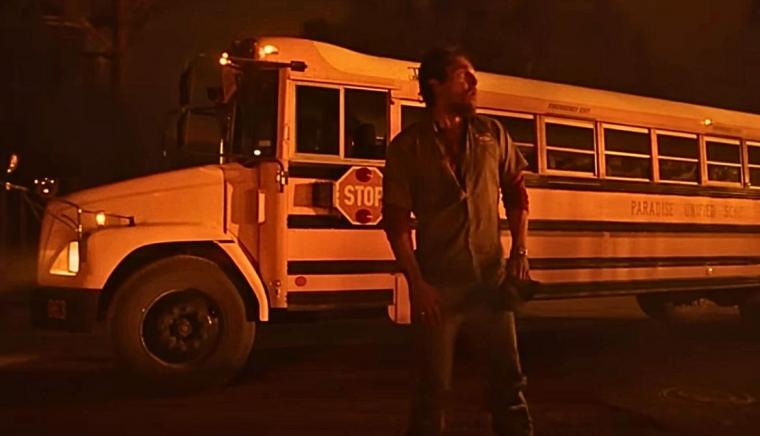
To get the chief demerit out of the way, just about everything to do with Greengrass' and co-screenwriter Brad Ingelsby's character-building is obnoxious, including McConaughey's overwrought portrayal. Practically Job-like in his suffering, Kevin McKay has everything stacked against him – he has no money, a job for which he's shown no respect, an ex-wife and son who hate him, et cetera et cetera – and McConaughey plays downtrodden with such pushy, indulgent self-pity that he very quickly becomes intolerable. And although she's supremely convincing as a caring elementary-school teacher, America Ferrera isn't allowed any character beyond “the other grown-up on the bus” after the fateful trek is initiated, her “endearing” sparring with McConaughey – who predictably nicknames her “Teach” – less charming than irksome.
But damn is Greengrass good with the action. His scenes of massive conflagrations and their side effects (downed power lines, cars crashing through windswept forest routes) are jaw-dropping in their execution, and the fiery threat is sustained with almost unbearable tension. Even if you know in advance how the tale is going to end, you're no less invested in the strangely beautiful horror of that yellow bus traversing through those terrifying blasts of orange and red. Greengrass also does wondrous work in his attention to the youths, none of whom are directed to be “cute,” and all 22 of whom routinely break your heart with their genuine anxiety and perfectly selected reaction shots. I'm way-late to the party on this title, but am so glad that The Lost Bus' visual-effects nod – viewed in retrospect, a “Duh!” in that category if ever there was one – came to pass. Hopefully others who similarly ignored the title will choose to climb aboard.
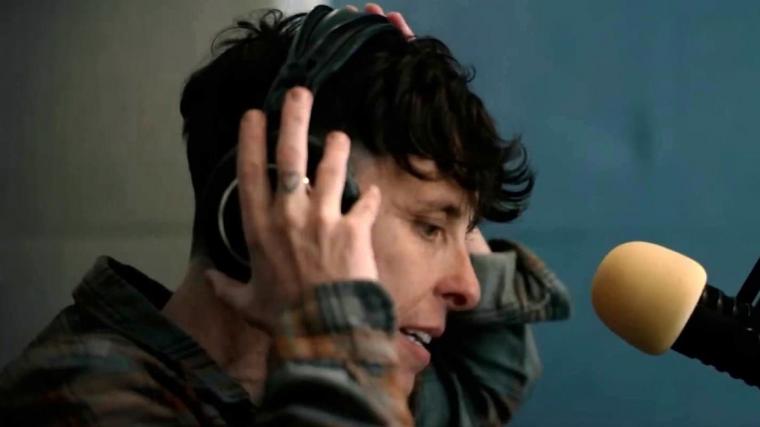
With Netflix's The Perfect Neighbor the only Best Documentary Feature nominee I'd seen prior to Thursday, my catch-up on the other four contenders began this past weekend with another Apple+ streamer: director Ryan White's Come See Me in the Good Light. It's an up-close-and-very-personal account of many months in the life of spoken-word poet and LQBTQ+ activist Andrea Gibson as they and their wife Megan Falley contend with Gibson's cancer diagnosis, and it wrecked me, principally due to how gorgeously unsentimental it is. Neither Gibson nor Falley think that the news of the poet's ovarian cancer, which was first diagnosed in 2021 before their passing last July, is anything but shitty. Amid the shit, though, is so much beauty: incalculable moments of tenderness, and huge bawdy laughs, and a defiant refusal to stop working despite the disease seeming to demand it.
Mostly, however, it's a testament to savoring every precious drop of life while you can – a challenge accepted, and gloriously fulfilled, in Gibson's sublime words and performances (of which we're treated to several), and even more so in the intensely loving interactions between Andrea and Megan. Unlike in other documentaries on similar subjects, you don't feel like an interloper – or, worse, a creepy voyeur – in the couple's health crisis. You feel invited in, with hosts who are happy you're there, and Come See Me in the Good Light might mark the finest argument for living I've seen in years. The biographical material and found footage on Gibson as a youth is affecting, if somewhat conventional. Everything else is boundlessly, heart-shatteringly unconventional, and while I may not necessarily be a better person for having seen this deeply moving work, I think it's enough that the movie makes me want to be one.
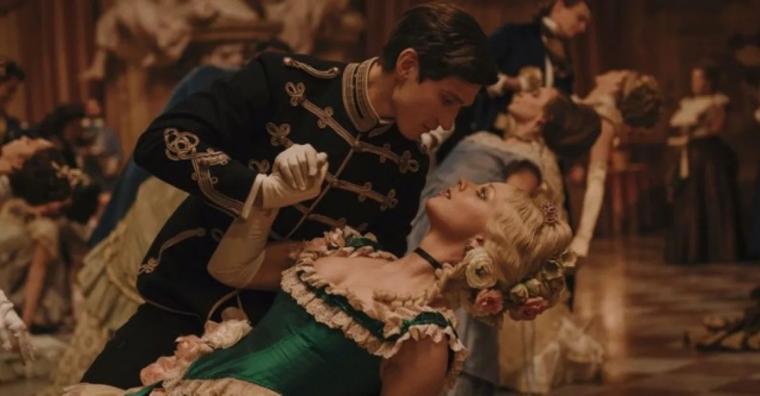
Scoring a nomination I predicted for a movie I hadn't seen, Norwegian writer/director Emile Blichfeldt's The Ugly Stepsister joins heavyweight titles Frankenstein and Sinners among the five contenders for the Best Makeup & Hairstyling Oscar. (The other two nominees are The Smashing Machine and Japanese drama Kokuho, the latter of which I'm hoping gets released somewhere prior to March 15.) How did I manage that accidental correct guess? Basically, just by hearing that the film was elevated body horror, which certainly did the trick for The Substance last year. Blichfeldt's movie also sounded like grisly fun, as it was a revisionist take on Cinderella that presented the fairytale from the perspective of one of Cindy's two “wicked” stepsisters. Let's remember that, in at least one of the European folk tale's iterations, that step-sibling actually hacked off part of her foot to squeeze it into the glass slipper. Let's learn more about her, please!
Well, we do learn more about her in The Ugly Stepsister (currently streaming on Hulu), and what we learn forms a dark-fairytale picture as upsetting and uproarious as it is pathetic and sad. It is, in short, everything The Substance wanted to be yet couldn't quite pull off. With chubby, uncouth Elvia (the remarkable Lea Myren) so desperate for the love of Prince Julian (a suitably handsome and loathsome Isac Calmroth) that she swallows a tapeworm in the hopes of decreasing her appetite, Blichfeldt's period shocker demonstrates the nightmarish atrocities some women will endure for their presumed ideas of beauty and happiness. Thematically, of course, that's so The Substance. This outing, however, delivers added delight in following the fairytale almost beat for beat – Thea Sofie Loch Næss is Cinderella, Ane Dahl Torp is the evil stepmother, Flo Fagerli is Elvira's blood sister – while forcing you to reconsider characters and events you've known since childhood. While the body horror is memorable, the emotions are truly palpable, and if The Ugly Stepsister goes cartoonishly overboard with several caricatures, it consistently does right by Myren. With the performer treating us to one of the most fearless turns in 2025 movies, her Elvira is revolting and tragic and hopeful and pitiable – and, in this brave re-imagining, perhaps granted a happier ending than the cruel fate that's surely awaiting Cinderella. By all means, Norwegian production companies, grant Blichfeldt the budget for whatever classic she wants to upend next. The Big Bad Wolf couldn't have been that bad, could he?