Through the thick melodic honey of Russian Romanticism and the ever-changing musical illusions of a contemporary American composition, the Quad City Symphony on December 7 fashioned a successful concert from two divergent approaches to lyricism. Although the symphony occasionally blurred the differences between melodies and their accompaniments, they achieved resplendent moments of uplifting splendor in both pieces.
The program paired Jennifer Higdon's imaginative, three-movement Violin Concerto - which won the 2010 Pulitzer Prize - with Sergei Rachmaninoff's profusely tuneful Symphony No. 2. Separated by a century of musical development, these works feature vast differences in compositional technique and tonality: Rachmaninoff worked in the customary symphonic form while Higdon writes improvisationally, and Rachmaninoff used traditional harmonic structure while Higdon employs a variety of tonal systems developed during the 20th Century.
But they are similar in using lyricism or songfulness as the primary means of self-expression. Consequently, in both cases, the artistic challenge for the Quad City Symphony was the same: to emphasize, with dynamics and stylistic nuances, melodic and motivic fragments and differentiate them from background sounds and accompaniment - a task the orchestra and its guest conductor struggled with in the first movement of Rachmaninoff and throughout Higdon.
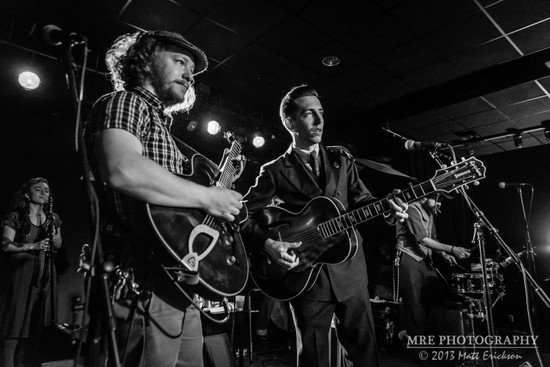
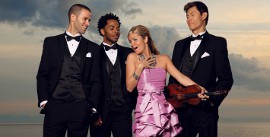 Singer Joey Niceforo, the founder and frontman for the musical quartet Destino, first met two of his group's other members - violinist Rosemary Siemens and pianist Roy Tan - when all three were active in the operatic ensemble The Canadian Tenors in 2006. The fourth member, tenor Terance Reddick, joined Destino two years later, and initially auditioned for the group by singing opera over the phone.
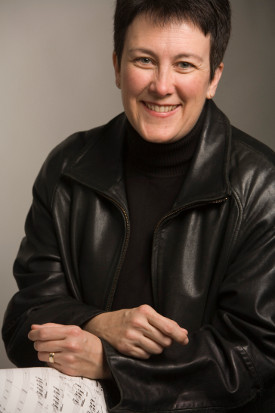 Jennifer Higdon's Violin Concerto unfolds as a slow burn with flickering, firefly-like tones, then straps you into a sonic roller coaster, corkscrewing through ever-changing musical images. When you have experienced the sublime disorderliness of Higdon's concerto, it seems miraculous that it ultimately makes sense; you have experienced something that was perceivable if not completely comprehensible.
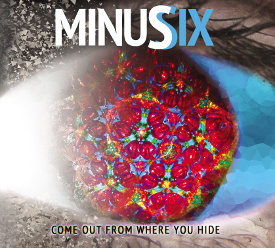 On Minus Six's new album Come Out from Where You Hide, "Grassfed" boldly announces itself with gorgeously intertwined fast runs on sax and piano - downhill, then up, and back down again, a deft flash of early jazz grafted onto verses of piano rock. The instrumental breaks elevate the whole, with pianist Kevin Carton and saxophonist Matt Sivertsen given the space to playfully develop and explore.

 Would you like to see a photo of perhaps the happiest child in the world?