
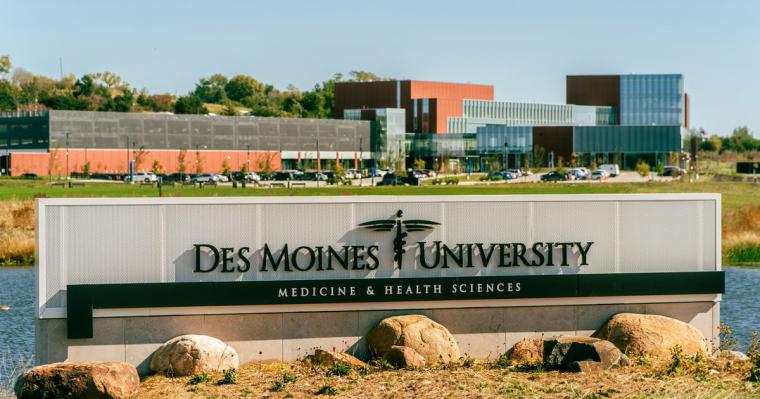
WEST DES MOINES, IOWA (December 3, 2025) — High-school students curious about a career in health-care can now register for Des Moines University (DMU) Medicine and Health Sciences' Mini Medical School.
The program, offered at no cost, is held on Tuesday evenings in February 2026, 6-7:30PM, at DMU's campus, 8025 Grand Ave, West Des Moines.
Participants will work directly with DMU faculty and students in interactive sessions that introduce them to medical problem-solving, patient care, and career paths in medicine and health science.
"Mini Medical School gives students a chance to think and work like health care professionals," says Kimberly Brown PhD, vice president for academic and student affairs.
"They leave with experiences that make a lasting impression and often a clearer vision of their future."
Mini Medical School offers two learning paths. The foundations track is designed for first-time participants.
This program introduces the essentials of medical thinking, anatomy, microbiology, physiology, and the science behind the health symptoms.
The health-professions lab is offered to students who have completed the foundations track. This program explores physical and occupational therapy, podiatric surgery (including hands-on suturing), physical-diagnosis skills, and a review of the role of ultrasound technology in diagnosis and treatment.
"Both tracks give students valuable opportunities to connect with DMU faculty and students, experience health care in action and explore potential career paths," Brown says.
Located in West Des Moines, part of Iowa's capital metro, Des Moines University Medicine and Health Sciences offers ten graduate-level professional-degree programs in anatomy, biomedical sciences, health-care administration, occupational therapy, osteopathic medicine, physical therapy, physician-assistant studies, podiatric medicine, and public health. Founded in 1898, the institution offers superior academics in a collaborative environment. DMU students' scores on national examinations, pass-rates on board certifications, and match-rates for medical-residency programs are consistently higher than national averages and rates at peer institutions.