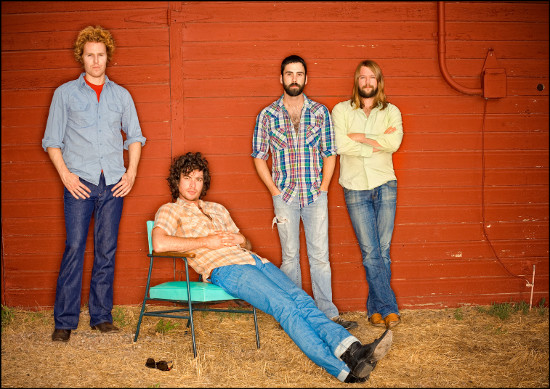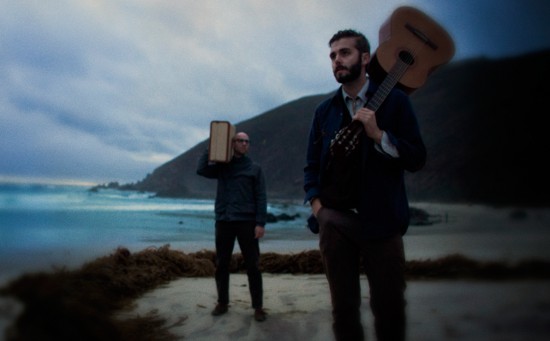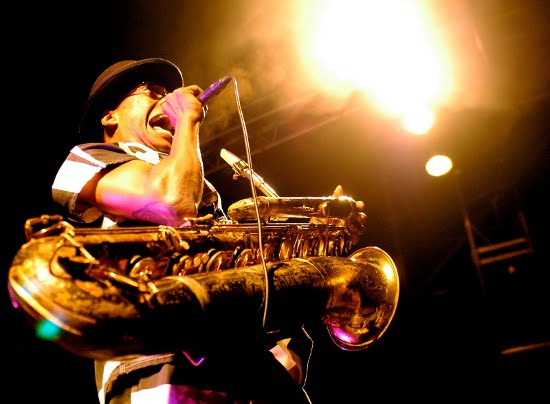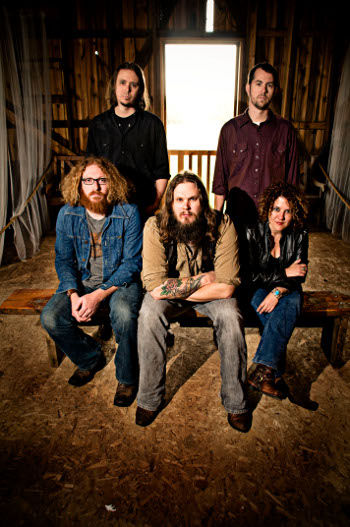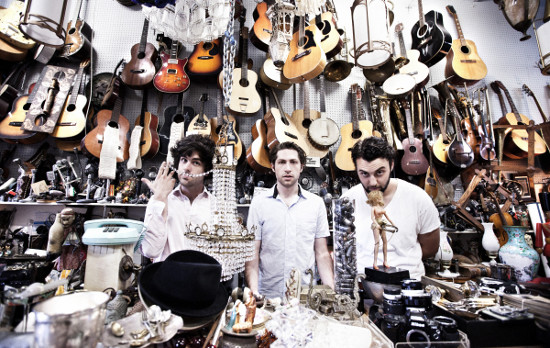
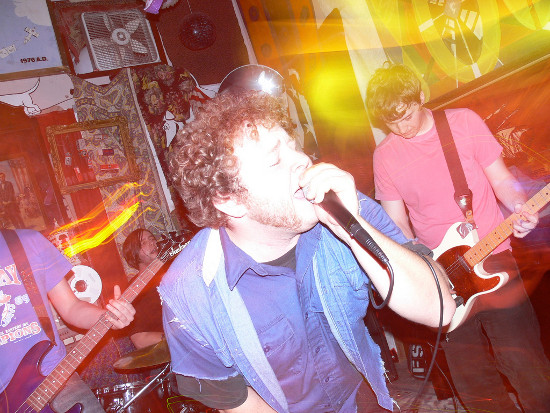
Meth & Goats. Photo by Dan Wilcox.

Without casting aspersions, it must be said that Meth & Goats' new album Leisure Time starts at full throttle and never lets up, with few variations in volume, pace, or approach. The Moline-based quartet has crafted a pummeling record that over 32 minutes offers scant relief. The album's first stylistic breather is the space noise of seventh track "Gem Vision," which is even more assaultive than the other nine songs.

In that context, though, the album is quite an achievement - razor-sharp, discordant hard rock finding a midpoint between the breathless anger of Rage Against the Machine and the sonically ravenous exploration of Cedric Bixler-Zavala's and Omar Rodriguez-Lopez's the Mars Volta and At the Drive-in, without the ego-driven ambition of any of those bands.

If Leisure Time also lacks those groups' moments of transcendent grace, that seems like a choice: Angular and throwing sharp elbows all over the place, Meth & Goats - which will perform a record-release show at RIBCO on Friday - makes no pretense to pretty. The album is loaded with hooks and urgency and dares you to keep up.
Gene Ween

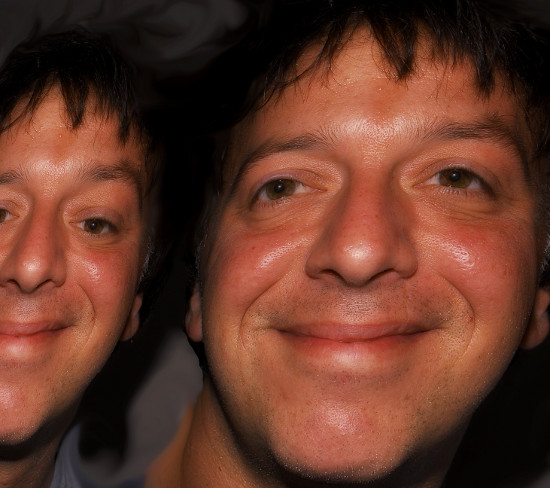
At this point in Ween's career, the only thing that should surprise the band's fans is the core duo of Gene and Dean Ween (born Aaron Freeman and Mickey Melchiondo, respectively) doing something normal.

Based on a conversation last week with Freeman - who will perform a duo show with Ween bassist Dave Dreiwitz at RIBCO on September 8 - there's no danger of that.

"Where I want to go next is the Disney-soundtrack-era Phil Collins," he said, adding that he was as "serious as a heart attack. ... From the onset of Ween, I always planned on devolving into that. Instead of trying to be cool. ... Partly I like that music ... . I find something very punk-rock about it, and I can't explain what that is."

The Baseball Project. Photo by Michael E. Anderson.

To get a sense of the challenge, charm, and skill of the Baseball Project super-group - playing RIBCO on June 9 - start with Scott McCaughey's "Buckner's Bolero," a litany of all that conspired to make Bill Buckner one of the sport's great scapegoats.

"If Bobby Ojeda hadn't raged at Sullivan and Yawkey / And hadn't been traded to the Mets for Calvin Schiraldi," it begins. "If Oil Can Boyd hadn't been such a nutcase / And Jim Rice had twice taken an easy extra base."

Here it's evident that McCaughey knows the game in general, knows Game Six of the 1986 World Series in particular, and is fearless in attempting rhythms and rhymes with proper names and baseball lingo in song. Of Red Sox Manager John McNamara, he sings: "If he'd hit Baylor for Buckner and yanked the first baseman / For his by-the-book late-inning defensive replacement / That ball would've been snagged if it'd ever been hit / And Mookie's last name would now be ''86.'"

But that amounts to little more than clever wordplay. Where McCaughey really shines is in taking the long view, approaching existential issues of baseball immortality: "If even one man doesn't do one thing he does / We'd all know Bill Buckner for what he was: / A pretty tough out for the Dodgers, Red Sox, and Cubs." But he finally concludes that the ground ball hit by Mookie Wilson that went through his legs might be the best thing that happened to his song's subject: "And your 22 years playing ball might be forgotten / Maybe Bill Buckner was lucky his luck was so rotten."

Ha Ha Tonka. Photo by Todd Roeth.

It's little surprise that the members of Ha Ha Tonka, hailing from the Ozarks, have a natural affinity for bluegrass.

"Anything we do, whether we're trying to cover an R.E.M. song or what have you, comes out sounding Ozark-ian," said frontman Brian Roberts in a phone interview last week. But on Death of a Decade, released in April, that influence on the band's indie rock is front-and-center with Brett Anderson's mandolin.

Roberts said the quartet, which will perform at RIBCO on Friday, aimed for "brighter, more hopeful sounds" on the album. And because Anderson had been playing lots of mandolin, "it just became the starting point for a lot songs. ... It's such a colorful, I daresay happy-sounding, instrument. It definitely has a bright sound about it that I think ... helped capture the type of vibe or mood that we were wanting on the songs."

That description misses the tonal and artistic expansiveness of the album. The mandolin drives opening track "Usual Suspects," and it's indeed an upbeat rocker. But elsewhere, the instrument brings shading or a counterpoint; on "Lonely Fortunes," the mandolin adds balance, emotional complexity, and ambiguity simply through its pregnant tone.

Ben Schneider is a visual artist who studied painting, and his music - as Lord Huron - reflects that. It's not merely the covers for his two EPs - warmly evocative, slightly foggy images that showcase the natural beauty of figures, water, landscape, and light together. The ethereal, tropical songs themselves have their origins in the visual.

Schneider and his four-piece backing band will be coming to RIBCO on May 4, and in a phone interview this week, he described the translation from the visual to the aural.

"When I'm writing songs, I usually try to tell a story ... ," he said. "A lot of times, the way I'll start is by getting an image in mind and then try to translate that image ... sonically. ... I just kind of try to make a soundtrack for that image. It's almost like making a little film in your head, and then making music that will go with it."

Angelo Moore of Fishbone

Fishbone's Angelo Moore has taken inspiration from an unlikely source: Britney Spears.

In 2007, the pop singer shaved her head. "She did that because she needed a change," Moore said in a phone interview last week. "She probably did it because she needed to be able to look into the mirror and see a different person. And from there, if she saw that different person, she would probably perform from a different perspective, which would be a fresh and new one.

"So in my particular case, these days, I've been wearing a wig."

Fishbone will be performing at RIBCO on March 12, and to appreciate Moore's wig-wearing ways, it's helpful to consider that the band has been around since 1979 (when Moore was in his early teens), and it hasn't been an easy ride.

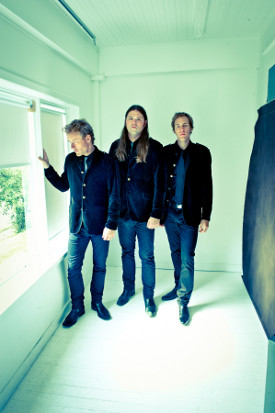
Whitey Morgan & the 78's. Photo by Doug Coombe.If you listen to the self-titled second album by Whitey Morgan & the 78's and think the band makes outlaw country sound easy, Morgan probably wouldn't object.
When he described finding his sound, Morgan - the stage name of Eric Allen - said, "It was difficult until I realized that ... limitations can be a beautiful thing."

He said his band - which will perform at RIBCO on January 21 - initially tried to sound like country from the middle part of the 20th Century, but they didn't have the chops to pull it off. It was only when they embraced the relative simplicity of the outlaw-country movement - personified by artists such as Kris Kristofferson, Willie Nelson, and Waylon Jennings - that things started to click.

I jokingly suggested that the problem was that he was too ambitious, and Morgan didn't take offense and didn't think I was kidding; he agreed.

Retribution Gospel Choir. Photo by Chelsea Morgan.When I interviewed Alan Sparhawk in 2007, the singer/songwriter/guitarist touched on the idea of a "golden moment ... when you're sort of just struggling with some instrument and you sort of have just figured it out, and you are just figuring out the first possible ideas and melodies on it; it's really exciting."

He was talking specifically about Low's Drums & Guns, in which the Minnesota trio (featuring Sparhawk, his wife Mimi Parker on drums, and bassist Matt Livingston - who has since left the band) experimented with instruments they weren't comfortable playing.

In an interview last week promoting Retribution Gospel Choir's December 31 performance at RIBCO (supporting the Meat Puppets), that concept re-emerged in slightly different form. He cast it as freedom - but it's critical to understand that it isn't a natural state of being but the result of work and getting rid of ego. "Those are everything," he said. "'There was a moment where I was not in the way.'"

Mini Mansions. Photo by Dustin Rabin.

If you want a sense of what Mini Mansions sounds like, interviews and reviews often reference the Beatles' experimental side and the late singer/songwriter Elliott Smith. But you're advised not to raise the comparisons with Michael Shuman, the Queens of the Stone Age bassist who formed Mini Mansions in early 2009.

Shuman has previously been up-front about the influences of and his love for the Beatles and Smith, but when I asked him about Mini Mansions' new self-titled album compared to the Beatles, he responded curtly: "I don't think it sounds anything like them." A lot of writers have repeated the comparison, he said, but "I just think it was the wrong bandwagon."

A trio that primarily employs keyboards, bass, drums, and voices, Mini Mansions - performing at RIBCO on December 11 - plays pop music that immediately grabs you but is also streaked with oddity and darkness. The Beatles comparison is frankly inevitable because of the vocal style and harmonies, and the spirit of Smith is undeniable as well. (For the record, outside of a closing scream and vocal flourish in "Monk," there's barely a hint of Queens of the Stone Age.)

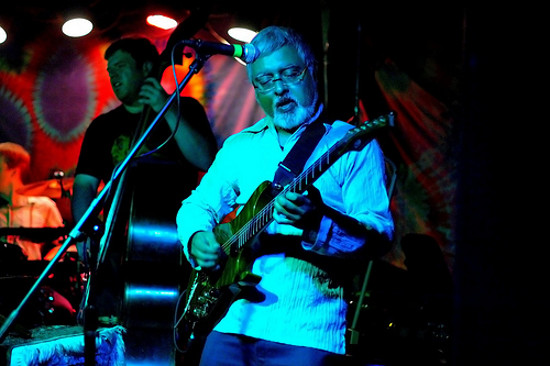
Fareed Haque

The Moog guitar looks like a standard electric guitar.

But Fareed Haque knows from unpleasant experience that its innards are anything but standard.

"There's an incredible amount of technology inside that instrument," Haque said in a phone interview last week. "I was flying with the instrument, and ... I feel that airline security ... looked at my name - Fareed Haque - and looked at the guitar." He paused here, letting the implication settle. "I don't know they took it apart, but I know that when I got it, it wasn't all put back together. Which presented great difficulties for our performance that evening. It looked okay, and I sat down to play it, and all the guts just kind of fell out on stage."

He related this story with good humor, in part because it's understandable that transportation-security officials would be suspicious of the outwardly benign guitar with the unusual stuff inside.

Haque will be demonstrating that inner weirdness of the Moog guitar on November 27 at RIBCO, when he performs with his new trio MathGames, which also features drummer Greg Fundis and bassist Alex Austin.

Pages