
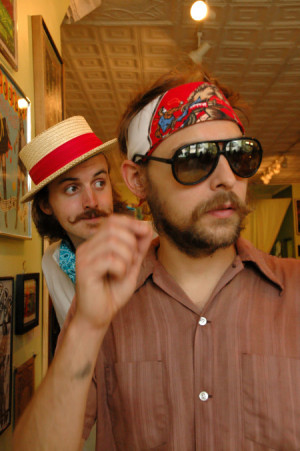
 Here are three things that Wallace Cochran told me in an interview last week to promote Drakkar Sauna's May 18 performance at RIBCO:
- The old-school country duo's upcoming album (set to be released on August 1) is titled 20009, which is pronounced "two thousand-ousand nine."
- "It's a theme record. It's about astronauts and love. Mostly astronauts and rocket travel and the failures of rocket travel in history."
- "Jeff [Stolz] definitely brought the Louvin Brothers to our relationship, and I'm glad I could respond to that with Mandy Patinkin."
A word of warning: None of this is necessarily true. Interviews with Drakkar Sauna typically play like dry comedy routines between Cochran and Stolz, as if they were lost members of Spinal Tap. For evidence, see the e-mail interview between the band and Daytrotter.com founder Sean Moeller, who has previously featured the band on his site and is bringing them back to town for the show and another recording session.
But while the band's interview style might be self-effacing and silly, and there's undoubtedly an oddball element to the music, it would be wrong to accuse Drakkar Sauna of not taking its craft seriously. On the band's albums, indie-sensibilities are fused with old-time country in an appealingly ramshackle concoction that sounds as if it came from a time-traveling saloon.
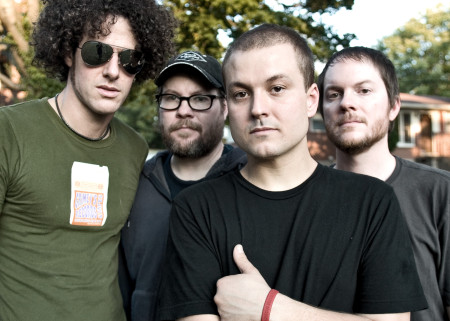
 If you want a sense of how excited the music press is about the up-and-coming South African psychedelic rock band Blk Jks (pronounced "Black Jacks"), you only need to see the art-rock royalty that reviewers name-check.
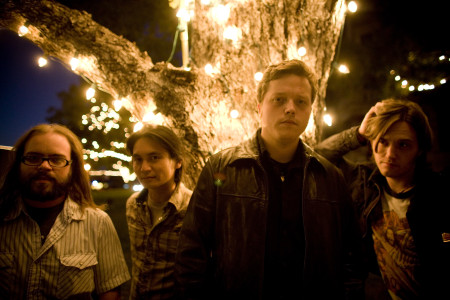
 If you listen to the three bands on a Daytrotter.com bill at RIBCO next week, the impression their recordings leave might mislead you.
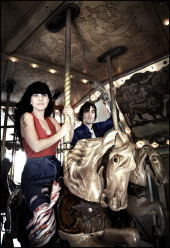 The influences of the Brooklyn-based duo KaiserCartel include punk rock on the "his" side and The Cure and My Bloody Valentine on the "her" side.
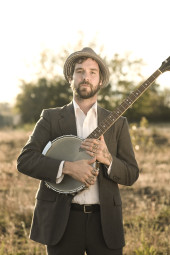 William Elliott Whitmore, a farm boy who hails from Lee County, Iowa, is set to release his new record, Animals in the Dark, on the Anti- label on February 17. After a trio of acclaimed, intimate, spare, and highly personal albums on the Southern label, Whitmore gets more political on Animals in the Dark, and he also fleshes out his sound. What remains the same is his wizened, worn voice, which gives a startling authenticity to his straightforward, woodsy folk music.